Author: WeBalkans

Building a Stronger Future Through Sports and Education: My Visit to Primary School “Izet Šabić” in Vogošća

By Dragana Vučković

As a Young European Ambassador to the Western Balkans, I often find myself inspired by the countless ways in which meaningful partnerships between the European Union and local communities bring about lasting change. One such occasion was my recent visit, together with my fellow Young European Ambassadors Alen and Mehmed, to Primary School “Izet Šabić” in Vogošća (Bosnia and Herzegovina). This visit gave us the opportunity to witness firsthand the remarkable transformation of the school’s sports hall, a project fully financed by the European Union. Walking into the newly renovated facility, I immediately felt the positive energy that radiated not just from the bright and modern interior, but from the smiling faces of students and teachers alike. This was more than just a construction project—it was a tangible investment in the future of young people, and by extension, the future of society as a whole.

We were warmly welcomed by the school’s principal, Mr. Medžid HASKOVIĆ, who passionately spoke about the significance of this initiative. He emphasized how crucial the renovation was for both students and staff. “This project is extremely significant for our students,” he told us, “because they now have the opportunity to develop their sports talents in safe and modern conditions. This is an investment in their future—and consequently, in the future of our society.” Indeed, the transformation is impressive. The entire sports hall has undergone a comprehensive overhaul. The works included the complete renovation of the gymnasium, changing rooms, restrooms, roof, equipment storage, and teachers’ rooms. Every part of the facility now reflects the high standards that were applied throughout the project, meeting both European and other relevant regulations for such spaces.

Of particular note is the installation of brand-new sports elastic flooring. The previous flooring was outdated, worn-out, and even hazardous. Now, the gym features high-quality elastic flooring that not only ensures safety but also enhances performance and usability. This flooring meets European standards and offers a professional surface for a wide range of physical activities.But the renovation went far beyond the floor. Painting and decorating works have breathed new life into the facility, while major construction, ceramic, and carpentry efforts have modernized and structurally fortified the space. Waterproofing and electrical systems were also replaced, ensuring that the facility will remain functional, safe, and sustainable for years to come.

During our visit, I had the chance to speak not only with Mr. HASKOVIĆ, but also with several teachers and students who shared their enthusiasm and gratitude. It was moving to hear how this upgraded space is already having a positive impact on day-to-day school life. Teachers now have an environment that enables them to deliver higher-quality physical education classes, while students feel more motivated and engaged during sports and extracurricular activities. The joy was palpable. One teacher, Minela DERVIŠEVIĆ shared how students who previously avoided gym classes due to the poor condition of the old hall are now eagerly participating and even exploring new athletic interests. As other teacher told me,  group of students proudly told him about their dreams of becoming athletes, coaches, or physical education teachers—and how this new gym gives them a real platform to start pursuing those dreams. School staff mentioned that parents, too, have expressed appreciation for the investment. They see the renovated sports hall not just as a space for physical activity, but as a place that teaches discipline, teamwork, and resilience—skills that will benefit their children throughout life.

As we walked through the hall, I could sense that this was more than just a school improvement—it was a community milestone. Mr. HASKOVIĆ expressed his deep satisfaction with the work done, emphasizing that the project has greatly improved the working and learning conditions for everyone involved. “We are sincerely thankful to the representatives of the European Union,” he said, “for their support and vision. This is proof that when we work together, we can create real opportunities for our children.”

As a Young European Ambassador, moments like this reaffirm my commitment to promoting the values of cooperation, solidarity, and investment in young people. This project stands as a clear example of how EU-funded initiatives can directly improve the lives of citizens in the Western Balkans, while also fostering a shared sense of purpose and belonging within the European family. I truly enjoyed this visit—not just because of the beautiful new facility, but because of the people I met. Their excitement, optimism, and appreciation reminded me why we do this work. It’s easy to talk about infrastructure and policy, but it’s the human stories—the students finding joy in sports again, the teachers feeling empowered in their roles, the parents seeing a better future for their children—that really capture the essence of meaningful change. This visit also reminded me that every investment in education and youth is an investment in peace, progress, and prosperity. The renovated sports hall at Primary School “Izet Šabić” is not just a gym—it’s a space of hope, growth, and potential. It’s a symbol of what can be achieved when institutions and communities come together with a shared goal.

On behalf of the Young European Ambassadors and as someone who deeply values regional cooperation, I want to extend heartfelt thanks to the European Union for supporting this initiative. I also want to commend the school leadership, staff, and local community for their dedication to creating a nurturing and dynamic environment for students. Let this project serve as a reminder of how far we can go when we work together—and as an inspiration for similar efforts across the Western Balkans and beyond.

Bridging Borders for a Greener Balkans: A Youth-Led Mission Across Kosovo, North Macedonia & Serbia

By Edlira Dibrani, Young European Ambassador from Kosovo

This World Environment Day, I find myself reflecting on one of the most rewarding and energizing journeys I’ve taken as a Young European Ambassador – a journey that began with a conversation in Prishtina and grew into a cross-border environmental movement uniting youth across Kosovo, North Macedonia, and Serbia. It started when I first met Zlatka Kuvendjieska from North Macedonia. We connected instantly over our shared passion for the environment and our desire to create change that reaches beyond national borders. Together, we launched the Green Bridge Initiative – a campaign designed to connect countries, communities, and young changemakers across the region. Soon after, we were joined by Marija Burgieva (North Macedonia), Vuk Stanojev (Serbia), and later by other passionate youth from our YEA community. The campaign quickly evolved into a collaborative force for good — showing that youth cooperation can become a strong foundation for environmental action in the Western Balkans.

Connecting Through Action

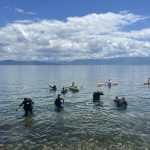
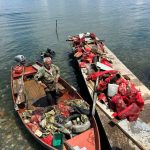
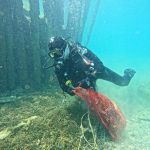
In Kosovo, I organized a 7-Day Eco Challenge, where each day I focused on small but meaningful environmental actions — walking in nature, organizing litter clean-ups, planting trees, and reducing single-use plastics. We also celebrated World Health Day with a special “Talk and Walk” activity in Germia Park, where we brought together teens for conversations on health, sustainability, and the importance of reconnecting with nature. Zlatka carried this spirit of action into North Macedonia, where she visited Eko-svest in Vevchani to learn about biodiversity protection and environmental education. Her efforts culminated in a large-scale clean-up at Lake Ohrid in Radožda, organized in collaboration with local diving clubs Norkac and Ezerski Puls. The event brought together over 100 volunteers from across Struga, Ohrid, Serbia, and Albania, showcasing the incredible impact of cross-border solidarity. Meanwhile, Marija and Vuk focused their efforts on raising awareness around zero-waste principles and sustainable waste management in Novi Sad and Skopje. Through community engagement, research, and blog writing, they explored the challenges of public waste systems and the possibilities for a circular economy in our region. Their blog on the subject offered insights into how even individual actions can make a difference – a key value of our initiative.

But they didn’t stop at learning – they acted. Both Vuk and Marija took part in hands-on clean-up efforts in Novi Sad and Skopje, where they mobilized their communities to care for shared public spaces. These events were powerful examples of how theory and action can go hand-in-hand, and how collaboration can transform awareness into change.

We also had the chance to collaborate with DyVo Lab, a Kosovo-based startup using tech to promote sustainable innovation  a-nother step in building bridges between environmental action and digital creativity.

A Shared Vision, A United Region

For all of us, the Green Bridge Initiative has become more than just a campaign. It’s a movement rooted in trust, cooperation, and the belief that we are stronger together, not just as individuals, but as countries working in unity for a common cause. As we celebrate World Environment Day, I am proud of how far we’ve come- not only in cleaning lakes, walking forests, and spreading awareness – but in building a foundation for lasting, regional cooperation. The friendships we’ve formed and the bridges we’ve built are proof that the environment can be a unifying force. And this is just the beginning. We are committed to growing this initiative, expanding our reach, and continuing to show that the youth of the Western Balkans are ready, not just to imagine a greener future, but to create it. The bridge is built. And it’s only getting stronger.  

North Macedonia’s Centre of Excellence in Green Innovation reaches final of 2025 ETF Green Skills Award

Skopje, 2 June 2025 – The Centre of Excellence in Green Innovation has been named one of five global finalists for the European Training Foundation’s (ETF) Green Skills Award 2025. The initiative, led by professor Radmil Polenakovikj and his team, is the only project from the Western Balkans to make the shortlist and now competes for the top prize in a public vote that runs until 30 June.

Selected from more than 250 applications spanning 50 countries, the Centre’s programme equips young people, teachers and small businesses with the skills needed for a low-carbon economy. Its hands-on courses cover eco-innovation, renewable-energy entrepreneurship and circular-economy practices. Graduates have already launched community recycling schemes and solar start-ups in several municipalities.

ETF Director Pilvi Torsti praised the finalists for “showing how local action can shape a resilient, sustainable future for all”. The Green Skills Award aligns with the EU’s Union of Skills and Clean Industrial Deal, which place green and digital competences at the heart of Europe’s growth strategy.

How to vote

Click here to visit the ETF public-voting platform
Select “North Macedonia – Centre of Excellence in Green Innovation”
Voting closes on 30 June 2025 at 13:00 CEST

The three projects with the most votes will be honoured during EU Green Week, where a special #ForOurPlanet prize will also be awarded.


About the Centre of Excellence in Green Innovation
Founded in Skopje in 2021, the Centre partners with universities, vocational schools and industry to pilot green curricula and incubate eco-start-ups. Its goal is to make North Macedonia a regional hub for sustainable technology and circular-economy know-how.

EU channels €65 million to rebuild Bosnia and Herzegovina after the 2024 floods

The European Union continues to deliver for its closest partners just as it does for its own member states. Today, the European Commission approved €45.7 million from the EU Solidarity Fund (EUSF) to help Bosnia and Herzegovina recover from the catastrophic floods and landslides triggered by storm Boris in October 2024. The grant, part of a wider €280 million EUSF package being disbursed across Europe, will finance urgent needs such as repairing damaged roads, bridges, water and power networks, providing temporary accommodation for displaced families, and upgrading flood-defence and early-warning systems.

This new funds from Solidarity Fund comes on top of the €20 million IPA special-measure package that Commission President Ursula von der Leyen announced during her visit to Bosnia and Herzegovina last autumn. Channelled through IOM and UNDP, that 30-month project, launched in January 2025, is already rehabilitating homes and public buildings, restoring community infrastructure and helping flood-hit micro, small and medium-sized enterprises get back on their feet. Several EU member states have also provided bilateral assistance ranging from emergency equipment to civil-protection teams.

With the two EU funding streams combined, total European support for Bosnia and Herzegovina’s flood recovery now exceeds €65 million. Crucially, by granting EUSF aid the Union treats Bosnia and Herzegovina, an EU candidate country, as if it were already a member, underscoring a relationship built on solidarity and shared aspirations. In the months ahead these resources will translate into safer homes, stronger local businesses and more resilient infrastructure.

Kaja Kallas reaffirms EU’s commitment to the Western Balkans

The EU High Representative for Foreign Affairs and Security Policy and Vice-President of the European Commission, Kaja Kallas, visited Serbia, Kosovo and North Macedonia on 22–23 May 2025. “The Western Balkans are of strategic importance to the European Union. EU enlargement in this region is our most significant geopolitical project and also my personal priority”, said Kallas. The key messages she delivered during each meeting underlined that the EU expects accession – but that the path comes with clear obligations. Serbia: No shortcuts on the path to the EU
In Belgrade, Kallas met with the country’s political leadership – President Aleksandar Vučić, Speaker of Parliament Ana Brnabić, and Prime Minister Đuro Macut – as well as opposition parliamentary groups, representatives of active youth organisations and civil society.In her statements to the media, Kallas stressed she had made it clear to government representatives that the EU wants to see Serbia making progress towards accession–this requires political leaders to implement reforms, clarify their strategic direction, and work on normalising relations with Kosovo, recalling that “There are no shortcuts.”, adding that “the best results come from restoring trust and relying on democratic principles”.After meeting with civil society representatives and hearing their calls for aspiration for justice and accountability – which are essential for Serbia to reach its full potential, she added that “their energy is needed to find the way forward.”
Kosovo: EU has begun to gradually lift measures In Pristina, Kallas met acting Prime Minister Albin Kurti, leaders of major political parties, and civil-society representatives. She encouraged authorities to overcome the political deadlock and swiftly form a government. “Leaders must set aside their divisions and prioritise Kosovo’s future. It is encouraging that EU membership is supported by the majority of Kosovars across the political spectrum. Kosovo belongs to the European family – but there are no shortcuts to EU membership”, stressing that Kosovo needs functional institutions capable of effectively implementing reforms. “A key priority remains the normalisation of relations between Kosovo and Serbia. You are equal partners at the table. As the European Union and as High Representative, I will continue to support this process. The dismantling of Serbia-supported structures in the north undermines efforts towards de-escalation”, Kallas emphasised. She confirmed that the EU had begun to gradually lift the measures introduced in June 2023, explaining that this decision opens the door to greater opportunities for Kosovo’s development and closer ties with Europe – but she also underlined that continued progress is conditional on sustainable de-escalation in the north. The EU’s Growth Plan for the Western Balkans, she added, offers Kosovo “a major opportunity for gradual integration into the single market During her brief stay in Kosovo, she also visited EULEX forces stationed there. “Our EULEX mission continues to support the rule of law in Kosovo, but the current political framework and stalemate are holding Kosovo back. The European Union is ready to support you – but political leaders must set aside their divisions and focus on Kosovo’s future”, she reiterated. North Macedonia: “You are a reliable partner” After meeting the Prime Minister of North Macedonia, Hristijan Mickoski, Kallas reassured the country belongs to the European family and the EU stands by it on its path to integration. She highlighted that North Macedonia was the first in the region to sign a Security and Defence Partnership with the EU and the first to benefit from the EU’s Growth Plan for the Western Balkans. “You are a reliable partner, and although the road to membership is not easy, my message is: stay the course. We know there are obstacles, but we discussed ways to overcome them. North Macedonia is the first regional beneficiary of the Growth Plan and the first to sign the Security and Defence Partnership with the EU. This partnership promotes joint action on Ukraine, hybrid threats, and counter-terrorism – and it shows that gradual integration works in practice. But we both want more, that is very clear. Your contribution to EUFOR Althea in Bosnia and Herzegovina is a clear example of your role as a reliable partner in regional security. I commend the strong efforts your government has made on its reform agenda”, Kallas said after the meeting. Kallas pledged to North Macdonia that the EU would offer even greater support going forward – whether in strengthening the rule of law, fighting corruption, or modernising public administration. In North Macedonia, together with the Minister of Defense, the Chief of General Staff of the Army of North Macedonia, the EU Ambassador and the EU Defense Attaché, Kallas visited the Balkan Medical Task Force (BMTF). This was Kaja Kallas’ second trip to the Western Balkans since assuming the role of High Representative – in April she visited Montenegro, Albania and Bosnia and Herzegovina. Throughout this tour, she once again emphasised the need for regional stability and, in Serbia, stressed Serbia’s important role in ensuring regional stability, including in Bosnia and Herzegovina.

Through regional action and shared goals, the Western Balkans go circular

Civil society actors from five Western Balkan countries have come together around a project, united by a shared commitment to advancing the green and digital transition through circular economy and eco-innovation.

Led by Montenegro’s Community Impact Accelerator – Zid (ADP-Zid), EICEE – Western Balkan Eco-Innovation and Circular Economy Ecosystem is a forty-month intervention carried out in collaboration with organisations from Croatia, Serbia, North Macedonia, Kosovo and Bosnia and Herzegovina, with the aim to create a strong regional network for the circular economy and raise awareness in the region about the importance of circular economy through educational programmes.

Up to now, five country reports have been published each providing knowledge on each respective country’s situation in relation to circular economy but also shedding light on the importance of an adoption of circular economy practices as the countries’ path to cultivating European values.

EICEE is particularly important in line with the 2020 Green Agenda for the Western Balkans, signed by WB leaders in Sofia, which is a testament to EU’s commitment to support circular economy development in the Western Balkans through policy alignment, funding, and technical assistance. The Green Agenda for the Western Balkans’ focus areas include: circular economy, decarbonization, pollution reduction and biodiversity and ecosystem protection, which in essence, mirror the EU’s Green Deal.

With an EU support of over one and a half million euro, the EICEE project has already intervened in each respective country, making steps forwards to matching the EU’s good practices when it comes to eliminating waste and promoting the continual use of resources.

National baseline reports have been completed in all partner countries, offering a comprehensive analysis of the circular economy. In addition, legal analysis as well as policy papers have been developed, outlining strategic recommendations for the alignment of Western Balkan economies with European Green Deal principles and the Circular Economy Action Plan. All these steps have laid ground for five innovation spaces that are currently being established or equipped across the partner countries, each tailored to national needs but operating within a unified regional concept.

These spaces are envisioned as physical nodes of the EICEE ecosystem and will serve as platforms for prototyping, training, community

12 Makerspace – Montenegro

Run by ADP-Zid in Podgorica, Montenegro, I2 Makerspace functions as the national center for the development of eco-designed and upcycled products. This space offers access to tools, equipment, and expert mentoring for innovators and social enterprises aiming to develop 3R (reduce, reuse, recycle) solutions. It also serves as an educational and co-creation hub, especially for youth and emerging entrepreneurs.


3R Space – Kosovo

Established by LENS in Peja, Kosovo, 3R Space is a facility dedicated to the recycling and creative re-use of electronic waste. The center combines practical innovation with digital tools and training, empowering local communities to understand and engage with e-waste management, while contributing to the development of sustainable digital products.


Ništo Novo – North Macedonia

Campaigns, exhibitions and learning programs that engage a broad spectrum of stakeholders, from students to decision-makers, are at the core of Ništo Novo run by ARNO in North Macedonia. This regional awareness center serves as a national platform for education, visibility and public promotion of circular economy practices.


Deli Center – Serbia

In Serbia, Deli Center expanded its existing coworking model into a space that integrates digital solutions for circular economy processes. This center supports both product development using natural materials (such as clay) and experimentation with digital fabrication and eco-design. It is also a point of convergence for creative professionals, green entrepreneurs, and educators.


Matchmakers Center – Bosnia and Herzegovina

Launched by the Green Building Council, the Matchmakers Center in Bosnia and Herzegovina acts as a national coordination point linking producers from the social and green economy with the mainstream industry. It facilitates partnerships, technology transfer, and the scaling of circular products, while also supporting market access and visibility for small enterprises.

Each center has a clearly defined focus and function, avoiding duplication of services, while at the same time contributing to a shared regional ecosystem. Together, they form a living infrastructure for innovation, education, product development, and policy support in the circular economy sector. Through their collaboration, the centers foster cross-border partnerships, promote exchange of good practices, and enable testing of new models for sustainable production and community development.

These spaces also serve as anchors for broader project activities, including mentoring, study visits, prototyping, and capacity-building for civil society organizations, social enterprises, and SMEs. As such, the regional infrastructure developed through EICEE represents both a practical and symbolic step toward a greener, more integrated, and innovation-driven Western Balkans.

How We Celebrated Europe Day in the Heart of the EU

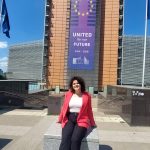
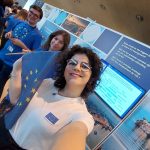
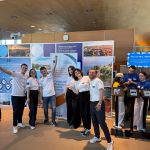
By Selda and Martin – Young European Ambassadors from the Western Balkans Europe Day in Brussels? At first, it might sound like it’s all about red tape and serious faces behind glass offices. But in reality, it’s quite the opposite. Imagine 15,000 people walking through the doors of EU institutions, live music playing in the background, hands full of sweets and brochures, and curious minds exploring everything from quizzes to VR stations. That’s the Europe Day we experienced, and this is the story of how six Young European Ambassadors (YEAs) from the Western Balkans spent three unforgettable days in Brussels.

 Day 1 – Open Doors, Open Minds

Every year on May 9th, the EU celebrates the anniversar y of the Schuman Declaration- when, in 1950, French Foreign Minister Robert Schuman proposed a new form of European cooperation to prevent future wars. That idea became the foundation for today’s European Union. To mark this day, EU institutions in Brussels open their doors to the public to bring EU citizens closer to the decision-making bodies that shape their lives. This year, we. YEAs from Montenegro, Albania, North Macedonia, Serbia, Bosnia and Herzegovina, and Kosovo* were right there in the middle of it all. At our joint stand inside the European Commission’s Berlaymont building, we presented the Young European Ambassadors Network in a “Living Library” format. We spoke with visitors of all ages about our home countries, the work we do as YEAs, and how our region contributes to the European story. Commissioner for Equality Hadja Lahbib even stopped by to see our activities! Yes- on that day, we basically worked for the European Commission like it was no big deal! It was a surreal yet empowering experience. Across the institutions, various EU agencies set up engaging, interactive booths filled with games, installations, and quizzes, turning a day of civic engagement into something that felt more like a festival. Day 2 – Museums, Stories, and Lightbulb Moment We began the second day at the House of European History. Now, we’ll be honest- some of us usually only visit museums when it rains. But this one was something else. It’s not your classic dusty exhibition hall; instead, it takes you on a stunning visual journey through Europe’s past—from revolutions and wars to unity and modern-day challenges. Our favorite moment? A towering installation that stretches across all the museum’s floors. As you walk up, you move through the layers of European history, discovering how ideas, people, and events have shaped the continent. Standing there, it rea lly hit us: the Western Balkans have always been part of this story- culturally, historically, and humanly. We may not be “inside” the EU just yet, but our place in the European narrative is undeniable. Later, we headed to the Parlamentarium, the European Parliament’s interactive visitor center. Available in every EU language, it offers virtual tours, simulations, and multimedia exhibits that explain how the Parliament works, how decisions are made, and how citizens are represented. It’s designed for everyone- from kids to policy nerds- and honestly, we didn’t want to leave. Day 3 – Behind the Scenes of Enlargement: A Love Story in the Making On our final day in Brussels, we traded museums for something equally eye-opening- a deep dive into the EU’s enlargement machinery. The Directorate-General for Enlargement and the Eastern Neighbourhood takes forward the EU’s Enlargement and Eastern Neighbourhood policies (DG ENEST), we had the chance to meet with some of the people who quite literally think about the Western Balkans every day. Among them was Agathe Nowak, a Policy Officer working on the EU enlargement process, who helped us understand how this journey has evolved from 1957 to today. We also spoke with Anja Nagel, who leads the private sector team within the Western Balkans Investment Framework (WBIF), and Klara Orlowska, who focuses on energy and manages programmes like EU4Energy in the Eastern Neighbourhood. Together, they gave us an inside look at what’s coming next, from the new Growth Plan for the Western Balkans to efforts around digital transformation and the EU’s Green Agenda. What stood out most was how concrete everything felt. These weren’t just policy ideas on paper- these were real people working on real projects that are already shaping reforms in our home countries, paving the way for future membership. If you’re curious about what that looks like in practice, keep an eye on WeBalkans channels- it’s all happening there. Our meeting with the Western Balkans Investment Framework (WBIF) left a lasting impression on us. Inspired by everything we learned- from funding instruments to real-life impact- we decided to create a digital booklet highlighting WBIF funding opportunities in the Western Balkans. It’s our way of sharing the knowledge and opportunities we gained with the rest of the YEA network, helping more young people understand how they can get involved in shaping the region’s future From meaningful conversations and official meetings to spontaneous laughter, chocolate breaks, and snapping photos in front of every EU flag we could find, these three days reminded us why we do what we do as Young European Ambassadors. The Western Balkans are not just future members of the EU; we’re already part of its heart and story. And celebrating Europe Day right in Brussels? That just made it feel a little more real. From Brussels, with love.  

Dimitar Atanasovski

YEA of the Month April 2025

Dimitar Atanasovski is our Young European Ambassador from Bitola, North Macedonia. With a strong passion for civic engagement and youth empowerment, Dimitar has been actively involved in activism from a young age. His dedication to creating positive change in his community has earned him the respect of his peers and positioned him as a leader among young people in Bitola and beyond. Over the years, Dimitar has taken on numerous leadership roles, most notably serving as the president of the student assembly at the University of St. Kliment Ohridski in Bitola. In this role, he advocates for student rights, organizes initiatives to improve campus life, and ensures that the voices of young people are heard in decision-making processes. In addition to his university involvement, Dimitar is also a committed member of his municipality’s Local Youth Council. Through this municipal platform, he works closely with local authorities to address issues affecting youth, propose innovative solutions, and promote greater youth participation in public life. His experience in both academic and municipal structures reflects his deep commitment to strengthening democratic values, fostering active citizenship, and building a more inclusive society for future generations.

Dimitar Atanasovski

Country: North Macedonia

Interests:

Dimitar Atanasovski is our Young European Ambassador from Bitola, North Macedonia. With a strong passion for civic engagement and youth empowerment, Dimitar has been actively involved in activism from a young age. His dedication to creating positive change in his community has earned him the respect of his peers and positioned him as a leader among young people in Bitola and beyond. Over the years, Dimitar has taken on numerous leadership roles, most notably serving as the president of the student assembly at the University of St. Kliment Ohridski in Bitola. In this role, he advocates for student rights, organizes initiatives to improve campus life, and ensures that the voices of young people are heard in decision-making processes. In addition to his university involvement, Dimitar is also a committed member of his municipality’s Local Youth Council. Through this municipal platform, he works closely with local authorities to address issues affecting youth, propose innovative solutions, and promote greater youth participation in public life. His experience in both academic and municipal structures reflects his deep commitment to strengthening democratic values, fostering active citizenship, and building a more inclusive society for future generations.

Instagram

Facebook

Linkedin

Twitter

European Commission welcomes inclusion of Serbia in the Single Euro Payments Area

Serbia joined the geographical scope of the Single Euro Payments Area (SEPA) following the positive decision by the European Payments Council (EPC). This is a practical example of the impact of the Growth Plan for the Western Balkans, an EU initiative to accelerate the socio-economic integration of the Western Balkans and its citizens into the EU, including through progressive access to certain areas of the EU single market based on alignment with the EU acquis Communautaire.

As a result of the European Payments Council decision, the payment service providers of Serbia will have the possibility to adhere to the various SEPA schemes that are managed by the EPC.

This step paves the way for the facilitation of financial transfers in euro and for the reduction of the cost and processing time of these transactions between their citizens, businesses and other SEPA members. It is therefore contributing to a sustained economic growth, with direct benefits for Serbian citizens.

The European Commission will continue to support the preparation of Serbia’s payment service providers and the country’s further alignment with the EU acquis in the area of financial services, which, among other important policy areas, is fundamental to Serbia’s path to accession.

Background

The European Payments Council (EPC) is an independent, international not-for-profit association formed of 83 members who are payment service providers (PSPs) or associations of PSPs. The EPC was created in 2002 by the European banking industry to develop European instruments for electronic euro payments. Today, close to 4,000 banks and other payment service providers participate in SEPA schemes.

In close dialogue with the stakeholder community, the EPC has developed, among other things, “schemes”, such as the SEPA Credit Transfer, the SEPA Instant Credit Transfer and the SEPA Direct Debit scheme. These schemes, which facilitated over 50 billion transactions in 36 countries last year, are regularly updated and enhanced by the EPC to help realise easy cross-border euro payments.

More Information

Factsheet on the Growth Plan for the Western Balkans

EPC press release on Serbia