Author: WeBalkans

Decode before you share

Dealing with disinformation is the biggest challenge nowadays. False information puts people’s lives in danger. How can we detect them?  During the three days of work at the Fact Content Lab in Podgorica, organised within the WeBalkans Facts Come First Campaign, journalists, fact-checkers, and producers from across the Western Balkans tried to find answer to this question.

  The people of Kosovo were warned, in May 2019, that a woman is after their children and kidnaps them. The warning, spread on social media all over the country, was illustrated with the picture of NN. The news spread very fast, and people started to panic. What happened the next day was that NN got attacked  by a group of people in broad daylight, on the town square in Lipjan, Kosovo. The attackers believed she had kidnapped and continued to kidnap children. NN was not the only victim in the region. Last year, in 2024, Serbia and the region were shaken with the news that a young girl named Danka Ilić disappeared. Soon after she went missing, the authorities arrested two men suspected of her murder. The media soon published a photo of the alleged murderer, an older man wearing a jacket with a yellow collar and smiling.  His picture was everywhere.  But in real life, the man in the picture wasn’t accused of anything nor did he have any connection to the case. Some journalists simply took the photo from the Facebook profile of a man that happened to have the same name as one of the suspects and falsely presented him to the whole region as a man who killed a two-year-old girl in cold blood. Another case was also the story of N.I, a journalist from Serbia, who felt like her life changed forever after an intimate footage of her was disseminated through a Telegram channel, without her consent. These stories represent three forms of information manipulation: disinformation, misinformation and malinformation. According to the website of Media Defence, an organisation dedicated to legally assisting journalists:
  • disinformation is false information that is spread intentionally with the aim to cause harm
  • misinformation is false information that is not disseminated with the intent to harm
  • malinformation is true information but spread to harm individuals or groups.
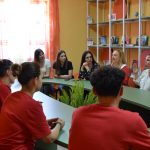
These types of manipulations always existed, but nowadays it seems that people deal with them more, especially with the rise of social media. According to the data from the 2024 Youth Survey conducted by the European Parliament, social media is the primary source of information on political and social issues for 42% of the European Union (EU) youth aged 16 to 30, while television serves that purpose for 39% of respondents of the same age. According to the data, the younger the person, the more likely they are to use social media as the primary source of information. The survey also showed that the majority of the respondents believe that they have been exposed to disinformation in the week before taking the survey, and that the majority also believe that they can recognize it. Young people and media professionals from the Western Balkan are familiar with examples of disinformation, misinformation and malinformation from their own countries. As they mentioned during the interviews, dealing with them is difficult. “Since we have a lot of information nowadays, we encounter a lot of unnecessary information that we scroll quickly away, especially on social media and online portals. This is also one of the additional reasons why people do not pay attention to details and do not question everything they see” said Emina Balota, a Young European Ambassador from Montenegro. For youngsters in the region, falsehoods are becoming a daily problem. Emina Odobašić, a university student from Bosnia and Herzegovina, feels that young people in her country are not well versed to recognize all kinds of incorrect information. “I try to fact-check what I see and avoid sharing things too quickly. Young people are more aware now, but many still share things without checking, especially if it supports their views.” The same problem is also faced by the journalists who have to report on a daily basis from their country. For Neda Dimova-Prokić, a journalist from North Macedonia, it is necessary that media literacy should be a part of the general education curricula. “Media literacy needs to be raised to a higher level, and teachers themselves need to be trained on how to present this to children from an early age. Critical thinking should be encouraged in schools and at home, and through examples, children should be guided to think critically.”. The importance of media literacy and critical thinking is not lost on those who have experienced the effects of disinformation, malinformation and misinformation on their own skin. Vullnet Krasniqi, journalist from Kosovo was targeted by disinformation for years, especially when he was part of the Big Brother reality TV show in Pristina. “One vivid example was during and after my time on Big Brother, when online narratives—often driven by clicks, algorithms, or even bad intent—were built around selective truths or outright fabrications about my identity, my opinions, or my relationships.” There are several options to fact-check content through online tools and platforms.  Jona Cenameri, a journalist from Albania, relies on various fact-checking platforms.  “I believe young people have different approaches when it comes to fake news. And the decrease in attention span is making it so that these pieces of news, by staying only briefly on their screens, don’t become subjects of deeper reflection, but instead pass by without much thought about their truthfulness.” False content can impact people at home or abroad.  Elena Prnjić, a social media manager for a fact-checking website from Serbia sees several ways to deal with this problem.  “Manipulative narratives are really dangerous all over the world, not just in Serbia. And there are multiple ways of dealing with them. One part of the public already has a deep mistrust in the media, and therefore often doesn’t automatically ‘fall for’ manipulations and disinformation. Those less digitally and media literate tend to believe such manipulations and disinformation without critical thinking. And there are also those, although rare, who are unsure and wish to investigate further. They do the research by themselves, or they consult experts – such as fact-checkers.” “Re-Setters” group at the “Fact Content Lab” workshop in Podgorica   The spread of disinformation, misinformation and malinformation is something that is beyond the control of individuals, but something that might be managed by collective effort. Still, each individual owes their communities, be them physical or digital, the effort of doing at least a minimal check before spreading the news around. For the young woman that was attacked in Kosovo, the falsely accused man from Serbia and the journalist targeted by malicious Telegram channels manipulative claims are not just pieces of content they scroll through, but things that negatively impacted their lives. In order to prevent such cases in the future – decode before you share. The content of this article does not reflect the official opinion of the European Union. Responsibility for the information and views expressed lies entirely with the authors.   AUTHORS: Vjosa Cerkini, Journalist Hyrije Mehmeti, Fact checker Nerma Šehović, Fact checker Giorgina Roci, Influencer Kleidi Memo, Young European Ambassador

Europe House Opens in Bar

The presence of the European Union in the south of Montenegro is now reinforced with the ofiicial opening of Europe House Bara new official space for dialogue with citizens. Established through a partnership between the EU Delegation to Montenegro and the Municipality of Bar, this modern space is designed to serve as an institutional platform for dialogue, information dissemination, and civic engagement.

Johann Sattler, the Ambassador of the EU to Montenegro, Maida Gorčević, Minister of European Affairs, and Dušan Raičević, Mayor of Bar, spoke at the opening ceremony. Speakers highlighted the importance of strengthening the EU’s institutional presence at the local level and emphasised the value of direct dialogue with citizens in the process of European integration. Johann Sattler, the Ambassador of the EU to Montenegro, stated: “Europe House in Bar is not just a new address – it is a space where Europe becomes real, tangible, and present in the lives of the citizens of this city and the entire coastal region. We want European values, opportunities, and support not to be something distant but a part of everyday life in the local communities. This is a place of encounter, dialogue, and change – This is an mportant landmark of the European future, already taking shape, right here in Bar.” Maida Gorčević, Minister of European Affairs, added: “The opening of Europe House in Bar comes at a time when Montenegro is demonstrating full commitment to the process of European integration. In a short period, this Government has returned the European agenda to the centre of political action. This is recognised by our European partners, who are now investing in institutions, reforms, and projects across the country with increased trust and readiness. Citizens of Montenegro see this as well. They show one of the highest levels of confidence in the European Union. This clearly demonstrates that, as a society, we are firmly committed to the European path. This also proves that the European path is not just a foreign policy objective but a deep internal necessity of our society.” Dušan Raičević, Mayor of Bar, emphasised that Europe House in Bar confirms the trust that the European Union places in Bar and its local administration. Simultaneously, it is a recognition of Bar’s dedication to adopting and implementing European standards and best practices. Raičević noted that during the last 4 years, the Municipality of Bar has successfully cooperated with the European Union through 12 projects in various areas, including sustainable development, social inclusion, preservation of rich cultural and natural heritage, green policies, and urban mobility. These projects, whether completed or ongoing, total over two million euros. “Europe House is a symbol of solidarity, equality, and respect for diversity. These are the very values championed by Europe and ones that we in Bar have lived and preserved for centuries. I am confident that Europe House will become a space for encounters, new ideas, dialogue, and development. Let it be a bridge between the citizens of Bar and the European institutions, between the local and the global, between today’s challenges and tomorrow’s solutions,” concluded the Mayor of Bar. Located in the premises of Radio Bar, on 24 November Boulevard, Europe House Bar is envisioned as an open space that will bring citizens closer to information about the European Union, its policies, programmes, and values – through educational activities, public debates, exhibitions, and cultural events. The opening programme included a presentation of activities that will commence tomorrow at Europe House. The opening event brought together high-ranking representatives, national and local authorities, members of the diplomatic corps, media, civil society representatives, and numerous citizens. This further underscores the importance of events like this for the strengthening of the institutional dialogue and advancing Montenegro’s European integration. In a country aspiring to join the European Union, the EU’s presence in local communities holds particular significance. European integration is not solely a process taking place at the state level – it rests on the active participation of citizens in all regions. Europe Houses, such as the one in Bar, serve as bridges between local communities and European institutions, enabling citizens to get involved and contribute to a shared European future.

To mark the opening of Europe House, the Delegation of the European Union to Montenegro organised an open-air concert for the citizens of Bar and numerous visitors.

The Day That Spoke Without Words

By Sara Kënuti, Young European Ambassador Albania

There are some days that leave a mark on your heart. For me, this was one of them.

A few days ago, Olta, Paola, and I had the privilege of visiting two very special institutions in Tirana: one for Children with Hearing Impairments and the other for Children with Visual Impairments. It wasn’t just a visit,  it was a warm hug filled with love, creativity, and strength.

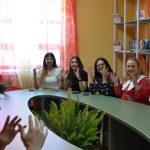
The visit started at the Institution for Children with Hearing Impairments. At first, I wondered what our communication would look like — how we would connect and understand one another. But as soon as I walked in, I realized that the languages of the heart, a smile, and the eyes speak louder than any words. Some of the children showed us their alphabet in sign language, along with a few expressions and simple words – and you know what? By the end, we were able to have a mini conversation with each other, and there was no experience more moving than that. We learned how to applaud, how to ask “How are you?”, how to say “I love you,” and many other beautiful things.

During the visit, we felt not only inspired but deeply aware of the importance of inclusive education and the impact of EU support on these children’s everyday lives. Through the `EU for Inclusive Teaching` project, this institution now has a fully equipped photography lab where students get to learn how to take photos and edit them using professional cameras and software. The kids happily showed us some of their pictures and told us all about their exhibitions. They had made two already, sharing their unique stories and talents with everyone. We even got to watch a fun moment where they showed us how they take photos — it was amazing to see their creativity and excitement up close! 

What the children were most excited about was that, for the first time, they can have their hearing tested on-site in the brand-new Audiogram Room — another EU-funded addition. This space, under the supervision of the institution´s doctor, brings healthcare closer and more accessible. Ola, the director of the institution, showed us that teachers and staff have also benefited through training in Sign Language and inclusive education techniques, delivered by Finnish specialists, enhancing their capacity to support each and every child.

After such a moving experience, we thought our day couldn’t get any more emotional — but we were wrong.

Our next stop was the Institute for Children with Visual Impairments, and from the moment we stepped inside, the feeling shifted into a quiet, grounded one. There’s something incredibly powerful about being in a space where sight isn’t the main guide — where people lead with touch, with sound, with kindness, and with presence.

Thanks to the EU, as Emiliano, the director of the institute, told us, their place is no longer just an institution – it’s transforming into a national resource center. We visited the new training hall, which will train assistant teachers from all over the country. These educators will go on to support students with visual impairments in regular schools across Albania. Everything, from the knowledge and materials to the methodology, will start here.

The EU didn’t just renovate a hall – it built a bridge: a space where change begins. With new infrastructure, better equipment, and a clear mission, this training hall is now a launchpad for inclusive education across Albania. Here, the goal isn’t just to support the children in one building. It’s to empower schools everywhere, so that no matter where a child lives, they’ll have a teacher who understands them, supports them, and believes in their potential.

As the visit was coming to an end, I found myself thinking about everything we had seen, heard and felt. From the quiet strength of the students who communicate through signs, to the gentle confidence of those who read the world through touch, one thing was clear: these children are not defined by what they lack, but by the incredible potential they can create, imagine, and achieve when given the right tools and support.

And speaking of support, what the European Union changed goes far beyond bricks, furniture, or equipment. It’s about investing in dignity, inclusion, and equal opportunity. It’s a powerful message to every child: “You belong. Your voice matters – in whatever form it takes.”

Truth against myths about the EU: The Western Balkans in the mirror of disinformation

PODGORICA – The European Union, as a political community that upholds the highest standards of human rights and values, is frequently targeted by various actors who, through the dissemination of negative narratives, aim to undermine citizens’ trust in the institutions of this union.

Social networks and dubious media outlets without imprints or professional journalistic standards in Western Balkan countries attempt to manipulate public opinion by appealing to emotions and political developments, turning sentiment against the fulfilment of European standards and the implementation of reforms.

The most common themes found on such websites and social media pages concern the rights of the LGBTQ population and alleged EU efforts to alter traditional norms that the people of the Western Balkans strongly cherish.

Claims are also often made that EU membership would undermine economic standards and lead to the exploitation of natural resources and other economic potentials in these countries.

One Facebook page from Croatia, with around 1,500 followers, claims that Croatia was economically better off while it was part of the Socialist Federal Republic of Yugoslavia than it is today as an EU member.

“Interpret this as you wish, call me a Yugoslav and attack me, but it must be said: Yugoslavia was a sovereign state, unlike Croatia. Decisions were made by the Croat Josip Broz, not by Brussels or foreign embassies. We had agriculture, shipbuilding, industry, top-tier films and series, and an unmatched music scene. We also had demographic growth and some semblance of moral values, as Western materialism, Coca-Cola culture, promiscuity, liberalism, radical feminism, etc., had not yet arrived. We had optimism in society, smiling faces on the streets, and belief in a better tomorrow,” the post reads.

However, the facts tell a different story, as Croatia received €25 billion from the EU from its accession until the end of 2024, which is about four times more than it contributes.  Croatia has a total surplus of € 16.36 billion as the difference between the funds paid to Croatia and its contribution to the EU budget, the Regional Development and EU Funds Ministry’s State Secretary, Domagoj Mikulić, told the parliament on Thursday. The funds withdrawn are four time highers than the country’s contribution to the EU funds since Croatia joined the EU until the end of 2023, said HSLS MP Dario Hrebak during a parliamentary debate, adding that this is also a good message to Eurosceptics.

This money not only helped Croatia improve its standard of living but also to implement reforms that enhanced quality of life. According to EU data, it is clear how much countries have benefited from EU membership.

Another example from the aforementioned propaganda Facebook page tries to establish a narrative that alleged changes in traditional family dynamics within EU member states are leading to the “feminization” of European men. The author refers to media reports claiming that French President Emmanuel Macron was allegedly slapped by his wife.

“The ridiculous EU’s leader was slapped last night by his wife. Can you imagine Putin or Xi getting slapped by their wives? You can’t. And that’s one reason why the decadent EU (unlike the East) is sinking deeper economically and politically. That’s part of the answer to why the EU has become an irrelevant actor in global affairs,” says the Facebook post.

Yet, all such claims are demystified by the clear rules written in the EU’s Founding Treaty.

Article 3 of the Treaty on European Union explicitly states that “the EU shall combat social exclusion and discrimination, promote social justice and protection, equality between women and men, solidarity between generations, and the rights of the child.”

Disinformation narratives are also present in Western Balkan countries that are in the process of joining the EU, such as Montenegro.

The pro-Russian portal IN4S, which, according to some polls, is the sixth most-read in the country, often spreads similar or identical controversial content.

In one of its articles, IN4S claims that “The city of Rijeka has introduced Health Education as a pilot project in six primary schools,” allegedly not as a classical health program, but as a sexual education course based on a left-liberal model. According to IN4S, the material contains numerous examples of feminist and LGBT propaganda.

Another article from the same outlet said “It’s not a question of whether we’ll join the EU, but what will be left of us if we do.”

It asserts that “Under the guise of fighting for human rights, the EU is increasingly pressuring the educational systems, media, and legal frameworks of member states to accept radical gender theories, while criminally threatening those who challenge these views.”

Hungary is cited as an example, allegedly having faced harsh criticism after passing a law that bans the promotion of LGBT content to children — something Brussels reportedly declared a “violation of European values.”

But what’s the truth?

Very little of these claims hold water, because the EU’s founding acts make it clear that the Union offers support to Member States, but holds no authority over education policy. Member states retain full sovereignty in structuring, organizing, and determining the content of their education systems, including curricula, financing, teacher qualifications, and the language of instruction.

In fact, the EU does not aim to eliminate traditional values. On the contrary, in the preamble to the Treaty on European Union, it explicitly states its intention to:

“Deepen the solidarity among its peoples, while respecting their history, culture, and traditions,” and to “reaffirm its attachment to the principles of liberty, democracy, respect for human rights and fundamental freedoms, and the rule of law.”

According to Article 6, paragraph 3 of this Treaty said that “fundamental rights, as guaranteed by the European Convention for the Protection of Human Rights and Fundamental Freedoms, and as they result from the constitutional traditions common to the Member States, shall constitute general principles of the Union’s law.”

Furthermore, all decisions are to be made “as closely as possible to the citizen,” following the principle of subsidiarity.

Also, Article 2 of the same document clearly states that the Union is founded on the values of respect for human dignity, freedom, democracy, equality, the rule of law, and respect for human rights, including the rights of persons belonging to minorities.”

These values, as emphasized, “are common to the Member States in a society where pluralism, non-discrimination, tolerance, justice, solidarity, and equality between women and men prevail.”

From all the above, it is clear that the Western Balkan countries, once they become EU members, will enjoy the same privileges and rights as all other Member States. Furthermore, as evidenced by the earlier examples, they will also achieve economic progress and an improved standard of living for their citizens.


AUTHORS:

Dejan Šainović, Journalist

Elena Prnjić, Fact checker

Jovana Đurišić, Fact checker

Marina Trajkovska, Influencer

Bojan Ristovski, Young European Ambassador

Empowering Voices, Bridging Gaps: YEAs in Action Across the Western Balkans

In April and May 2025, Young European Ambassadors (YEAs) from across the Western Balkans took part in four inspiring events under the TACSO People-to-People (P2P) program. From tackling digital inequality to promoting inclusion and youth participation, each event highlighted the YEAs’ dedication to building a more equal, connected, and empowered region.

Standing with Women and Girls with Disabilities – Albania

YEAs Melisa Dorda and Loreta Gjoni joined the event “Preventing Discrimination Against Women and Girls with Disabilities in Education, Employment, Family, and Community Life” in Albania. The gathering brought together civil society representatives and professionals committed to inclusion and equality.

The event focused on the power of resilience, self-belief, and solidarity. Through heartfelt stories and open discussion, it sparked deep reflection and reinforced the YEAs’ commitment to standing up for the rights of women and girls with disabilities.

Digital Inclusion Takes Center Stage – Podgorica

At the “Bridging the Digital Divide in the Western Balkans” event in Podgorica, YEAs Marija Blažević, Anton Gjolaj, Iva Korović, and Selda Jahjagić joined civil society actors from the region to tackle the pressing issue of digital inequality.

Through hands-on sessions and a powerful cybersecurity simulation by NGO 35MM, participants explored real solutions—like creating co-working spaces in rural areas, training young digital volunteers, and ensuring affordable access to tech. The takeaway? Digital rights are human rights, and progress comes through connection and collaboration.

Youth Shaping Civil Society – Skopje

YEA Flori Imeri participated in the TACSO P2P event in Skopje, where young changemakers, civil society leaders, and regional experts came together to talk about youth engagement and strengthening democratic spaces.

One key takeaway was the impact of small, local initiatives that are driving real change in communities. The event showcased the power of youth in shaping a more inclusive, active, and forward-looking civil society.

Safer Social Media for Children – Pristina

In Pristina, a regional conference on Safe Social Media Behaviour for Children, supported by TACSO, brought much-needed attention to online safety for young people. YEA Visar Kukaqi contributed a youth perspective to discussions on how to make the digital space safer and more responsible for future generations.

These events were more than conferences—they were moments of learning, connection, and empowerment. From advocating for disability inclusion to promoting digital access and safe online spaces, YEAs continue to be at the heart of youth-driven change across

the region. Together, we’re building bridges—not just between countries, but between people, ideas, and generations.

Breathing New Life Into Janjevë/Janjevo: How EU Support is Transforming a Small Town in Kosovo

By Young European Ambassadors Kosovo

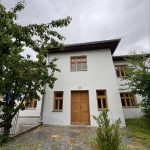
As part of the Follow Me Club initiative, Young European Ambassadors (YEAs) are visiting EU-funded projects across the region to witness first-hand how EU support is making a difference in local communities. During one of these visits, we had the chance to explore Janjevë/Janjevo, a small town in southeastern Kosovo that is currently undergoing a remarkable transformation.

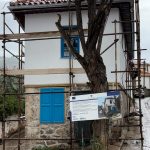
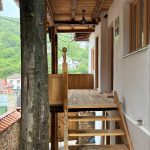
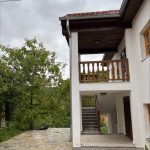
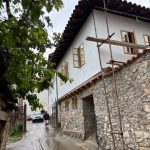
Funded by the European Union and implemented by the United Nations Development Programme (UNDP), the revitalization project in Janjevë/Janjevo focuses on restoring 14 historic houses in the town’s old center. But this is much more than a renovation effort- it’s a story of preserving cultural heritage while paving the way for economic growth and community development.

The restored buildings are being repurposed into guesthouses, restaurants, and venues to showcase local crafts and products. This new infrastructure is laying the foundation for Janjevë/Janjevo to grow into a vibrant tourist destination, attracting visitors while keeping the benefits within the community.

At the heart of this project are the people of Janjevë/Janjevo. Local residents are being trained in traditional crafts and supported in starting small businesses, ensuring that tourism generates sustainable livelihoods. The project also honors the town’s multiethnic heritage, including the rich history of the Croatian families who once lived here, making cultural preservation a central pillar of the revitalization.

Beyond economic and cultural aspects, the initiative includes a wide range of community activities. Social and cultural events, workshops for children, and creative programs are helping to foster inclusion, bring generations together, and strengthen the sense of belonging among residents.

The town’s transformation is also supported by much-needed infrastructure improvements, such as modernizing the electric grid and installing energy-efficient street lighting—contributing to a more sustainable and resilient future for the community.

Janjevë/Janjevo stands as a powerful example of how cultural heritage, economic opportunity, and community engagement can work hand in hand to create lasting change. Thanks to the support of the European Union and the dedication of local people, this small town is finding new life and new possibilities, for generations to come.

Facts Come First: Fighting disinformation in the Western Balkans

The institutions of the European Union are firmly committed to combating disinformation, as it threatens democratic processes, reinforces authoritarian tendencies, and increases the influence of harmful foreign actors. For this very reason, the EU supports a range of projects and activities in its partner countries in the Western Balkans that strengthen the fight against disinformation.

As a result of bringing together various professionals engaged in tackling disinformation, WeBalkans organised a major regional workshop called the Facts Content Lab in Podgorica, Montenegro, from 10 to 13 June. Journalists, influencers, fact-checkers, content creators, producers, and Young European Ambassadors (YEA) gathered to discuss local disinformation issues and ways to overcome them.

“When reporting and trying to verify sources and claims, you become aware not only of the speed at which disinformation spreads, but also of the sheer volume of it in public discourse—and how deeply it shapes public opinion. Our task is not only to correct false information, but also to regain people’s trust, letter by letter, story by story,” said journalist Dejan Šajinović, Nezavisne novine.

Across the event, participants explored how to counter disinformation in fresh and impactful ways. Working in dynamic teams, they developed creative multimedia contents designed to resonate with audiences and promote credible, fact-based sources.

Today, people receive more information in a single day than they did in an entire lifetime a century ago. Some of it is accurate, some distorted, and some deliberately designed to mislead, confuse, or exhaust the consumer. Certain media outlets are intentionally set up to spread falsehoods, with the aim of undermining trust in all media. They are particularly frequent during election campaigns or times of political crisis. Furthermore, many media platforms carry sponsored content that closely resembles real journalism yet is not marked as paid content—even though it should be.

Only a person who is objectively informed can make sound and well-informed decisions. In this context, it is vitally important to strengthen media literacy—especially among the youngest and the oldest, who are particularly vulnerable to disinformation, manipulative influence, and scams.

“Fighting disinformation isn’t only about presenting facts—it’s about rebuilding trust. People need to believe not just in the accuracy of information, but in the integrity of those who share it. Trust is the bridge between truth and understanding, and without it, facts can fall on deaf ears.” – said Ioana Avadani a media expert from Romania that moderated the Facts Content Lab in Podgorica.

In addition to the recent launch of the WeBalkans Disinformation Campaign, the Young European Ambassadors have also been active over the past two years, organising 27 media literacy workshops across the Western Balkans and reaching over 300 future media literacy educators.

“The idea is that participants of these workshops across all Western Balkan countries become media literacy educators for young people aged 13 to 16. A new round of workshops is currently being prepared, and all new members of the Young European Ambassadors network will receive training,” announces Armin Poljak from the network.

To help address this issue, the European Commission in 2024—ahead of the European Parliament elections—developed educational materials to help individuals build resilience to information manipulation

That same year, the Association JaBiHEU, which brings together Young Ambassadors for Freedom of Expression from across Bosnia and Herzegovina, in cooperation with World University Service Austria (WUS) and with financial support from the European Union, created the Freedom of Expression Guide which also provides basic guidelines for recognising disinformation.

“It is extremely important for young people—and indeed for all generations—to learn how to identify false information, especially in the Balkans. It’s essential to critically evaluate media, bearing in mind that they are profit-driven and aim to generate revenue, clicks, likes, and shares on social media—before they even consider delivering information in a responsible way,” said Ivan Subotić, a fact-checker from Belgrade, during a regional workshop for activists within the Regional Youth Dialogue for Europe project, funded by the European Union.

To begin with, anyone who suspects they are being exposed to disinformation should stay curious and continually ask themselves: Is what I’m reading or watching true? Why was it published? Who stands to benefit from this information? Is the content based on facts or just opinions? Are sources cited? Has any other outlet reported the same story? Does this content allow me to draw my own conclusions, or is it telling me what to think? Is the publisher’s imprint (impressum) clear—who owns the outlet, and do they have other businesses besides media?

Media literacy requires constant questioning—especially in an age of AI-generated algorithms and increasingly sophisticated disinformation tactics.

To learn more about the WeBalkans Disinformation Campaign, visit the dedicated web page where you can find useful information on how to combat disinformation narratives.

Disinformation gets clicks, facts build trust

Podgorica, 13 June 2025:  “We came long way from Economy of money to Economy of information, than to Economy of attention down to Economy of emotions. Today we have Economy of trust. The key shift is no longer asking “Is it true?” but “Do I trust the source?”—a question that demands we build critical thinking, digital literacy, communication, collaboration, empathy, and compassion”.  With this words Ioana Avadani a media expert from Romania opened  Facts Content Lab  in Podgorica, that is taking place as a part of DG ENEST WeBalkans media literacy campaign “Facts Come First”.   

The Lab offered a rare opportunity for journalists, influencers, fact-checkers, and content creators from across the Western Balkans to come together and share local perspectives on disinformation. They explored how this phenomenon affects everyday life in the region and highlighted the importance of factual accuracy, critical thinking, and informed civic participation. 

 “Disinformation isn’t merely about spreading falsehoods, it’s about controlling public discourse and undermining democratic values. Countering disinformation protects democracy, promotes informed decision-making, and ultimately leads to stronger, media-literate societies,” said Raluca Costache, Team leader of WeBalkans Programme and added “Through the Facts Come First campaign, we emphasize that disinformation thrives on confusion and facts bring clarity. A fact based perspective on EU accession allows citizens of the Western Balkans to critically assess information and reject false narratives.” 

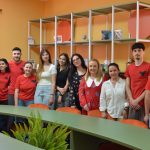
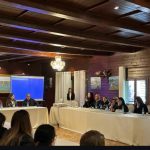
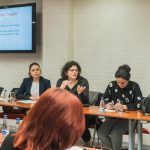
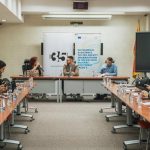
All participants

A key thematic focus of the Lab was the debunking of common misconceptions about EU accession. Participants discussed how content creators, especially journalists can unpack false narratives and offer audiences of both, EU Member States and the Western Balkans a clearer understanding of the EU accession process.  

Also, one of the most interesting segment was projecting the “future of truth”. Participants explored what might impact the truth in 2040. AI-generated news emerged as both, a challenge and a lens through which the role of humans was reasserted. And it was concluded- AI may assist, but human empathy will lead, because people will always need people.  

When reporting and trying to verify sources and claims, you become aware not only of the speed at which disinformation spreads, but also of the sheer volume of it in public discourse—and how deeply it shapes public opinion. Our task is not only to correct false information, but also to regain people’s trust, letter by letter, story by story,” said journalist Dejan Šajinović, Nezavisne novine  

Across the event, participants explored how to counter disinformation in fresh and impactful ways. Working in dynamic teams, they developed creative multimedia contents designed to resonate with audiences and promote credible, fact-based sources. 

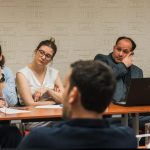
Discussion

“As an influencer, I believe it’s most important to remain true to who I am in real life. I’m not just someone who talks about books—I use my platform to share real opinion and contribute to meaningful conversations in Albanian society, always verifying sources and checking facts. Just like with book reviews—you can’t talk about a book by telling a different story. On social media, honesty should be your goal if you want to build a long-term relation with audience that truly trusts you,” said Xhorxhina Roci, an influencer.. 

In addition to AI-driven disinformation the participants examined persuasive techniques, biased reporting, and native advertising, which increasingly blur the line between information and manipulation.  

In that context the importance of fact checking was highlighted as a process that is not  just about catching falsehoods—it’s about slowing down the hype in public space so truth has time to catch up. In a sea of viral content, the role of fact checkers  is to bring evidence back into focus.  

The Lab also underlines the need for creating better conditions for strengthening independent and professional media environment. Through support for media integrity, fact-checking initiatives, and media independence, the EU seeks to reinforce public trust in credible journalism across the Western Balkans. 

Fact Content Lab

“Fighting disinformation isn’t only about presenting facts—it’s about rebuilding trust. People need to believe not just in the accuracy of information, but in the integrity of those who share it. Trust is the bridge between truth and understanding, and without it, facts can fall on deaf ears.” – said Avadani  

Three intensive days of production resulted in content ready for publication: videos, reels, articles, and social media stories that reflect not only the views of journalists, influencers, fact-checkers, and content creators on the topic of disinformation, but also the way they would communicate about it with their audiences. 

For more information, visit the web page of the Disinformation Campaign

A Place Where Children Find Safety and Support

By Young European Ambassadors Serbia

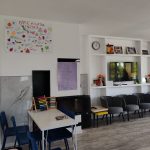
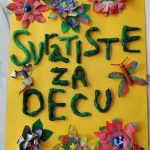
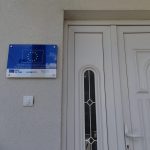
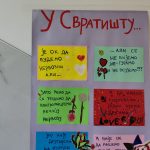
Recently, as part of the Young European Ambassadors (YEA) Follow Me Club, we visited one of the newly renovated children’s shelters in Belgrade ‘Svratište za decu’ whose transformation was made possible thanks to EU funding and implemented by the United Nations Office for Project Services (UNOPS). This visit, part of a broader initiative to explore EU-supported projects in Serbia, left a deep impression on us.

A Shelter That Feels Like Home

From the moment we entered, it was clear that this shelter is more than a temporary refuge. Children come here whenever they need to, to rest, to shower, to eat, or simply to feel safe. Some were relaxing and watching TV when we arrived, while others were preparing for their upcoming high school entrance exams, studying in the calm atmosphere created by the staff. It was heartwarming to see how naturally the children felt at home.

What truly stood out to us was the presence of trained professionals who are always there to support the kids, whether emotionally, educationally, or socially. The shelter doesn’t just offer help; it offers care and structure. Children are treated with dignity, and their individuality is respected.

New Resources That Make a Difference

While walking outside, we noticed something new: a white minivan parked by the house. The staff explained that the van is used to take children to workshops, educational events, and social outings. This is a big change from before, when such transport wasn’t available. It might seem like a small thing, but having reliable transportation opens up a world of experiences for the kids, giving them a chance to explore beyond the shelter.

How You Can Help

What we saw during our visit reminded us of something simple but essential: every child deserves safety, support, and a chance to grow. This shelter provides exactly that, and it does so with the help of people who care.

The shelter is not just a place of rest; it’s also a place of growth. Through a volunteer program, people from the community can apply to hold classes and workshops for the children. These activities range from creative arts to school tutoring, offering the kids new opportunities to learn and connect. It’s a simple but powerful way to help, and anyone with a skill or some time to give can join. This openness makes the shelter not only a place of safety but a space of possibility.

You don’t have to be part of a large organization to make a difference. Whether by volunteering your time, donating resources, or just spreading the word, your help can mean the world to a child.

This shelter is just one of many, but its story shows what is possible when people come together for a good cause. We’re grateful we had the chance to witness it firsthand, and we hope more of you will join in supporting places like this.

Let’s keep building spaces where every child feels they belong.

WeBalkans Photo Exhibition’s travel starts from Belgrade

Belgrade, 10 June, 2025: The Europe House in Belgrade hosted the first WeBalkans Regional Youth Photo Contest exhibition, featuring 18 selected photographs from a pool of 183 submissions by young people across the Western Balkans. The exhibition is a part of DG ENEST WeBalkans public campaign Ready. Steady. Our Europe.

As Belgrade marks the start of the regional tour, the exhibition will continue on to Podgorica, Tirana, Skopje, Maglaj, Pristina, and Struga between June and August 2025. The exhibitions will be held in Europe Houses, public spaces and cultural centres, providing visibility to young talents and sparking dialogue around sport, youth, and shared values.

We want young people to be at the very foundation of the European path, not as observers but as active participants in building a Europe that is peaceful, united, and open to all who share its values.Today, we are especially proud to congratulate three young women from Serbia whose photographs are among the 18 selected for this regional exhibition.”, said Plamena Halacheva, Deputy Head of the EU Delegation to Serbia.

WeBalkans Exhibition

When we discussed with our network what unites us across Europe, we realized it is the values that sport carries—unity, effort, hard work, defeat, learning from defeat, the path to victory, and teamwork. We are sending a clear message that the process is what matters, not necessarily the victory”, added Selena Tasic, Public Diplomacy Manager of the WeBalkans project.

WeBalkans Exhibition

A jury of six prominent photographers, vloggers, and media professionals from the Western Balkans had the challenging task of selecting the top entries.

Sport is definitely what connects young people. It allows them to travel, to work, to create, and to be recognized globally. WeBalkans shows what young people are capable of.“, said jury member Aleksandar Krstanović, sport journalist, campaign jury member.

The Belgrade event brought together more than 50 young participants, EU representatives, influencers, and media professionals. Besides the EU Ambassador to Serbia, the speakers included Dušan Simonović, Young European Ambassador; professional basketball player and winner of FIBA 3×3 Champions Cup 2025, Nenad Nerandžić; and world champions in table tennis Bogdan Marojević and Nikola Mitro.

WeBalkans Exhibition

I think it’s a great thing that the European Union supports activities like these within the field of sports in the region, and I look forward to seeing more projects of this kind.” said Nenad Nerandžić.

“It is important that the European Union encourages young people to engage in sports and to promote true values.” added Bogdan Marojević.

The audience was also addressed by one of the winning photographers from Serbia, Vida Jović, who said: My photograph came about completely by chance—a moment when everything just fell into place. It was taken a few years ago, without preparation or equipment; it was simply a special moment. Teamwork in sports is uniquely powerful, and I’m glad that this is visible in all the photographs.”

The photo journey will culminate in an online public vote, set to take place in August on webalkans.eu where audiences will be invited to select their favorite images. The top six winning photographers (one per Albania, Bosnia and Herzegovina, Kosovo, Montenegro, North Macedonia and Serbia) will be awarded a trip to an EU capital—a symbolic step on their journey toward Europe.