Author: WeBalkans

From Classroom Dreams to Real Impact: Our Visit to “Vladimir Nazor” School in Podgorica

By Marija Blažević and Selda Jahjagić, Young European Ambassadors, Montenegro

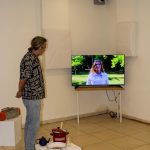
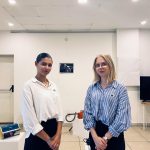
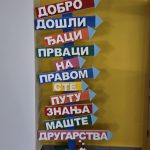
As Young European Ambassadors (YEAs), we often talk about the importance of education, youth empowerment, and the positive role the EU plays in the Western Balkans. But sometimes, we get to experience it all firsthand, and that’s exactly what happened during our recent visit to the newly built “Vladimir Nazor” Primary School in Podgorica, Montenegro.

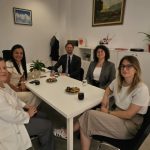
As part of the Follow-Me Club, we had the opportunity to explore this beautiful school, which was built with support from the European Union through the European Investment Bank (EIB). We were joined by Mr. Damien Sorrell, Head of the EIB Regional Representation to the Western Balkans, whose presence added a special significance to the visit.

From the moment we arrived, we felt incredibly welcomed. Ms. Ljiljana Marković, the school’s director, greeted us with warmth and pride, showing us around the new facilities. With nearly 1,000 pupils, the school now offers bright, modern classrooms and vibrant learning spaces – the kind of environment that inspires both students and teachers every single day. Walking through the halls, we could truly feel the energy of possibility and the promise of future success.

One of the highlights for us was spending time with the students. We talked about our roles as YEAs and shared what it means to be active in our communities and take initiative. The conversations were honest, lively, and full of dreams – from future astronauts and scientists to young artists and athletes. It was inspiring to hear how these young people see their future and how much they value education.

Mr. Sorrell also joined the discussions and reflected on how meaningful it is to witness EU-supported projects in action. Seeing happy, engaged students and dedicated teachers reminded us all of the real impact that cooperation and investment can have, not just on buildings, but on people’s lives.

For us, this wasn’t just a school visit. It was a moment to connect, to listen, and to celebrate how far we’ve come – and how much further we can go when young people are given the space and support to thrive. Education is more than lessons and textbooks. It’s about building futures, shaping leaders, and creating a better tomorrow.

We left “Vladimir Nazor” School with full hearts and renewed motivation to keep working toward a future where every young person in the Western Balkans has the chance to grow, learn, and dream big — in classrooms just like this one.

Empowering Youth Voices: My Journey as a Young European Ambassador at EYE2025

 By Vuk Stanojev, Young European Ambassador, Serbia Do you know that feeling when you want to be somewhere where you can experience something special that happens every two years, something that is considered the biggest event for young people in Europe? Well, I just did!  Hi, my name is Vuk, and I was part of the European Youth Event that happened in Strasbourg, France, from the 12th to the 14th of June 2025, with over 9,000 participants from all over Europe. 

What is so special about this event?

If we don’t consider the number of young people in the same place eager to speak, discuss and reshape Europe, then be ready to be amazed even more. This event is held every two years in Strasbourg, and this year it was the sixth edition, which hosted an estimated 8,000 to 10,000 young people in person. All the participants were aged 16 to 30 representing around 160 different nationalities across the EU and beyond. This is the way to make sure all are included, so you can imagine massive participation in more than 450 in-person activities like panels, interactive workshops, quizzes, tours, networking opportunities, and artistic performances. Every activity happened right in the European Parliament, where, besides taking part in the activities, you could roam around Parliament and see for yourself how magnificent it looks both inside and out. Beyond activities in the European Parliament, you also had the opportunity to participate in the dedicated EYE Village, where, at the end of the day, people were enjoying different local performances at the EYE concert. Unfortunately, not all people had the opportunity to come, but even then there was an opportunity to be part of the event online, where it was estimated that there were 1,000 people following talks livestreamed from the Hemicycle. 

From the airport directly to the European Court of Human Rights

Who says you can’t be active after a long travel morning? Right after we stepped foot in Strasbourg, we already had the security check at the Human Rights Building. We heard a presentation from one of the lawyers at the Court’s Registry on the role and work of the Court. Do you know what kind of cases go before the Court? Who are the applicants? As of the end of 2024, the European Court of Human Rights had over 60,000 applications pending before it! While this number had decreased from previous years, it still shows the immense volume of human rights complaints it handles.   After the Court, we headed straight to the Delegation of the European Union to the Council of Europe, where we discussed EU enlargement with the exchange of thoughts on the topic. Speakers on this panel discussion were Ms Vesna Kos, Ambassador of the EU to the Council of Europe; Mr Claus Neukirch, Director of Programme Co-ordination of the Council of Europe; and Mr Cristian Urse, Deputy to the Director of Political Affairs and External Relations at the Council of Europe. After a fruitful discussion on the promotion of human rights, democracy and the rule of law in the context of EU enlargement, we had the opportunity to talk about protecting media freedom and combating foreign information, manipulation and interference (FIMI) with Mr Tobias Flessenkemper, Head of the Youth Department at the Council of Europe; Ms Katarzyna Sumislawska, Policy Officer and Lead on Awareness-raising on FIMI and Disinformation in the Strategic Communication Division of the European External Action Service; and Ms Elena Brodeala, Member of the Steering Committee on Media and Information Society (CDMSI)’s Secretariat at the Council of Europe.

What did Young European Ambassadors do at the EYE?

I myself was one of the six inspiring young people representing the network of Young European Ambassadors from the Western Balkans at EYE2025. I am from Novi Sad, Serbia, and this was my first time participating in the event with so many inspiring and active participants. My role here was to support my fellow YEAs on the panel “The role of youth in EU enlargement: What’s at stake?” and participate in one of the 6 slots for the presentation of the “Made of Us” campaign. I was also involved in the “Youth Advisory Masterclass: learn from the YEAs”, where I spoke about my experience as a communicator and activist.  The panel we had as an activity was organised by YEAs and YEAs East. Through our joint efforts, we aimed to share the insights into the EU enlargement process and what the challenges and opportunities for young people in these countries are.  YEA from WB who participated in this panel are Olta Shehu from Albania, Danilo Bulatović from Montenegro and Hana Kulić from Bosnia and Herzegovina. What are your thoughts on the process of EU enlargement? Are you familiar with the accession process or the role of youth in shaping it? Next activity that we all participate in some way is “Made of Us – WB Roadtrip”, where people could get more information about the campaign itself. This campaign showcased how youth influencers from the WB and the EU had the opportunity to travel across the Western Balkans with the aim of showcasing cultural heritage, sustainable initiatives and shared values that are connecting all of us across Europe. Participants had the opportunity to hear about this story as many as 6 times over the 2 days at the EYE! Together with Gresa, we opened one of the workshops with a short quiz about the Western Balkans.  Finally, our Youth Advisory Masterclass, which was a hands-on workshop led by YEAs. This masterclass had the aim to equip participants with knowledge to enhance their skills for youth advisory, advocacy, policy dialogue and youth participation in decision-making processes. Speakers on this masterclass were Katarina Marinković, Gresa Boshtraj and myself, Vuk Stanojev. One of the perks for participants was the real-life examples of interactive activities they learned about and how they can influence policies and drive change in their local communities. I personally shared my journey as an activist at the local level and communicator as YEA with practicalities on how to advocate for young people in your community and beyond. What you could hear from me are:
  • the importance of authenticity and personal stories in direct communication with youth audiences, as your narration needs to resonate with both them and you. 
  •  the importance of understanding that there are differences in communication styles and platforms to reach diverse groups of young people.
  • that active listening is the key for understand the needs and concerns of young people
  • that collaboration and co-creation with your peers is positive thing for a more effective communication strategy.

Conclusion

Overall, my participation in EYE2025 was a nice experience, engaging with high-level officials on EU enlargement and media freedom to co-lead sessions like the “Made of Us” campaign and Youth Advisory Masterclass, which was incredible. This showed me that youth voices must be heard, and they are essential for shaping the future of Europe.  Find your platform, start locally, and build up to the European level; make your voice heard. Every small step you take counts; whether you contribute small things on the local level or make a big step for the better future of Europe, all of them are meaningful drives for change. 

Embracing Innovation, Diversity, and Community at Social Hackathon Umbria 2025

By Emina Balota, Young European Ambassador, Montenegro

This July, from 3 to 6 July, I had the privilege of participating in Social Hackathon Umbria 2025 (SHU2025) in Spello, Italy, as a Young European Ambassador (YEA).

It became one of the most enriching and intense experiences of my year. Our accommodation in Spello was beautiful, and the locals were incredibly kind and welcoming, which made the entire experience even more special.

SHU2025 gathered over 400 participants from 24 countries across different continents, transforming the medieval village of Spello into a living lab of social innovation, youth energy, and community spirit.

Spello: A Village Transformed by Ideas

Walking through Spello’s flower-filled alleys, cobbled streets, and historic gates each day, I felt inspired by how a small community can become a hub for youth-led innovation. Thanks to SHU’s community-based approach, our meal vouchers allowed us to explore Spello’s local trattorias, directly supporting local businesses while immersing ourselves in Umbrian culture through intense hackathon activities.

A Rich, Dynamic Agenda
SHU2025 was not just a hackathon; it was a four-day ecosystem of learning, creating, and connecting, with a packed and diverse agenda:
D-Village Learning Labs:
Coding for girls, VR escape rooms, 3D printing, drone piloting, digital journalism, and robotics workshops, providing hands-on digital skill development for young participants.
Young people of all ages explored how to use technology creatively and responsibly.

SHU Young Makers Programme:
Participants aged 16–30 designed, prototyped, and pitched solutions for social challenges, guided by mentors and facilitators, including myself.
It was inspiring to see projects addressing environmental sustainability, accessibility, digital inclusion, and heritage protection come to life.

Cultural Integration Activities:
Unmasking Parade in Spello’s main square, celebrating cultural diversity with colours, music, and local residents joining in.
A multicultural welcome aperitivo at the Biblioteca Comunale square.
Open-air cinema under the stars with a documentary on youth social impact stories.
Yoga and morning hikes in the olive groves to start the days with calm energy.

Evening Networking and Celebrations:
A lively SHU2025 party at Villa Fidelia gardens with music and intercultural dance.
Informal networking dinners with local and international changemakers.
The SHU Awards Night at Ca’Rapillo, where teams pitched their solutions and celebrated their accomplishments.

Workshops and Talks:
Pitching masterclasses, social impact funding sessions, and design thinking workshops for youth innovators.
Panel discussions on digital literacy, youth mobility, and community building in rural areas.

Community Engagement:
SHU2025 engaged Spello’s local community, with residents participating in open labs and parents bringing children to explore technology in a safe and inclusive environment.

The Power of Diversity and Collaboration

SHU2025 was a living example of diversity in action. Participants came from Kenya, Benin, Brazil, France, Italy, and the Western Balkans, bringing their perspectives and cultural experiences to every conversation.

Despite language and background differences, we were united by a shared goal: using technology and creativity to build solutions for a more inclusive, sustainable society. Working late into the evenings with young participants, mentoring their pitch decks, and helping refine their ideas reminded me how empowered youth are unstoppable changemakers when given space and guidance.

A Space for Learning and Inspiration
Through the D-Village and hackathon, young people learned:
– How to design user-friendly digital tools for community challenges.
– How to pitch confidently in front of diverse audiences.
– How to collaborate across cultures and backgrounds.
– The importance of community-driven innovation.
It was moving to see young participants confidently demo their VR solutions or eco-friendly apps they had designed in just 48 hours, sharing their passion for impact.

 Gratitude
A huge thank you to the entire SHU2025 team for creating such a welcoming, dynamic, and joyful environment. Your commitment to empowering youth, supporting learning, and making innovation accessible is deeply inspiring.

As a Young European Ambassador, SHU2025 reinforced my commitment to youth mobility, digital skill-building, and fostering cross-cultural cooperation to create a more connected, resilient Europe and neighbourhood region.

Final Reflections
SHU2025 was much more than a hackathon. It was a celebration of community, creativity, and collective action, proving that even in a small village, big ideas can thrive when people come together.
For all young changemakers:
– Seek spaces like SHU.
– Dare to bring your ideas to life.
– Trust in collaboration, creativity, and your power to shape your communities.
If you ever get the chance to participate in SHU, take it! It is an experience that will leave you energised, connected, and ready to continue creating positive change.

Follow me Club: YEAs Experience Digital Innovation at INNOFEIT EDIH in Skopje

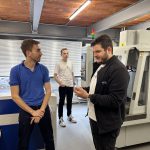
By Stefan Atanasovski Trajkovic   The Follow me Club recently had the chance to step into the heart of digital innovation in North Macedonia. As Young European Ambassadors, we visited INNOFEIT EDIH (European Digital Innovation Hub) at the Faculty of Electrical Engineering and Information Technologies (FEIT) in Skopje in May 2025. This visit gave us a close-up look at how one of the country’s most forward-looking initiatives is helping businesses and public institutions improve through digital tools. INNOFEIT EDIH is the first of its kind in North Macedonia, and it supports companies and public services as they explore and adopt technologies like artificial intelligence, automation, and data analytics. To share this experience with others, we also created a short social media reel during the visit to showcase how the EU is actively supporting innovation in our region. A Hands-On Look at Europe’s Digital Innovation Network INNOFEIT EDIH officially opened in early 2025 and is now part of a larger EU-funded network of European Digital Innovation Hubs. This network exists to support the digital transformation of small and medium enterprises (SMEs) and public services across Europe. What makes this hub important is that it brings access to high-level technologies right to our doorstep. We’re talking about real tools like cybersecurity systems, smart sensors, computer vision, and even digital twin technology, not just abstract concepts. While walking through the center, we learned how the hub provides Test Before Investservices, meaning companies can try out technologies in a safe and supported environment before deciding to invest in them. Alongside this, the hub offers technical advice, training, and help with finding financing for innovation. What really stood out to us was how the hub tailors its work to fit the needs of local industries. It focuses on key sectors from North Macedonia’s Smart Specialization Strategy, including smart agriculture and food processing, modern construction materials, advanced manufacturing, and energy solutions. It helped us see how EU support can connect global innovation with local challenges. Connecting the Western Balkans to Europe’s Digital Future INNOFEIT EDIH is part of a broader vision for the Western Balkans. Through the EU’s Growth Plan and Digital Europe Programme, seven EDIHs have been launched across five Western Balkan countries, with over €5.6 million in funding to support these hubs. They’re not just offices with tech – they’re one-stop shops where businesses and institutions can learn, grow, and connect to a wider European network. These hubs make support available in local languages and share best practices across countries. During our visit, we saw how INNOFEIT EDIH is also working to close the digital skills gap, which affects many people in our region. The hub offers practical training programs for everyone from students to professionals, covering everything from basic digital tools to advanced skills like AI and cybersecurity.

Why This Visit Matters to Us

This visit reminded us that the EU’s support isn’t just about policies or funding — it’s about creating real opportunities for people in our countries. At INNOFEIT EDIH, we saw how cooperation between the EU and the Western Balkans is turning ideas into action. The hub is not only building technical capacity – it’s building confidence and opening doors for the next generation of innovators. We want young people across the Western Balkans to know that these kinds of projects are meant for them too. Whether you’re into tech, entrepreneurship, public service, or just want to build your digital skills – places like INNOFEIT EDIH are here to help. To get a feel for what we experienced, check out the reel we created during our visit. And stay tuned as we continue exploring how EU-supported projects are shaping our region’s future, one innovation at a time.

The New Theatre Market bringing together practitioners from the region

Six open calls aimed at different theatre and cultural practitioners mark the full-force emergence of The New Theatre Market (NTM) project in the region’s cultural scene.    The Industry Pitch, Theatre Market, Showcase, Industry Professionals, and Residencies for Critics and Producers as well as Directors, are all open calls that are part of a joint initiative of SARTR from Bosnia and Herzegovina, Heartefact from Serbia, Ulysses Theatre from Croatia, Binario Vivo from Italy, Para Film & Teater from Norway and Real Stage from Bosnia and Herzegovina, with the goal to position Southeast European theater on the international stage while promoting innovation, sustainability, and diversity in the industry.  Heartefact’s Andrej Nosov says that STS is an important bridge that connects the region but also encourages all of us to collaborate and network. “Here in the Balkans, we are constantly positioned on the periphery of Europe—this is yet another opportunity to engage in dialogue with the centers, both internally and outward toward the world,” he continues, stating that a platform like STS is important especially for theatre, looking at how budgets shrink and civic space narrows. “STS is like therapy in a long-term healing process,” Nosov says, “We speak different languages, face similar challenges, and deeply believe that our own problem is the greatest. This is an ideal opportunity to hear and see others.”    The New Theatre Market (NTM) aims to create a platform for co-production, talent development, and promotion of sustainable practices in the theater industry across Southeast Europe. The project will take place over two years, primarily based in Sarajevo, with additional activities in other partner countries. It aims to position Southeast European theater on the international stage while promoting innovation, sustainability, and diversity in the industry.    “While reflecting on the potential for a joint project involving both the region and European theatre professionals, we raised a series of questions about the underrepresented Balkan theatre, which remains largely unrecognized and unacknowledged within the broader European context. We believe that STS will primarily serve as a platform for connecting theatre workers and artists. It will enhance visibility and offer our colleagues from Europe and beyond valuable insight into our work, poetics, and production challenges. Advancing theatre art and all of its segments also means strengthening institutions, independent productions, authors, and all other professionals—moving toward more open, high-quality, and contemporary expressions. The opportunity for all of us to speak in one place and exchange experiences is the most valuable resource artists can have. By sharing knowledge with colleagues, respecting diverse perspectives, and keeping up with current developments, we contribute to building a healthier and more stable theatre environment,” says Maja Salkić Burazerović, when speaking about the situation that made the conceiving of this initiative an urgency.   Increased co-productions and international collaborations, enhanced skills and visibility for Southeast European theater professionals, improved sustainability practices in theater production, strengthened networks between artists, institutions and decision makers; new business models and funding opportunities for the theater sector are what the six project partners are aiming to achieve through various programs of the project.  Most of the project’s programs center in and around the Sarajevo Theatre Showcase, which is an annual theater industry event held during the second week of September, providing a vital platform for theater professionals from Southeast Europe. The showcase will foster international collaboration and consequently empower the regional theater sector, thus serving both as a networking hub and a catalyst for innovative, environmentally responsible theater-making.   The Sarajevo Theatre Showcase this year will take place between September 12-14 in Sarajevo and will feature several programs, which are the pillars of The New Theatre Market Project.   The Theatre Market  In this platform, through pre-arranged one-on-one meetings, theater makers will have the chance to connect with potential partners and co-producers with the aim of fostering collaboration and opening new opportunities for Southeast European theater productions. The Theatre Market will be taking place from September 12 to 14. The open call for participation at the theater market can be found here 

Residency 

The residency program features an intensive five-day program in Sarajevo designed for thirty emerging theater professionals from Southeast Europe. Combining practical workshops, mentorship sessions, and networking opportunities, the residency enables participants to develop their skills, expand their networks, and explore new approaches to theater-making under the guidance of experienced international mentors. The Residency program will be taking place from the September 9 to 14. The open call for participation in the residency program (for critics and producers) can be found here, whereas the open call for participation in the residency program (for directors) can be found here   

Atelier Program 

The Atelier Program collaborative writers’ room, where selected playwrights work together on new plays on a year round basis, with the support of dedicated mentors. The call for participation in this program has been closed and the beneficiaries are already working on their plays that are going to be presented in the Sarajevo Theater Showcase taking place in Sarajevo from September 12 to 14.    

Showcase 

Up to ten recently produced theater productions from the region will be presented in front of a carefully selected audience of industry professionals. This part of the program connects theater makers with international programmers, festivals, and producers.The Showcase will be taking place from September 12 to 14. Theater companies and collectives from across the region can apply with their productions here, and a carefully selected committee will select the ten pieces that will be presented in Sarajevo.    

Stage Talks 

Key issues in contemporary theater, such as diversity in programming, sustainable production practices, audience development and international collaborations are some of the topics that will be discussed upon on the Stage Talks program that will take place on September 13 and 14.    

Green Lab 

The Green Lab program is a conference program exploring various issues in contemporary theatre making, bringing togetherindustry experts, practitioners, and decision-makers to share knowledge and shape the future of theater in Southeast Europe.   

Industry Pitch 

The Industry Pitch is a dynamic platform for emerging theater makers to present their projects to industry professionals in a focused format. This program highlights new voices in theater, with special attention to projects from underrepresented groups and with innovative approaches that address contemporary social and cultural challenges. The Industry Pitch program will be taking place on September 13 and 14 and the open call for participation in the industry pitch program can be found here 

Youth Voices for a Water-Resilient Future: Reflections from EXPOAPA2025

By Megi Marku

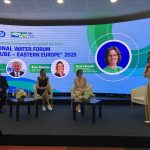
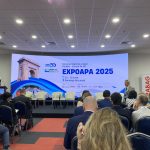
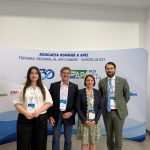
From June 23-25, 2025, I had the privilege of joining hundreds of experts, innovators, and decision-makers in Bucharest for EXPOAPA2025 and the Regional Water Forum “Danube – Eastern Europe.” Hosted at Romexpo, this gathering brought together over 100 exhibitors, national authorities, international organizations, and water sector professionals united by one mission: shaping a sustainable and resilient water future.

This wasn’t just another conference. It was a call to action and a powerful reminder that the future of water in Europe depends on inclusive, cross-generational collaboration.

Setting the Stage: Opening Day Insights

The event opened with remarks from Ilie Vlaicu, President of the Romanian Water Association, and a compelling keynote by Roxana Mînzatu, Executive Vice-President of the European Commission. Her message emphasized the EU’s support for innovation and sustainability within the sector.

A standout moment on Day 1 was the #Skills4Water session, which spotlighted the urgent need for education and capacity development in a sector undergoing green and digital transformation. Another key feature was the International Technical-Scientific Conference, where experts shared adaptive strategies to manage the impacts of climate change on water systems- a topic that deeply resonated with all participants, myself included.

Youth Perspectives at the Roundtable on Water Resilience

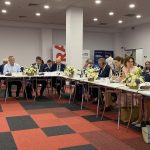
Day 2 marked a personal milestone: I participated in the high-level Roundtable on “Water Resilience in Eastern Europe”, chaired by European Commissioner Jessika Roswall. I joined an esteemed group of representatives from the European Water Association, IAWD, national water associations, academia, and private sector leaders.

The discussions revolved around the newly launched European Water Resilience Strategy (EWRS), a much-needed blueprint for restoring water cycles, ensuring access to clean water, preparing for disruptions, and building a water-smart economy.

As a youth delegate and co-author of the Youth Position Paper on EWRS, I had the honour of presenting youth perspectives on the Strategy. Our paper, developed in collaboration with young experts from EYWP and WYPW, was acknowledged by the European Commission during the consultation phase- an encouraging sign of institutional openness.

In my intervention, I strongly welcomed two new initiatives under the EWRS:

  • The European Water Academy (EWA), and

  • The upcoming Knowledge and Innovation Community (KIC) in Water.

However, I also made the case that these platforms must go beyond informing youth- they must actively engage young people in the planning, co-design, and implementation of solutions.

Financing Water Resilience: Investing in Youth Innovation

One critical aspect of water resilience is financing, and I was encouraged by the Strategy’s inclusion of the Water Resilience Investment Accelerator. Still, I urged decision-makers to create dedicated pathways for youth-led projects- a youth funding track that could help turn great ideas into scalable impact.

I also proposed three mechanisms to embed youth structurally within the governance of the EWRS:

  1. A Youth Water Advisory Board

  2. Reserved youth seats in governing structures like the Water Resilience Forum

  3. Regular youth consultations at EU and Member State levels, especially during key milestones like the 2027 mid-term review.

These steps would help ensure that youth are not just invited to the table—but have a real voice and role in shaping the future.

Final Day: Financing the Future of Water

The forum concluded with the International Workshop on “Water Sector Financing”, where experts from across Europe- Romania, the Netherlands, Portugal, Cyprus- shared lessons on investment readiness, integrated funding strategies, and long-term sustainability of the sector.

Looking Ahead

My time at EXPOAPA2025 reinforced a belief I hold dearly: young people are not just beneficiaries of future water systems, we are co-creators of them. The EWRS represents a turning point for Europe, and I’m proud that youth voices are helping shape its direction.

As we move from strategy to action, let’s ensure that the vision we build is inclusive, innovative, future-proof, and that youth remain at the heart of this transformation.

Navigating the AI-Generated Minefield

AI-generated disinformation and fake news – understanding the role of algorithms in media consumption and how AI shapes information exposure to improve digital literacy skills In the last few years, frequent internet and social media users have likely come across “street interview” videos, where content creators pose lighthearted, humorous, or thought-provoking questions to random passersby. However, have you seen this new video of a street interview of medieval peasants and people about their daily lives?
We showed this video to people in Podgorica, Montenegro and asked them their thoughts about it. One of them, Antonella Balic, commented: “I would recognize it [the video above] is AI generated – it is good for cartoons, movies, for fun. But if it is for real people, speeches, etc, it might be controversial” How did this video make you feel? Did you find it funny? Because it certainly is. However, there is a darker side to this type of content. With the rise of AI-generated videos, some people have been impersonating doctors and medical experts to endorse unlicensed or fraudulent health products, real people about current political events, fake videos of politicians and world leaders engaged in embarrassing, illegal, or controversial acts and many more examples. And this has been happening all over the Western Balkan region. For example, in Albania, the fact-check organization Faktoje reviewed a video which depicts an impossibly large snake swimming on the surface of a large river, all while it is recorded from a helicopter. While some might find it amusing, others might get scared. But, as the reviewers from Faktoje show, it is fake. In neighboring North Macedonia, people have used real footage of a famous doctor Zhan Mitrev, and make a deep-fake of him as he is promoting a herbal tea that is supposedly banned by the country.  As it is noted in this report by the fact-checking organization Truthmeter, it is fake. You can see the video here:
Across the border, a member of the Serbian Parliament posted an AI generated photo on X, showing student protesters on their way to Strasbourg eating food under the Croatian flag. It’s obvious that it is AI generated photo, Raskrinkavanje finds. AI-generated videos and images are often deleted rapidly, complicating fact-checkers’ efforts to archive them as evidence. This ephemerality, combined with swift reposting in altered forms, undermines systematic tracking and allows disinformation to persist across platforms, evading accountability and amplifying its spread before verification occurs. A fact-checker from Montenegro, Nina Đuranović (Raskrinkavanje.me), said that in an era where the boundary between genuine human expression and machine-generated content is increasingly blurred, the ability to discern fabricated material has become essential to safeguarding both the autonomy of human thought and the integrity of informed decision-making. “As algorithms have a growing influence over public discourse, the irresponsible deployment of AI technologies poses a profound risk — from the insidious proliferation of disinformation to the gradual erosion of democratic principles”, she said. She added that concrete examples, such as those documented by the fact-checking organization she is a part of, underscore this concern: when the average internet user encounters a video purporting to show Russian aircraft destroyed by Ukrainian forces, footage of a vessel allegedly discharging sewage into the sea, or an image depicting world leaders engaged in implausible physical gestures, their understanding of reality can be subtly — yet significantly — distorted, shaping opinions and reinforcing false narratives. Similarly, another fact-checker from Kosovo, Hyrije Mehmeti (Hibrid.info), explained why is important to recognize AI-generated content: “It is essential for maintaining trust, transparency, and accountability in digital communication. And as AI tools become more advanced, distinguishing between human and machine-produced content helps audiences critically assess the source, intent, and credibility of information”. She said the consequences of using AI-generated content without disclosure include the spread of misinformation, loss of public trust in media and institutions, and potential manipulation of public opinion. “Furthermore, in academic and journalistic contexts, it also raises ethical concerns regarding authorship, originality, and intellectual honesty”, said Mehmeti. Media and digital literacy have become more critical than ever as AI-generated models grow increasingly sophisticated and difficult to distinguish from authentic content with the naked eye. If fake content is nearly impossible to detect, bad actors can exploit it for their own agendas — potentially undermining political processes and even threatening the foundations of democracy. To protect ourselves from AI-generated disinformation, we must remain vigilant and always double-check suspicious content. Consult tech-savvy friends, family, or fact-checking organizations—and review comment sections for additional context. Before sharing, pause and verify: check before you share to help stop the spread of fake news.   AUTHORS Geri Emiri, Journalist Dallandyshe Xhaferri, Journalist Matej Trojachanec, Fact checker Biljana Matijašević, Journalist Naida Odobašić, Young European Ambassador

Is your decision really yours? The subtle power of Native Advertising

“Is my decision truly mine? Only mine?” This may soon become one of the most pressing questions we ask ourselves. In an age when psychological and digital manipulation are more sophisticated than ever, many of us are being gently steered toward choices we believe are our own—when, in fact, someone else has made them for us. The tool of the trade? So-called native advertising.

When Ads Don’t Look Like Ads

Take, for instance, readers of the prestigious The New York Times. While browsing its website, many users unknowingly wandered into a sponsored content section, seamlessly integrated into the platform’s editorial layout. What they encountered appeared to be a heartfelt article on bird conservation and the vital role birds play in preserving our environment. It was well-crafted, visually pleasing, and supported by subtle background music and charming animations of birds fluttering about.   Only toward the end of the article does the reader discover the brand name “AllBirds”—a shoe company whose name conveniently contains the word “bird.” But by then, the promotional intent is so gently embedded that the reader doesn’t feel targeted. There’s no flashy call-to-action, no “Buy Now” button—just an aftertaste of environmental consciousness linked to a brand. The hope is that this emotional and sensory imprint might lead to a purchase later—perhaps when the reader notices they have landed on a retail site or reflects on how their consumer choice could help “Mother Earth.” The president of the Center for Independent Journalism in Bucharest, Ioana Avadani, believes the major danger of this kind of advertising is the fact that it is hidden. “Advertising is a legitimate way of communicating information. Commercial information is legitimate information—people must know what they are buying. But hidden advertising is problematic. Hidden advertising pretends to be news, and instead of presenting options, it presents something like a recommendation. The fact is hidden advertising is dishonest. And that is the major danger,” Avadani says.

Subtle Costs, Powerful Impact

Native advertising is not cheap. Brands pay premium dollar not only for visibility in respected outlets but also for a nuanced, non-intrusive presentation. The goal is clear: to blend in so well with editorial content that the viewers do not realize they are being sold to. These ads are engineered to avoid disrupting the user experience. They match the tone, style, and format of the hosting platform. They appear within a user’s feed, fitting in naturally with surrounding articles or videos—avoiding the “ad fatigue” that traditional banners often cause. And even if marked “paid post”, their strictly commercial intent flies under the radar. And that is exactly the point.   What Happens When This Technique Moves to Politics? Marketers who craft such campaigns might argue that “positive manipulation” is acceptable—after all, no one was forced to buy shoes. But what happens when the same tactics are applied to political decisions? What if we are nudged not toward eco-friendly sneakers, but toward certain candidates in elections? What if we are subtly led to believe in one version of societal values over another, without realizing we have been influenced? “There is an underlying danger because if one technology is used for commercial purposes, it may later be used for political purposes. So, the same way you get hidden advertising for shoes or clothes or food… you may get hidden advertising—or native advertising—in politics. And once again, instead of presenting you with open options and letting you, as a voter, choose, you are just presented with ‘the truth.’ As if this was the reality,” says Avadani. In regions like the Western Balkans, where critical thinking and media literacy are still developing, this becomes a serious concern. A large portion of the population seldom questions what they read—especially when it comes from a “reputable” source.

Who Decides What’s ‘Positive’ Manipulation?

This is the critical question. When the tools of influence are this sophisticated and invisible, who gets to decide which messages are beneficial and which are harmful? The answer, unfortunately, is often the very entities that create and pay for these messages. Avadani underlines that most people are unaware of native advertising—and even media professionals often don’t recognize it. “It is a rather new trend, and as I said before, the main danger is that it is hidden. It’s like playing the people instead of appealing to their judgment and allowing them to form their own opinions based on arguments—just playing with their emotions,” Avadani says, adding that it is a new manipulation technique, mediated by technology.  

Awareness Is the First Step

Native advertising, in its most elegant form, can inform and inspire, but it can also manipulate and mislead. As media consumers, we must develop sharper awareness and stronger critical thinking. The more we understand the tools being used on us, the more capable we are of making decisions that are truly our own.   AUTHORS Mladen Savatović, Journalist Neda Dimova-Prokić, Journalist Nina Đuranović, Fact checker Nina Pavičević, Influencer Emina Odobašić, Young European Ambassador

Western Balkans Leaders’ meeting in Skopje reaffirms commitment for swift delivery of the Growth Plan

Commissioner for Enlargement Marta Kos and the leaders of the six Western Balkans partners (Albania, Bosnia and Herzegovina, Kosovo, Montenegro, North Macedonia and Serbia) gathered in Skopje for a high-level meeting dedicated to the EU-backed Growth Plan for the Western Balkans. The leaders reaffirmed their determination to seize the opportunities that the Growth Plan brings to the region.   After a year of advancing reform and intensive cooperation across areas such as finance, transport, digital connectivity and market integration, Commissioner Marta Kos and leaders took stock of the progress made so far. They also confirmed their determination to meet on a regular basis to maintain the political momentum behind the Plan’s implementation. The leaders intend to meet again in the autumn of this year.

Partners delivering on reforms under the Reform Agendas

The Reform & Growth Facility (RGF), under which the partners have developed Reform Agendas, is an ambitious common tool and commitment to implement more than 600 ambitious reforms for which the EU is providing €6 billion in financial support. So far, pre-financing payments under the RGF have been made to North Macedonia, Albania, Montenegro and Serbia. The Commission encourages Kosovo to accelerate the approval process for bringing into force the Facility and Loan agreements to unlock pre-financing. The Commission also welcomes the adoption by Bosnia and Herzegovina of a draft Reform Agenda on 27 June. Following the approval of five Reform Agendas in October 2024, the partners have started the implementation of the reforms. During the meeting, Commissioner Kos recalled that this instrument needs sustained and strong steer and ownership by the political leaders to ensure swift and full delivery. This will accelerate our partners’ growth and ensure they advance on their EU accession path. While results on some important reforms are already visible, partners were invited during the meeting to speed up the delivery of the plan. The Commission is working closely with the Western Balkan partners to achieve just that.

New flagship investments in clean energy up to €487 million

By using the pre-financing made available to the beneficiaries who have completed all the RGF preparatory work, the Commission proposed to the Western Balkans Investment Framework (WBIF) Operational Board an investment package of €87.7 million. This is expected to mobilise a total of €487.3 million for eight new investments in clean energy in Albania, Montenegro and Serbia:
  • Electricity: construction of overhead lines, construction of substations in Albania and Montenegro.
  • Hydropower: rehabilitation of hydropower plants in Albania and Serbia.
  • Solar heating: renewable energy integration into Novi Sad District Heating System in Serbia.
These investments will be rolled out in close cooperation with the Western Balkan partners and international financial institutions through the WBIF.

Advancing on regional integration and new areas of gradual integration into the EU Single Market

Under the Growth Plan, to further accelerate gradual integration in the EU Single Market, in addition to reforms committed to under the RGF, partners have taken the following complementary measures: First, Montenegro, Albania, North Macedonia and Serbia have joined the Single Euro Payments Area (SEPA). This paves the way for making financial transfers in euro easier and reduces the cost and processing time of these transactions between their citizens, businesses and other SEPA members. On the Green Lanes – an initiative supported by the European Commission that ensures smoother transit flows of goods within and between the Western Balkans and  the EU – implementation is underway to support the 11 busiest crossing points. The Commission will provide financial support to address infrastructure needs through the Safe and Sustainable Transport Programme. Work progresses on digital connectivity as well.  As a result of the first call, seven European Digital Innovation Hubs that will support SMEs in their digital transformation,  transitions have been selected and activities started in January 2025, with more calls underway. On the EU digital identity wallet, the Western Balkans are working along the same trajectory as EU Member States. In addition, over 300 municipalities have applied for WiFi for the Western Balkans (WiFi4WB) and the first hotspots should be in place in the last quarter of this year. The Commission and the Western Balkan countries will also double down on efforts to reduce roaming rates, which would allow citizens to roam like at home when moving in the EU and in the Western Balkans. Work is also advancing to facilitate the development of the Western Balkans’ tourism ecosystem. This is achieved by integrating regional tourism stakeholders into EU wide bodies and mechanisms, including the Tourism Advisory Committee, and the European Travel Commission. The aim is to support the transition towards a greener, more digital and resilient tourism industry and to boost skills. On consumer protection, cooperation is developing to facilitate access to tools, knowledge and networks to build partner countries’ capacity to ensure the protection of consumer rights and product safety. Finally, the Single Market Highway initiative will focus on romot industrial alliances and strengthening value chains between the Western Balkans and the European Union; acceleration of regulatory convergence and integration of business communities

Next steps

Building on the work already done, participants agreed to double down on reforms, reaffirming their political commitment and working to forge broad national consensus so that key measures are adopted rigorously and on time as well as to boost communication and visibility, ensuring citizens and businesses see the concrete benefits of the Growth Plan and understand the reforms it brings. In the next weeks, the Commission will finalise its assessment of the reforms’ implementation and will proceed with the adoption of the decisions on the disbursements related to the first reporting round-.

Background

This leaders’ meeting was meant to take place in March this year,but was postponed due to the tragic fire in Kočani. The Growth Plan for the Western Balkans was adopted by the Commission on 8 November 2023. The Plan aims to integrate the Western Balkan partners into the EU’s Single Market, advance regional economic cooperation, deepen EU-related reforms and increase pre-accession funding to accelerate socio-economic convergence of the Western Balkans with the EU. The Growth Plan incentivises enlargement partners’ preparations for EU membership, by bringing forward some of its benefits ahead of full integration into the EU. This in turn should significantly speed up the enlargement process and the growth of their economies. The Growth Plan has the potential to double the size of the Western Balkan economies within the next decade. To support this process a new €6 billion financing instrument, the Reform and Growth Facility for the Western Balkans was adopted for the period 2024-2027. The Plan is based on four pillars, aimed at: 1. enhancing economic integration with the European Union’s Single Market; 2. boosting economic integration within the Western Balkans through the Common Regional Market, based on EU rules and standards; 3. accelerating fundamental reforms, including on the fundamentals cluster, supporting the Western Balkans’ path towards EU membership, improving sustainable economic growth including through attracting foreign investments and strengthening regional stability; and 4. supporting convergence with the EU through increased financial assistance.

For More Information

Twelve years of Croatia in the European Union

On 1st July 2025, Croatia marks twelve years of membership in the European Union. Having joined in 2013 as the 28th – and so far the most recent – full member state, six years after Bulgaria and Romania, Croatia entered the Schengen Area and the Eurozone at the start of 2023, adopting the euro as its national currency.

EU membership has brought Croatian citizens the freedom to move within EU borders, the right to seek employment in other member states, and access to numerous educational programmes. For the country itself, it has meant a seat at the political decision-making table at EU level, as well as access to investment funds. According to the European Parliament’s Eurobarometer winter 2025 survey, 85% of Croatian respondents said their country benefits from EU membership.

“I’ve long been a passionate supporter of the EU and all the opportunities and rights it offers. When we joined, my elder daughter was just starting secondary school, and I was thrilled because I knew that for her generation – and for the younger ones too – new opportunities would open up for education and later for employment across the EU. And I was right – she’s now doing her Master’s in the Netherlands. But the EU isn’t just about young people – it also provides a wide range of lifelong learning programmes that aren’t age-restricted. I know many people will say that everything has become more expensive since joining the EU and that many bright young people have left the country, but I see us as part of a community. We’re connected, all on one continent – you can drive, or take a low-cost flight. And I see in the media how local communities are developing well thanks to EU funds, and I believe we can even support our neighbours who haven’t yet joined the EU… I really like it”, says Marina (51), from Zadar.

According to Croatian media reports, the largest EU-funded investments over the past twelve years include the Pelješac Bridge (€350 million), the modernisation of the Rijeka–Budapest railway line (over €1 billion), the upgrade of Dubrovnik Airport (€250 million), the rural development programme (€2 billion), post-earthquake assistance to Petrinja (€1 billion), and various other forms of financial support.

According to government data, EU membership has helped accelerate Croatia’s economic development. While ten years ago Croatia’s development level was at 59% of the EU average, it is now over 70%. The process of drawing on EU funds has also significantly improved – in the first ten years, Croatia received €10.74 billion more from EU funds than it contributed to the common EU budget.

For now, we truly benefit from being in the EU, but I don’t know how long that will last. I fear we’re entering a period of serious challenges – but then again, I find some comfort in the fact that we’re not facing them alone”, says Ivica (35) from Zagreb.

According to Eurostat data for 2023, which were published in February 2025, Croatia is the safest country in the European Union – only 1.2% of people at risk of poverty reported experiencing crime, violence, or vandalism in their neighbourhood. Among those not at risk of poverty, the figure was 1.5%, the lowest in the EU, where the average stands at around 10%.


Alongside domestic reforms, Croatia – through its Ministry of Regional Development and EU Funds – has also been supporting neighbouring countries on their path to EU accession, especially Montenegro and Bosnia and Herzegovina. This support has included initiatives in healthcare (early diagnosis of melanoma and bowel cancer, for example), tourism, protection of cultural heritage, disaster risk prevention, and energy efficiency.

The experience of Croatia shows how EU membership can drive economic growth, improve public services, and enhance security. The Western Balkan countries now have a similar opportunity. With continued commitment to reforms, on rule of law, governance, green transition and digitalisation, they too can deliver real benefits for their citizens. Croatia’s journey is proof that transformation is possible when countries seize the momentum and stay the course toward the European Union.