Serbia joined the geographical scope of the Single Euro Payments Area (SEPA) following the positive decision by the European Payments Council (EPC). This is a practical example of the impact of the Growth Plan for the Western Balkans, an EU initiative to accelerate the socio-economic integration of the Western Balkans and its citizens into the EU, including through progressive access to certain areas of the EU single market based on alignment with the EU acquis Communautaire.
As a result of the European Payments Council decision, the payment service providers of Serbia will have the possibility to adhere to the various SEPA schemes that are managed by the EPC.
This step paves the way for the facilitation of financial transfers in euro and for the reduction of the cost and processing time of these transactions between their citizens, businesses and other SEPA members. It is therefore contributing to a sustained economic growth, with direct benefits for Serbian citizens.
The European Commission will continue to support the preparation of Serbia’s payment service providers and the country’s further alignment with the EU acquis in the area of financial services, which, among other important policy areas, is fundamental to Serbia’s path to accession.
Background
The European Payments Council (EPC) is an independent, international not-for-profit association formed of 83 members who are payment service providers (PSPs) or associations of PSPs. The EPC was created in 2002 by the European banking industry to develop European instruments for electronic euro payments. Today, close to 4,000 banks and other payment service providers participate in SEPA schemes.
In close dialogue with the stakeholder community, the EPC has developed, among other things, “schemes”, such as the SEPA Credit Transfer, the SEPA Instant Credit Transfer and the SEPA Direct Debit scheme. These schemes, which facilitated over 50 billion transactions in 36 countries last year, are regularly updated and enhanced by the EPC to help realise easy cross-border euro payments.
The fifth meeting of the Accession Conference with Albania was held today in Brussels. The meeting served to open negotiations with Albania on the so-called cluster 3: competitiveness and inclusive growth.
This cluster includes the following negotiating chapters:
Chapter 10 – Digital transformation and media,
Chapter 16 – Taxation,
Chapter 17 – Economic and monetary policy,
Chapter 19 – Social policy and employment,
Chapter 20 – Enterprise and industrial policy,
Chapter 25 – Science and research,
Chapter 26 – Education and culture,
Chapter 29 – Customs union
The EU also set benchmarks for the provisional closure of these chapters.
This follows the opening of the first cluster on ‘Fundamentals’, the sixth cluster on ‘External relations’ and the second cluster on ‘Internal market’ at the Accession Conferences with Albania held on 15 October 2024, 17 December 2024, and 14 April 2025, respectively.
Monitoring of progress in the alignment with and implementation of the EU acquis and relevant European standards will continue throughout the negotiations.
The Accession Conference will return to this cluster at an appropriate moment.
The European Union delegation was led by Ambassador Agnieszka Bartol, Permanent Representative of Poland to the EU, on behalf of the Polish Presidency of the Council of the EU, with the participation of Commission Director General Gert Jan Koopman. The Albanian delegation was led by Mr Igli Hasani, Minister for Europe and Foreign Affairs of Albania.
Background
Following the introduction of the revised methodology for the accession negotiations in 2020, negotiating chapters are divided in six thematic clusters:
Fundamentals
Internal market
Competitiveness and inclusive growth
Green agenda and sustainable connectivity
Resources, agriculture and cohesion
External relations
Negotiations on the Fundamentals cluster are the first to be opened and the last to be closed, and progress under this cluster will determine the overall pace of negotiations.
The European Union, like most democratic countries around the world, marks 17th May as the International Day Against Homophobia, Biphobia and Transphobia (IDAHOT). Protecting the rights of members of the LGBTIQ+ community is one of the EU’s key priorities.
Since the end of the 90s of the last century, the EU has been advocating for the equality of lesbians, gay men, bisexual, transgender, intersex, queer individuals, and other sexual minorities, in line with its strong commitment to promoting and protecting fundamental human rights for all. Yet, these groups still face discrimination across the world, including in the Western Balkans. The EU works to raise public awareness of LGBTIQ+ rights, while also taking practical steps to improve protection and social inclusion for these communities, both in member states and in candidate countries. One such practical example is a safe house for LGBTIQ+ victims of discrimination which located in Sarajevo, at a confidential address and operated by the Wings of Hope Foundation.
“The house opened in 2024, and in April we celebrated its one-year anniversary. We were able to create this safe space thanks to the understanding and support of the EU and the Council of Europe. Many LGBTIQ+ people experience various forms of abuse, including physical violence, even in their own homes after coming out. For some persons their families may withdraw financial or emotional support, making continued schooling impossible, or schools themselves may refuse reasonable accommodation. For them this shelter is crucial to have a space where they can find protection”, says Nejla Zejnilagić, a coordinator at Wings of Hope.
This safe house operates on the same principles as shelters for women survivors of domestic violence.
“We are offering a roof over their heads, food, hygiene products, and psychological support, which we provide in cooperation with the Sarajevo Open Centre. Adults over the age of 18 can stay for up to six months or less if they become self-sufficient sooner”, says Zejnilagić. She adds that the safe house can host up to six residents and currently serves only people from Bosnia and Herzegovina.
At the time of the interview with WeBalkans four people were staying at the house, all saying that “this free and safe space has changed their lives”.
Coordinator Zejnilagić also mentions a visit from a like-minded organisation in Serbia, which expressed interest in implementing a similar project. In addition to the safe house, the EU is supporting several training courses and educational initiatives in Bosnia and Herzegovina aimed at recognising and combating hate speech, including those targeted at civil servants. Similar activities are taking place in North Macedonia and Albania.
In North Macedonia, the first national helpline for members of the LGBTIQ+ community was launched during the COVID-19 pandemic as part of a project promoting diversity and equality. However, the helpline has since been shut down. Currently, members of the LGBTIQ+ community in the country can access counselling services provided by the organisation EGAL, and a new SOS line is expected to be launched soon.
“Thanks to EU support, we will be launching a green line with the number 0800-66666, which will operate 24/7 in Macedonian. We will also provide psychological support and one-on-one sessions for LGBTIQ+ victims of violence. Additionally, we are seeking funding to reopen the LGBTIQ+ safe house we were forced to close a few months ago”, said Ivana Kostovska, director of the now-closed safe house in Skopje.
In Albania 2024 saw the first symbolic same-sex wedding, made possible through the efforts and support of the EU. However, same-sex marriage is still not legally recognised in the country. Through the “Proud of Rights” project in Albania, the EU has focused on promoting equality, social inclusion, and non-discrimination of women and LGBTIQ+ individuals. This project includes youth training, awareness-raising campaigns, and capacity building for civil-society organisations in cities such as Tirana, Shkodër, and Lezhë. Albania also has a national action plan for the LGBTIQ+ community for the period 2021–2027, supported by the EU’s efforts at the UN, especially through UNDP.
The EU also strongly supports the LGBTIQ+ community in Serbia and Montenegro. In Montenegro, the project “Combating Hate and Intolerance” backed the development of the National LGBTI Strategy for the 2024–2029 period, as well as an evaluation of the previous strategy (2019–2023). In Serbia, awareness-raising efforts are ongoing. In both countries, EU delegations actively support Pride events. Every year, to mark Pride, the EU Delegation to Serbia is lit up in the colours of the LGBTIQ+ flag.
In Kosovo the EU supports various activities commemorating IDAHOT including poetry nights and the promotion of the first LGBTIQ+ radio show “Lequ Zemër”. The EU also supports the Centre for Equality and Liberty (CEL) which works to strengthen the LGBT community by preventing discrimination based on sexual orientation and gender identity, raising public awareness of LGBTIQ+ rights and advocating for equal rights in accordance with the country’s constitution and laws. Over the years, this Centre has organised advocacy campaigns, promoted social change, and provided psychosocial support, free legal assistance, housing, and other resources. In 2024 alone, the EU supported a range of CEL initiatives aimed at empowering the LGBTIQ+ community, such as professional make-up training, media monitoring of hate speech, student advocacy scholarships, and legal aid workshops. The EU also gave strong backing to Pride Week in Pristina, which concluded with a Pride Parade.
On 17 May 1990, the World Health Organization removed homosexuality from its list of diseases, and this date was subsequently designated as the International Day Against Homophobia, Transphobia, and Biphobia (IDAHOBIT). The EU and its member states are committed to key legal instruments including the Treaty of Amsterdam (1997), “the Charter of Fundamental Rights of the European Union (2000), and various anti-discrimination directives. The results of a 2024 survey conducted by the EU Agency for Fundamental Rights (FRA) revealed that 37% of LGBTIQ+ individuals had encountered some form of “conversion therapy” — a practice aimed at “curing” sexual orientation and/or gender identity which has far-reaching negative consequences.
All EU membership candidates in the Western Balkans region (Albania, Bosnia and Herzegovina, Kosovo, Montenegro, North Macedonia and Serbia) celebrated Europe Day with various festivities. Across the cities, concerts, exhibitions, theatre performances, interactive workshops, and quizzes took place, involving participants of all generations—primarily young people—as well as artists from the region and EU member states.
In Albania, much of May was dedicated to the EU through various artistic events held at multiple venues under the common theme of EU Weeks – A Space for Creativity. “The EU is a complex construct encompassing many different identities, pasts, histories, and cultures, and yet everyone lives together, connected by a sense of belonging to Europe and a shared desire for peace and a good life. I can’t think of a better way to live,” said Žaklina, one of the artists who took part in the activities.
To mark Europe Day in Bosnia and Herzegovina, secondary school students in four cities took part in workshops where they assumed roles such as EU leaders, diplomats, representatives of EU member and candidate countries, activists, and journalists, engaging in processes of negotiation and decision-making. Through active debate and teamwork, they explored the complexity of these processes.
Ambassador Luigi Soreca, Head of the EU Delegation to Bosnia and Herzegovina and EU Special Representative in the country, stated on the occasion that young people are not mere observers in the EU accession process.
“They are already shaping the conversation, and their voices will shape the future,” said Soreca. The EU Delegation noted that the young participants “demonstrated an impressive level of diplomacy, public speaking, critical thinking, and mutual respect and understanding in overcoming differences.”
One of the participants commented that it was not easy: “It’s really hard to always have solid arguments for what you want, and sometimes you need to let go of ideas that seem brilliant. But we need to learn how to act, because the EU is about compromise—and that is our future. The idea of human rights and travelling without borders, with the chance to live, study, and work in such a vast space, is very appealing,” said Amna from Mostar.
Europe Day is an official holiday in Kosovo, and to mark the occasion, citizens enjoyed a variety of events: creative workshops for children, traditional food from various EU member states, classical music and children’s choir concerts, films from European countries. In North Mitrovica, the student dormitory was decorated with a mural celebrating EU values, and participants said there was plenty of laughter, joy, and cheer.
In Montenegro, Europe Day celebrations included the Ministry of European Integration, in cooperation with local municipalities and with EU support through the EU4ME project, organising the European Tour – Games Without Borders from 9 to 20 May. The events took place in six cities (Nikšić, Žabljak, Pljevlja, Berane, Petnjica and Bar), featuring competitions for upper primary school pupils to showcase their knowledge of the EU. They were enthusiastically supported by parents, representatives of the Montenegrin Government, the EU Delegation and EU embassies, as well as famous athletes from the host cities. In general, the whole month of May in Montenegro was devoted to the EU through art, culture, education, games, and environmental activities across the country. Events also included a concert by the group Perper and performances by a symphony orchestra.
The EU emphasised that Europe Day celebrations serve as a reminder of the Union’s founding principles and values, including stability, prosperity, and unity across Europe. Michalis Rokas, Head of the EU Mission in North Macedonia, stated at the Europe Day celebration there that “the EU has always been built by those who dared to think and act boldly.” “Bold action is still needed from all of us, including future member states. Let us continue to build a Europe that stands for peace, democracy, solidarity and shared values,” said Rokas, during an event where secondary school students from several towns played ElectionVille and demonstrated strong understanding of democratic principles.
In Serbia, the main celebration was held in Belgrade on the banks of the Danube. It featured exhibitions, singing workshops, visits to a pollinator garden, children’s performances, and cooking sessions with recipes from different EU member states. One of the silos was transformed into an artwork by NeSpoon, a Polish artist, who painted it with lace motifs traditionally handmade by Serbian women. “We had such a great time today. The EU seems even more beautiful and appealing now—perhaps not the perfect solution, but there’s no better one now,” said Dejan, whom we met along the Danube.
Europe Day is marked on 9 May in remembrance of the year 1950, when Robert Schuman, then French Foreign Minister, proposed the creation of the European Coal and Steel Community, stating that this would make war “not only unthinkable but materially impossible.” On that day, he proposed the Declaration on a United Europe, which is considered the beginning of the formation of the European Union.
“Europe will not be made all at once. It will be built through concrete achievements,” he said at the time. This year, 75 years later, the message Together we are stronger echoed through numerous events.
For years, Perugia has transformed into the world’s journalism hub every April. Thanks to the EU project aimed at public broadcasters in the Western Balkans, “Innovation. Media. Minds.” and the support for public service journalists, this year the trends and innovations from this prestigious event reached the O Radio newsroom.
Journalists, editors, and media researchers from all over the world gathered to exchange experiences with colleagues and learn about key challenges and directions for the profession’s development. The number one topic in Perugia this year was media sustainability, considering a series of decisions by U.S. President Donald Trump to cut funding for media and media projects. Significant attention was also given to reporting from war-affected areas.
My focus, however, was on new media formats, the use of artificial intelligence, and social media as a source of information. Among the many inspiring speakers was TikTok journalism pioneer and former BBC author, Sophia Smith Galer. For two consecutive years, she has won the British Journalism Award for innovation and was listed on Forbes’ list of the most influential women in England under 30. This TikTok author has over 140 million views, and in Perugia, she shared her insights on how to reach a younger audience and where, if at all, the boundary lies between informing through social media and traditional media.
The festival program was so diverse and rich that the most challenging part was deciding what to follow, as about ten sessions were held simultaneously every day, with at least 50 sessions in total daily. Given that young people are my focus, I attended several panels and workshops discussing new formats and ways to tell a story. Some examples include using humor in informative content, collaborating with influencers, and developing a specially designed communication channel with the audience.
When it comes to journalism, artificial intelligence is an unavoidable topic. Journalists from numerous global newsrooms already use various AI tools and shared their experiences. At the same time, it was a place where creators of certain AI systems presented their products, and I took the exclusive opportunity to register RTV and O Radio for a one-year free trial of the you.com system. This tool is intended for journalists and those dealing with information and data, and the package includes an AI agent service. The unanimous stance I bring from the journalism festival in Perugia regarding journalism and artificial intelligence is that the final decision on content must still be editorial and human.
The festival in Perugia confirmed that journalism is changing at an incredible speed, as are the ways of obtaining information and audience habits. New generations get informed on social media, and trends show that globally, by the end of this year, more than 80% of content will come from social media. Therefore, for traditional media, the key challenges are innovation and the readiness to adapt to new trends and conditions.
Participating in the Journalism Festival in Perugia was definitely one of the most inspiring events for me professionally. Besides the incredible number of lecturers and topics covered, meeting colleagues from around the world and exchanging concrete experiences was equally useful and interesting. I am grateful that the EU project “Innovation. Media. Minds.” recognized the important role of journalists and editors in public services and provided the opportunity and support for learning and professional development. The next step is to apply the acquired experience and knowledge, which I believe will soon be recognized in O Radio’s future projects.
Funded by the European Union, the Innovation. Media. Minds Program: Support to Public Service Journalism in the Western Balkans, is managed by the Goethe-Institut on behalf of the European Commission and in collaboration with its implementing partner DW Akademie. The contents of this story are the sole responsibility of the author and do not necessarily reflect the views of the European Union.
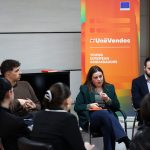
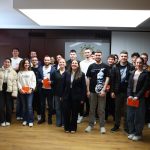
As Albania heads to the polls today to elect 140 members of its Parliament, the #IDecide campaign marks the culmination of four weeks of grassroots youth engagement led by the Young European Ambassadors (YEAs). Launched at a pivotal moment, the campaign set out to empower young Albanians to participate meaningfully in the electoral process and make informed decisions at the ballot box.
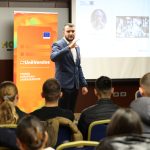
Throughout the past month, YEAs in Albania have been on the move visiting towns like Fier, Vlora, and Rrëshen where they connected directly with young people through workshops, open discussions, and interactive sessions. These events created space for honest conversations about how and where to vote, what civic rights young people hold, and why their voices matter in a democracy – topics that often remain unclear for first-time voters.
“The #IDecide campaign is all about encouraging young people to take an active role in the electoral process,” Stjuart explains. “Through workshops and conversations, we’re working to fill an important gap: many young people still don’t have access to basic information like where and how to vote, what their rights are, or even why their participation matters.”
By making information more accessible and relatable, the campaign aims to empower young people to feel confident and make informed decisions. For Stjuart, now in his second year of involvement, the experience continues to be just as eye-opening. Each visit and each conversation bring fresh insights into the challenges young people face when it comes to civic participation.
“Being a Young European Ambassador makes this work even more meaningful,” he shares. “The campaign reflects what YEAs stand for- bringing Europe closer to young people and helping them realize that their voice truly matters.”
Across towns and conversations, certain themes have come up time and again: misinformation, distrust in institutions, and doubts about whether one vote can make an impact. But once space for dialogue is opened, perspectives begin to shift.
As someone with a passion for digital communication, Stjuart’s workshops have focused especially on the role of social media during election periods. He’s been helping young people understand how to identify misinformation, participate in constructive dialogue, and use their online presence to motivate others to engage.
“In today’s fast-paced digital environment, being well-informed online is just as important as being informed offline,” he emphasizes. “Many young people told me they had never really thought about the impact of what they post until now, and that’s a conversation I’m glad we’re starting.”
For Stjuart, the most powerful moments come when awareness sparks change. “When someone tells me, ‘I didn’t know this before,’ or ‘Now I feel like I can make a difference,’ that’s everything.”
Support from the European Union Delegation in Albania has added institutional weight to the campaign, showing young people that their concerns are being heard not only by their peers, but also by national and international actors invested in strengthening democratic participation.
As the #IDecide campaign wraps up today with the nation casting its votes, the energy and commitment of young people like Stjuart send a clear message: with the right tools and support, youth are not only ready but eager to shape the future of their democracy.
As of January 2025, the European Digital Innovation Hubs (EDIHs) Network has expanded to include new hubs across the Western Balkans.
The expansion of the network is part of the EU’s broader Growth Plan for the Western Balkans, aimed at helping the region integrate with the EU Digital Single Market. By joining the EDIH Network, beneficiaries in the Enlargement region gain early access to digital tools, knowledge-sharing platforms, and funding opportunities even before formal EU accession. The benefits will be tangible, especially for SMEs, startups, and public institutions striving for digital and green transformation.
“We are helping both public institutions and businesses to use digital tools that solve real problems like streamlining services for reaching new markets. We are making it easier for them to connect and work across the borders, just like the digital single market is meant to do.” says Prof.Dr. Slavica Tomović, Assistant Professor at the Faculty of Electrical Engineering of the University of Montenegro. This development marks an important step for the European Union’s digital transformation efforts in the Enlargement region and opens exciting new opportunities for local businesses, public institutions, and startups to become part of Europe’s thriving digital ecosystem.
European Digital Innovation Hubs (EDIHs) act as one-stop shops that help companies and public sector organizations respond to digital challenges and enhance their competitiveness. They offer a range of services including access to technical expertise, training and skills development, advice on financing, and the opportunity to “test before invest” in digital technologies. Furthermore, they support the green transition by helping organizations implement sustainable and circular digital practices.
Backed by the Digital Europe Programme (DEP), EDIHs are co-financed—50% from the DEP and the rest from national, regional, or private sources. Their mission is to ensure that no region is left behind in the digital age.
In North Macedonia, the INOFEIT EDIH is the country’s first official European Digital Innovation Hub. Built on the strong foundations of INNOFEITDIH, it brings together academia, industry, business associations, and public stakeholders. Over the next four years, INOFEIT EDIH will provide free digital services worth €2 million to SMEs and public sector organizations with its key services.
“In today’s rapidly evolving digital landscape, staying ahead with the latest technologies is essential for businesses and public organizations. North Macedonia’s integration into the EU Digital Innovation Hubs Network through INNOFEIT EDIH provides a unique opportunity for SMEs and PSOs to enhance their competitiveness and drive societal progress.” says Dimitar Taskovski from North Macedonia’s INNOFEIT.
In Kosovo, the consortium managing the DIG-4K project is comprised of several actors representing civil society, business and academic sectors, Innovation and Training Park (ITP) as Lead Partner and Edutask; Makerspace Innovation Center Prizren, UBT University, Ukshin Hoti University, QUANTIX, ALT SHPK, CACTTUS Education as implementing partners and the Ministry of Economy, Kosovo and Kosovo Research and Education Network (KREN) as associated partners.
“Kosovo’s integration into the EU Digital Innovation Hubs (EDIH) Network offers a transformative opportunity for businesses, educational institutions, and public sector stakeholders. Through the DIG-4K project, beneficiaries will gain access to expertise, resources, and funding to accelerate digital transformation.” says Arsim Nimanaj from GIZ Kosovo, further providing concrete information on how beneficiaries can benefit from this membership, “Advisory services will help businesses and institutions implement digital strategies, optimize processes, and enhance competitiveness. The Digital Skills Academy will bridge skill gaps through training, certifications, and hands-on workshops, ensuring a future-ready workforce. The Tech Access and Testing Lab will provide a space for innovation, enabling businesses to prototype and test AI, cybersecurity, and green technologies. Funding and investment support will guide stakeholders in securing financial resources, enhancing their ability to develop and sustain projects. International networking and collaboration will open access to global markets and partnerships, strengthening Kosovo’s digital ecosystem. Additionally, efforts to scale and sustain successful digital solutions will ensure long-term impact through visibility, market reach, and continuous evaluation,” Nimanaj concludes.
Digital transformation starting from AI-powered agriculture to smart public services, fostered by the hubs that are now part of the EDIH Network will support inclusive growth, sustainability, and prepare the region for the future of work and business.
For local organizations in the Western Balkans, joining the EDIH network means being part of a Europe-wide movement toward innovation, efficiency, and sustainability.
More information on the European Union’s Growth Plan for the Western Balkans can be found here.
By: Rixhers Dengo, Melisa Dorda, and Debora Kolgega
Ever wondered how architecture can go beyond just designing buildings and truly impact the way we live and interact? Or how the spaces we create today can shape the cities of tomorrow?
Let’s explore how we can make architecture that speaks to both the environment and the people it serves, and how we can be part of shaping cities that embrace innovation, responsibility, and inclusion.
Why architecture matters: Reflections from the SHARE Forum
This February, we walked into the SHARE International Architecture Forum in Albania expecting to hear about buildings, concrete, glass, shapes, and beauty. But instead, we were met with a mix of ideas: tradition and digital futures, design and the need to address climate change. Held in the Pyramid of Tirana, an odd building itself, the forum brought together professionals and thinkers, raising more questions than it answered.
This is where things became interesting. One of the biggest takeaways from SHARE was how many people are rethinking architecture beyond just how it looks. We heard about new materials, reusing old buildings in new ways, sustainable housing, and designing for everyone, real efforts to balance design with environmental and social responsibility.
There were inspiring examples: public projects that focused on community needs, restorations that respected local history while adding new ideas, and construction systems made to adjust to changing climates. Of course, some challenges were still present. While sustainable ideas were often discussed, their implementation sometimes felt basic or limited by things like tight budgets, slow policies, or market-focused views.
But this doesn’t erase the effort. It shows we’re in a time of change, and SHARE helped us see both the progress made and the road ahead.
What inspired us at SHARE?
One of the most powerful insights was the idea of designing spaces that truly respond to the needs of the people who use them. Architects are increasingly focused on resilience, integrating eco-friendly materials and nature into urban environments. Yet, there’s still much to consider about power, says Rixhers: “Who decides what’s sustainable, and who shapes the future”?
These questions brought us back to the core challenge of architecture, creating spaces that last and serve communities, while respecting both heritage and innovation.
Debora says that: “Being young and drawn by nothing but passion, such activities often raise the desire and optimism for new opportunities. So I saw this opportunity as an introduction to the result, to the beautiful side of this profession, where after the challenges and many steps during the design, not only in the professional aspect but also as individuals who live it daily in individual forms in the surrounding environment.”
Meanwhile, it is worth mentioning one of the speakers, Davide MACULLO, a prominent architect with projects implemented in the Balkans who is known for the creative living world that brings him closer to the environment by organically intertwining, during a coffee break where he quoted to us three as young architects: “The beginning will always be difficult everywhere, and it doesn’t matter where you come from or who has paved your path before you, try every experience, never say no to a new challenge and give everything for what you believe in while you are young, ability and work comes with experience and are therefore acquired along the way.”
Davide Macullo/ downloaded from share-architects.com
Why should YEAs even care?
As young European Ambassadors, we have a unique opportunity to shape the spaces we live in and the communities we build. Architecture is not just about professional designs made by experts in firms or city councils, it’s about the spaces we experience every day: the walk to the bus, the café we meet friends at, or even the way our apartment buildings feel. If we are serious about sustainability, community, and democracy, it’s time we start engaging with the environments that impact our lives. Architecture is a form of soft power; it can include or exclude without a single word, and it shapes how we participate in our communities.
This is why architecture is no longer just a creative profession, it’s a political responsibility. From addressing climate change, where buildings account for over 30% of global CO₂ emissions, to designing inclusive public spaces that foster freedom and resilience, architecture touches everything. It defines who feels safe, seen, and welcomed, and it plays a key role in shaping the identities of our communities. Young people must be at the forefront of creating environments that work for all, from those with different abilities to diverse backgrounds.
How do EU-funded projects benefit our communities?
One of the most exciting parts of being a YEA is the ability to connect what we learn in professional spaces like SHARE to actual transformation on the ground. That’s why we wanted to highlight a few incredible EU-funded architecture and urban development projects in Albania and the region that prove how design and European values go hand in hand.
The Vlora Waterfront project really changed the way people experience the city. What used to be just a neglected stretch of coastline is now a lively, pedestrian-friendly thanks to EU funding and a collaboration with international architects. It’s become one of the few places in Albania with real, modern touristic infrastructure, and you can feel its impact.
Regeneration of the waterfront supports the current touristic boom in Albania as Vlora is one of the few places where proper touristic infrastructures. Where local businesses are thriving, young people finally have a public space to hang out in by the sea, and it’s now much more accessible to everyone, not just tourists.
College of Europe, Tirana Campus – Building a space for young minds
Courtesy of MIR, Designed by Oppenheim Architects
The new Tirana campus of the College of Europe isn’t just an academic expansion, it’s a serious investment in the next generation of decision makers, especially young architects like us who are driven by values and vision. The design itself is modern and symbolic, but what’s even more powerful is what will happen inside those walls.
Future leaders will be shaped as people who won’t just study policies, but design them. Architects who won’t only build structures, but help shape sustainable, inclusive cities grounded in European principles like democracy, accessibility, and innovation. This campus will be a meeting point where ideas become actions, and where the built environment meets policymaking.
European Heritage Hub grants
Funded under the EU’s Creative Europe programme, the European Heritage Hub supports the preservation and creative reuse of cultural heritage across Europe, including the Western Balkans.
In Albania, sites like Gjirokastra and Berat, both UNESCO-listed and have benefited from EU-supported cultural revitalization programs. You can actually feel the difference when you walk through those cities now. Historic buildings are being restored, not just to preserve the past but to create spaces where people, especially young people, can gather, celebrate culture, and share stories. The European Heritage Hub, which is an EUfunded pilot project, is playing a big role in this initiative.
Practical ways for YEAs to engage in architecture
Rather than just offering calls to action, we present practical ways for youth to engage with architecture. One option is Design Advocacy Labs, where youth-led groups explore local issues like abandoned spaces or informal settlements and co-design small-scale interventions.
Another idea is Architecture Walks with Local Elders, which gather oral stories tied to buildings to preserve unofficial memories of the past. We can also embrace Critique- as-Practice by creating visual campaigns to question public projects through photography, collage, or AR filters.
Cross border exchanges offer an opportunity to pair young creatives from different Balkan cities to reinterpret EU-funded projects, asking, “What would you do differently?”
Open Source Design is another avenue, where collaborations with universities and design collectives could result in publishing open blueprints for adaptable public furniture, mobile stages, or shelters. Architecture needs new formats, not just new facades.
Attending the SHARE Forum as Young European Ambassadors reinforced our belief that architecture should be at the heart of our conversations, campaigns, and actions.
Conclusion
The SHARE Forum reminded us that architecture is more than just walls and windows, it’s about values like sustainability, inclusion, creativity, and community. As Young European Ambassadors (YEAs), we understand that architecture is a powerful tool for shaping better societies, not just physically, but socially, emotionally, and environmentally.
The Forum sparked a shared belief that we, as the next generation, have a role in transforming the spaces we inhabit, from activism to design, storytelling, or simply asking the right questions. Whether through youth-led design workshops, supporting inclusive spaces, or participating in EU-funded projects, we can shape a future that includes everyone.
The governing bodies of the WBIF met in Brussels on 24-25 April 2025 for the 7th Strategic and Operational Board meetings.
The first set of investment projects submitted by the beneficiaries to be financed under the new Reform and Growth Facility was presented and discussed.
All the projects are in the field of clean energy aiming at improving capacity of energy systems in the region to integrate renewable energy sources.
The WBIF plays an important role in implementing the Reform and Growth Facility for the Western Balkans, which is a key instrument under the EU’s Growth Plan to boost socio-economic convergence with the EU and to accelerate the accession process.
The WBIF is the financial mechanism that will channel €3 billion of grants and loans under the Facility to support priority investments in transport, energy, digital and human capital development.
The WBIF also approved the scaling-up of the Regional Energy Efficiency Programme (REEP)* with additional €90 million from the Instrument for Pre-accession Assistance (IPA III).
Implemented by the European Bank for Reconstruction and Development (EBRD) and the German development bank KfW, this programme is assisting the Western Balkan partners in decarbonising their economies through investments in renewable energy and energy efficiency measures across residential, public and private sectors. The meeting was also the opportunity to launch the new webpage showcasing the REEP activities, news and success stories: www.wbif.eu/reep-2025.
At the afternoon side-event, hosted by DG ENEST ‘Bridging Markets: EU Industry & Investment in the Western Balkans’ the EU and Western Balkan industry representatives explored how the WBIF is fostering infrastructure investment and creating business opportunities across the region. Over 40 participants — including engineering firms, consultancies, trade associations, and members of the WBIF Strategic Board — discussed investment opportunities from ongoing and pipeline WBIF projects, improving the business environment for EU and Western Balkans companies and addressed barriers facing EU companies in non-EU markets, with insightful contributions from European Investment Bank (EIB), European Construction Industry Federation (FIEC), European Federation of Engineering Consultancy Associations (EFCA), STRABAG, and representatives of national institutions and public companies from the Western Balkans.
The WBIF Board meetings brought together – in person and online – representatives from WBIF stakeholders (European Commission, EU Member States, Norway, Western Balkan partners and financial partner organisations) and observers (European Parliament, Transport Community, Energy Community, Regional Cooperation Council and WB6 Chamber Investment Forum). The meetings were co-chaired by the European Commission and Croatia as the Bilateral Donors’ Chair.
The meeting was closed with the WBIF’s 15-year anniversary video showing the key results 2009-2024.* With reservation to supporting energy efficiency measures in public sector buildings in the entity of Republika Srpska (Bosnia and Herzegovina).
The Growth Plan for the Western Balkans is an offer from the European Union to membership candidates (Albania, Bosnia and Herzegovina, Kosovo, Montenegro, North Macedonia, and Serbia ) to accelerate their accession process. The Growth Plan provides for a faster integration into the EU’s Single Market, while requiring stronger regional economic cooperation, which is expected to lead to an accelerated socio-economic convergence with the EU. To support these reforms, a fund of €6 billion has been prepared – comprising €2 billion in grants and €4 billion in concessional loans – conditional on the implementation of specific reforms and alignment of domestic legislation with the EU acquis.
It is estimated that the implementation of the Growth Plan could provide significant momentum to reforms, potentially leading to a doubling of the region’s economies over the next decade.
“The Growth Plan does not affect the ongoing accession processes, or the specific conditions set within those frameworks, particularly regarding fundamental principles. The Common Regional Market is an initiative agreed upon by the leaders of the Western Balkans at the Berlin Process Summit in Sofia in 2020. This market, along with its accompanying action plan, aims to enable the free movement of goods, services, capital, and people within the region”, the Growth Plan states, emphasising that “speed is key” and that the plan is intended to help the region focus on their shared future as EU members and overcome bilateral challenges hindering progress.
Adi Ćerimagić, an analyst from the European Stability Initiative, explains that the EU is attempting to provide membership candidates with some of the benefits of membership in advance.
“One component is additional funding to narrow the gap between what EU members and candidate countries receive. However, this comes with the requirement of a detailed reform plan that covers not only the rule of law and economic reform, but also other areas such as public administration and public procurement reform, depending on each country’s needs. Another aspect is pre-accession benefits, with the expectation that candidate countries will adopt legislation and institutions enabling them to function as if they were members. A good example is SEPA, which allows banks in candidate countries to conduct euro transactions as if they were in the EU, without additional fees, but this requires adapting national legislation and banking regulations,” says Ćerimagić, noting that the essence of the Growth Plan is to offer candidates more money and more opportunities for their economies and citizens, based on the pace at which they implement reforms.
Professor Lejla Ramić-Mesihović, from the Department of International Relations at the International Burch University (IBU), says this represents a major opportunity.
“The Growth Plan is an excellent opportunity to strengthen the Common Regional Market of the Western Balkans and connect it with the EU’s Single Market, which we are all oriented towards. It is essentially a pot of money to which we all have access”
The Growth Plan focuses on seven key areas: the free movement of goods, services and workers; access to euro-denominated payments; easier road transport; decarbonisation and energy market integration; a common digital market; and integration into industrial supply chains. Some of the opportunities created include new employment prospects, free public internet access, cheaper and faster money transfers (via SEPA), reduced border waiting times for road transport (green lanes), and digital hubs for start-up companies. The prerequisites for these benefits include harmonising border control legislation, signing the Convention on a Common Transit Procedure, reforming public finances in line with European standards, and mutual recognition of skills and qualifications between the EU and the Western Balkans – including professional qualifications, building on the existing mobility agreements.
The Growth Plan covers the period from 2024 to 2027, and the allocated funds will be distributed based on a formula that includes GDP, population, and several other criteria. According to preliminary estimates, Albania could receive €922 million, Montenegro €383 million, Kosovo €880 million, North Macedonia €750 million, Serbia €1.58 billion, while Bosnia and Herzegovina, once it finalises its reform agenda, could be eligible for €1.85 billion. At least 50% of the total amount will be directed towards investments through the Western Balkans Investment Framework (WBIF). The remaining funds will go directly to the governments of the Western Balkans, and access to the funds will depend on the progress made in implementing the reform agendas each country has developed.
Disbursements will take place twice a year, based on applications submitted by the Western Balkan governments, but only after the European Commission confirms that all conditions have been met – such as macroeconomic stability, sound public financial management, transparency, and budget oversight.
The Growth Plan was adopted on 8 November 2023, and by April 2025 the European Commission had approved the Reform Agendas of Albania, Kosovo, Montenegro, North Macedonia, and Serbia. Bosnia and Herzegovina has yet to receive the “green light.”
The Western Balkan governments have been warned that if they fail to meet payment conditions, the Commission will suspend or withhold the corresponding amounts. Furthermore, those that do not implement reforms within a year or two will be required to return the funds, which will then be redistributed to others.
We use cookies and similar technologies to improve your experience on our website.
Read our Privacy Policy.



 By making information more accessible and relatable, the campaign aims to empower young people to feel confident and make informed decisions. For Stjuart, now in his second year of involvement, the experience continues to be just as eye-opening. Each visit and each conversation bring fresh insights into the challenges young people face when it comes to civic participation.
“Being a Young European Ambassador makes this work even more meaningful,” he shares. “The campaign reflects what YEAs stand for- bringing Europe closer to young people and helping them realize that their voice truly matters.”
By making information more accessible and relatable, the campaign aims to empower young people to feel confident and make informed decisions. For Stjuart, now in his second year of involvement, the experience continues to be just as eye-opening. Each visit and each conversation bring fresh insights into the challenges young people face when it comes to civic participation.
“Being a Young European Ambassador makes this work even more meaningful,” he shares. “The campaign reflects what YEAs stand for- bringing Europe closer to young people and helping them realize that their voice truly matters.”