
Albania, Bosnia and Herzegovina, Kosovo, Montenegro, North Macedonia, Serbia
“Is my decision truly mine? Only mine?”
This may soon become one of the most pressing questions we ask ourselves. In an age when psychological and digital manipulation are more sophisticated than ever, many of us are being gently steered toward choices we believe are our own—when, in fact, someone else has made them for us. The tool of the trade? So-called native advertising.

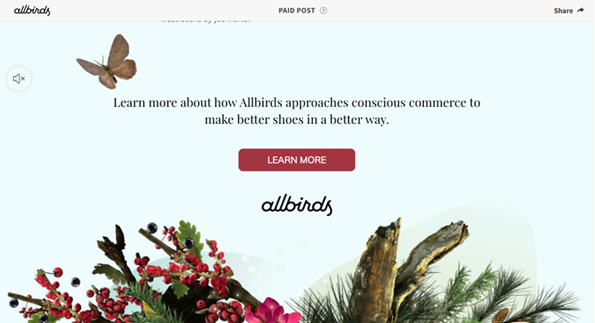
 Only toward the end of the article does the reader discover the brand name “AllBirds”—a shoe company whose name conveniently contains the word “bird.” But by then, the promotional intent is so gently embedded that the reader doesn’t feel targeted. There’s no flashy call-to-action, no “Buy Now” button—just an aftertaste of environmental consciousness linked to a brand.
 The hope is that this emotional and sensory imprint might lead to a purchase later—perhaps when the reader notices they have landed on a retail site or reflects on how their consumer choice could help “Mother Earth.”
 The president of the Center for Independent Journalism in Bucharest, Ioana Avadani, believes the major danger of this kind of advertising is the fact that it is hidden.
“Advertising is a legitimate way of communicating information. Commercial information is legitimate information—people must know what they are buying. But hidden advertising is problematic. Hidden advertising pretends to be news, and instead of presenting options, it presents something like a recommendation. The fact is hidden advertising is dishonest. And that is the major danger,” Avadani says.
The president of the Center for Independent Journalism in Bucharest, Ioana Avadani, believes the major danger of this kind of advertising is the fact that it is hidden.
“Advertising is a legitimate way of communicating information. Commercial information is legitimate information—people must know what they are buying. But hidden advertising is problematic. Hidden advertising pretends to be news, and instead of presenting options, it presents something like a recommendation. The fact is hidden advertising is dishonest. And that is the major danger,” Avadani says.
When Ads Don’t Look Like Ads
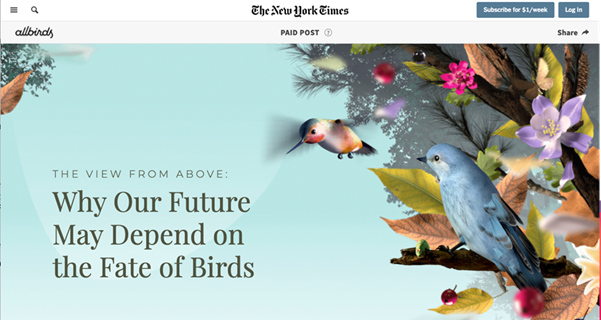
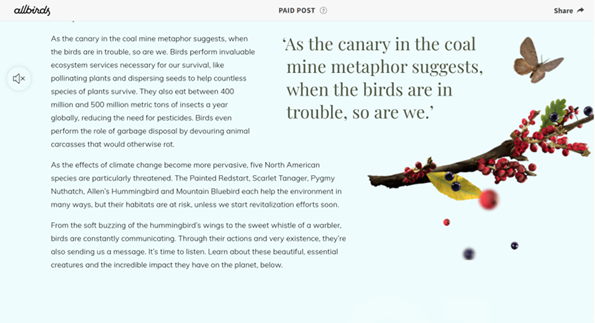
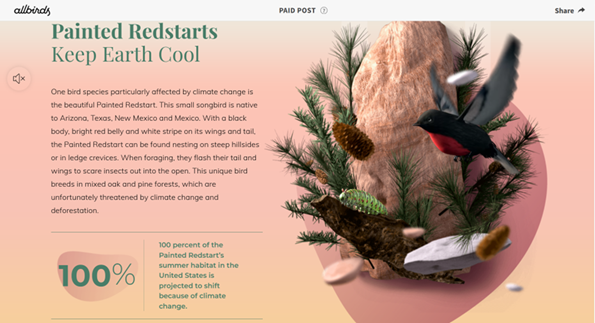
Take, for instance, readers of the prestigious The New York Times. While browsing its website, many users unknowingly wandered into a sponsored content section, seamlessly integrated into the platform’s editorial layout. What they encountered appeared to be a heartfelt article on bird conservation and the vital role birds play in preserving our environment. It was well-crafted, visually pleasing, and supported by subtle background music and charming animations of birds fluttering about.
Only toward the end of the article does the reader discover the brand name “AllBirds”—a shoe company whose name conveniently contains the word “bird.” But by then, the promotional intent is so gently embedded that the reader doesn’t feel targeted. There’s no flashy call-to-action, no “Buy Now” button—just an aftertaste of environmental consciousness linked to a brand.
The hope is that this emotional and sensory imprint might lead to a purchase later—perhaps when the reader notices they have landed on a retail site or reflects on how their consumer choice could help “Mother Earth.”
The president of the Center for Independent Journalism in Bucharest, Ioana Avadani, believes the major danger of this kind of advertising is the fact that it is hidden.
“Advertising is a legitimate way of communicating information. Commercial information is legitimate information—people must know what they are buying. But hidden advertising is problematic. Hidden advertising pretends to be news, and instead of presenting options, it presents something like a recommendation. The fact is hidden advertising is dishonest. And that is the major danger,” Avadani says.


