
Suad Skenderi from Romalitico in Skopje has a simple test for progress. “Change is something you see when your neighbour or your neighbourhood has changed, when the people that you love and care for have a better life, equal opportunities and are treated with dignity.”
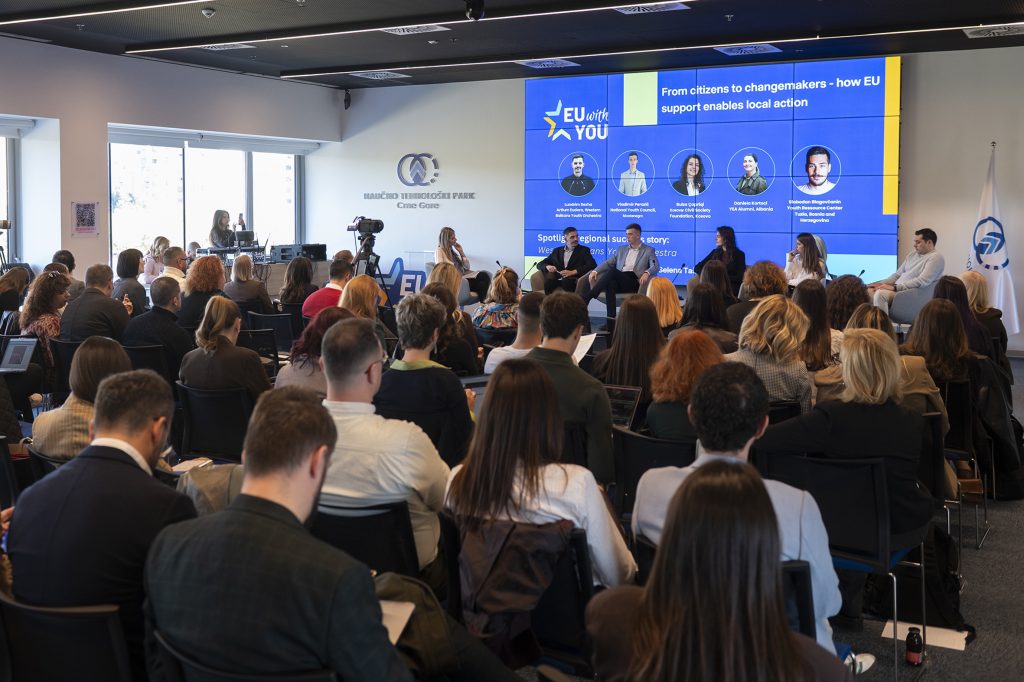
That test ran through the EU With YOU Hub in Podgorica on 5 and 6 November. Civil society activists, journalists, Young European Ambassadors and EU representatives from across the Western Balkans worked there on two questions. How do fundamental rights move from the law into people’s lives? And how do we tell that story so people recognise it as their own?
Who shapes the story
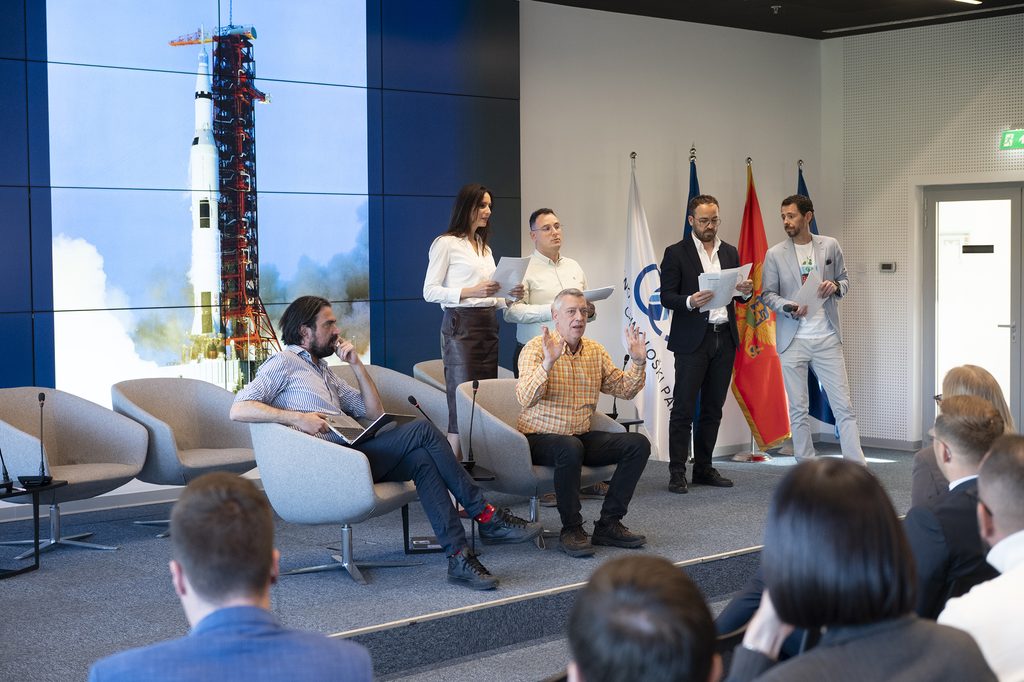
Young European Ambassadors Esti Piranej and Bogdan Malavrazić opened the Hub with a quiz on the Western Balkans and the EU.
Friederike Wünschmann from the EU Delegation to Montenegro then put a question to the storytellers in the room: “Who gets to shape the story of the Western Balkans, and whose voices are being heard?” The region, she said, is too often told through conflict and division. Her advice to content creators: “Who is missing from your projects?”
Marie Brancaleone from DG ENEST explained why these voices matter. Support for EU membership in the region is high, but people know far less about what the EU does for them. “We are not here to have the institutional message.”
WeBalkans Team Leader Raluca Costache gave participants three questions to take into their work: “What has changed? For whom? Where has the EU supported, and why does it actually matter?”
Samra Lučkin from WeBalkans presented the campaign behind the Hub under the title “Our journey with people”. EU With YOU starts from the people who live EU support: entrepreneurs, farmers, students, activists. It follows how that support shows up in their everyday choices.
In the lightning talk Free2Speak, journalist and author Brano Mandić reminded the room that “freedom of speech is not something set in stone”. He added that the platforms shaping it can be understood: “Algorithms are not mystical.”
Equal opportunities for all
The first panel, moderated by Arian Rexhepi from WeBalkans, looked at the distance between rights on paper and rights in practice.
“People do not have the capacity or even the understanding of how they can put these laws to work,” said Anja Basha of the Albanian Human Rights Group. Her organisation runs a complaint centre for citizens whose rights have been violated.
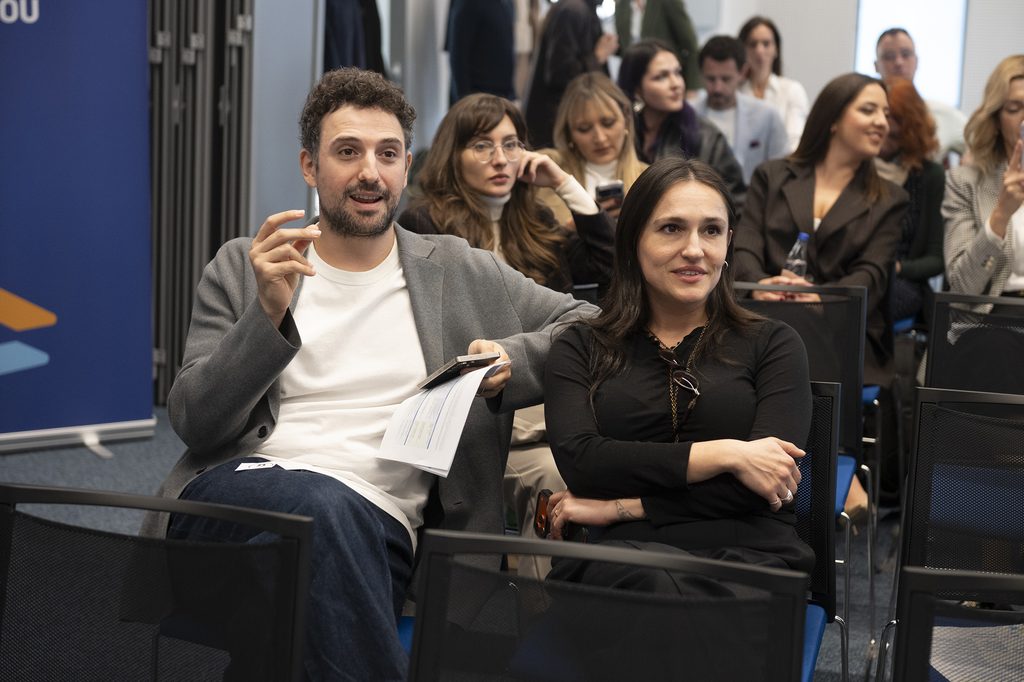
Suad Skenderi added a warning about how support reaches people. “For so many years, Roma communities have felt like the project itself.” Real change, Skenderi said, has come “through people on the field”, with Roma communities driving it themselves.
Daliborka Uljarević of the Centre for Civic Education in Montenegro set the bar higher than visibility: “The aim is not only to make discrimination more visible, but to make it less acceptable, less tolerated and less likely to go unchallenged.”
Branko Čečen, journalist and former director of the Centre for Investigative Journalism of Serbia (CINS), said newsrooms choose stories by how many lives they affect, and “if you consistently follow that approach, minorities will never be heard”. His answer is to reserve part of every newsroom’s capacity for people without a voice.
Maida Muminović of the Media Center Foundation Sarajevo pairs local journalists with civil society on solutions stories. Good journalism, she said, can be a TikTok video, a Reel or a long-form piece: “The format may change, but fundamental journalistic principles and values must remain.”
From citizens to changemakers
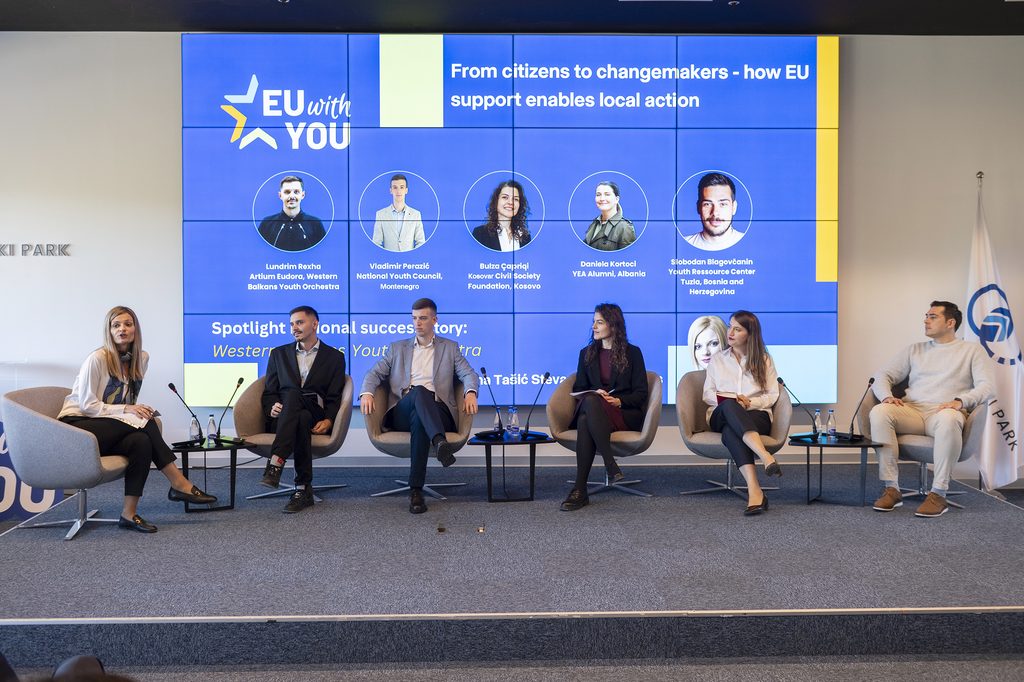
A second panel, moderated by Selena Tasić Stevanić from WeBalkans, looked at how ideas that start in one community grow into change others can see.
Lundrim Rexha from Artium Eudora presented the Western Balkans Youth Orchestra. With EU support, it gave young musicians from across the region their first chance to play together. It has since performed around 88 chamber concerts across the Balkans and Europe.
Vladimir Perazić from the National Youth Council of Montenegro described how young people created and presented the idea of a Youth Committee in the Parliament of Montenegro. Parliament changed its Rules of Procedure to create it, “something that does not happen very often”. “This is a complete example of how an initiative created by young people can directly influence decisions and bring change,” he said.
Daniela Kortoci, a Young European Ambassador alumna from Albania, recalled the question the network kept asking: “Okay, this is the problem, but what is your solution?” Her answer was a campaign for first-time voters in small towns and remote areas.
Slobodan Blagovčanin from the Youth Resource Center Tuzla gave the most personal example: “I learned [English] for nine years in school, but thanks to the first Erasmus+, I started speaking it in a village somewhere in Romania.”
From reforms to real life
In the Regional Dialogue moderated by Marie Brancaleone, EU Delegations and Offices described the same gap from their side of the table.
Mladenka Tešić from the EU Delegation to Montenegro named the task: “The real challenge is ensuring that citizens actually feel the implementation of fundamental rights on the ground.”
Kristina Dimovska from the EU Delegation to North Macedonia agreed: “Fundamental rights are essentially about people, and we need to always put people at the centre.”
Aferdita Mehaj from the EU Office in Kosovo said: “We have good laws on non-discrimination and gender equality, largely aligned with EU standards. But the gap is implementation.”
Iris Sengla from the EU Delegation to Albania put it plainly: “When justice is out of reach, rights remain nothing more than words on paper.” She presented an EU-funded project that trains judges and brings mobile legal advice to persons with disabilities.
In Bosnia and Herzegovina, the project Možemo bolje (We Can Do Better) lets communities set their own priorities. “Rather than telling communities what they need to do, we are helping them organise community dialogues and agree on their own priorities,” said Fermín Córdoba from the EU Delegation to Bosnia and Herzegovina.
From conversation to content
In the workshop “Media of the future: a crash course in reimagining communication”, journalists Branko Čečen and Ilir Gashi worked with participants on new ways to tell these stories. Raluca Costache and Samra Lučkin from WeBalkans then led a debriefing for journalists, content creators and Young European Ambassadors.
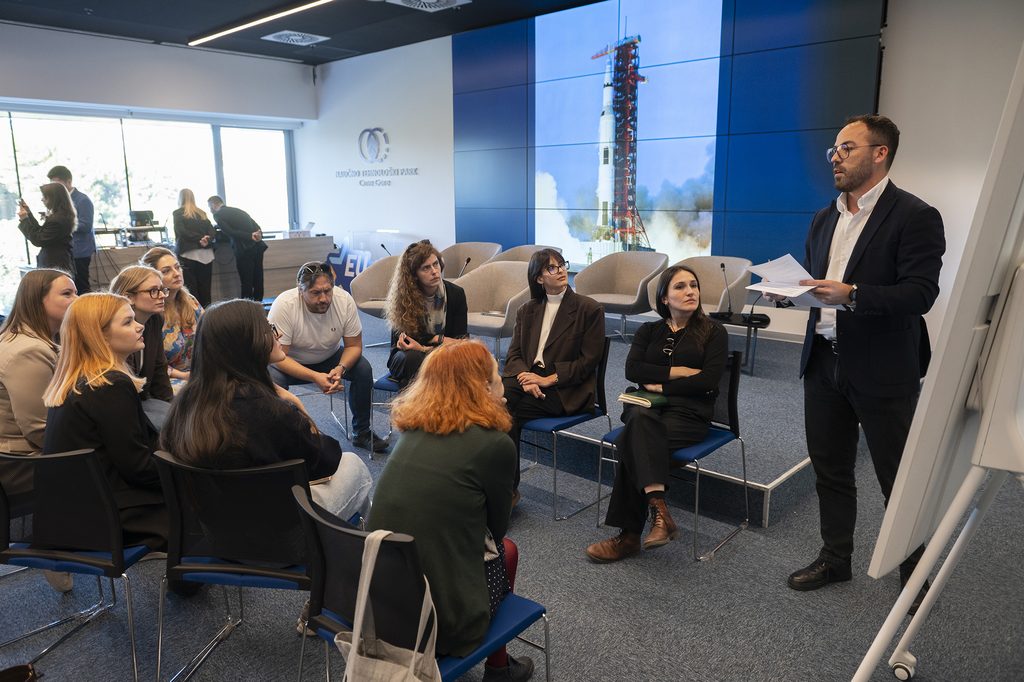
The Hub then moved from discussion to production. Participants planned and filmed their content, beneficiaries gave interviews to journalists, and multipliers recorded short statements on their projects and the benefits of EU assistance.
The European Union will continue to support the region on this path. That support reaches courts, parliaments and public institutions. It also reaches the civil society organisations, journalists and young people who turn reforms into change people can feel. Podgorica was the second EU With YOU Creative Hub after Belgrade, and the connections made there are meant to outlast it. “The idea is not that we work together for two days and then we all go home,” said Marie Brancaleone. Aferdita Mehaj from the EU Office in Kosovo explained how that support will be judged: “Our success will be measured not by how much we spend, but by the lasting improvements we achieve in people’s lives.” It is the same test Suad Skenderi set at the start.


