Author: WeBalkans

Montenegro’s ambitious €9 bn transport infrastructure programme

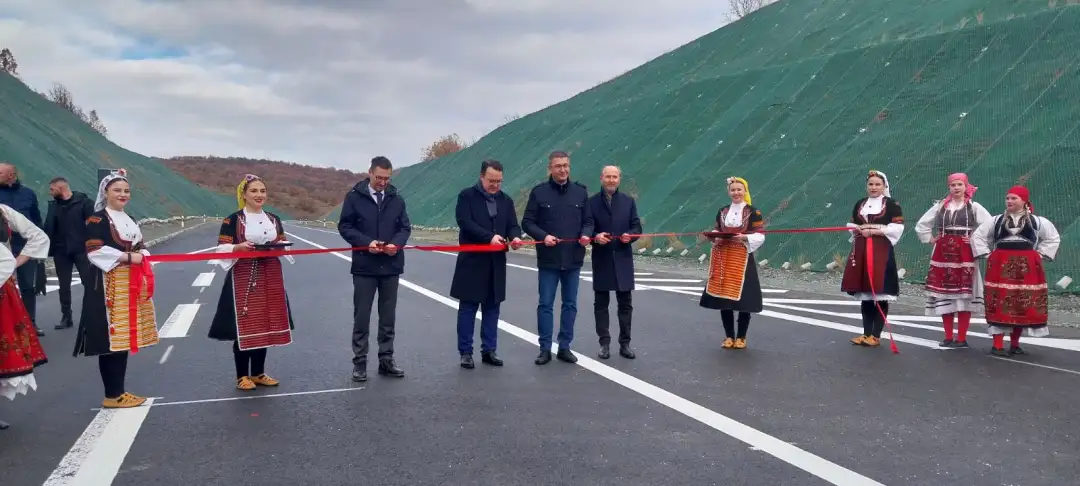
The European Union, through the Western Balkans Investment Framework (WBIF), funds the development of transport infrastructure in all Western Balkan countries and in Montenegro, in cooperation with the European Bank of Reconstruction and Development (EBRD) and the European Investment Bank (EIB).

Montenegro’s current investment programme for transport infrastructure development amounts to an ambitious €9 billion, creating significant opportunities for investments and partnerships within Montenegro and the Western Balkans region.

To promote these opportunities to interested companies from the EU Member States, the region, and Montenegro, the Government of Montenegro and the European Commission, in cooperation with the EIB, organised an Information Day in Podgorica on 28 January 2025. The event featured presentations on upcoming road and railway infrastructure projects along the Western Balkans-Eastern Mediterranean European transport corridor, particularly the Mateševo – Andrijevica motorway segment, as well as other priority projects in the transport sector.

The event was opened by Prime Minister of Montenegro Milojko Spajić, the European Union’s Ambassador to Montenegro Johann SattlerMatej Zakonjšek, Director of Permanent Secretariat of Transport Community, and senior representatives of the Ministry of Transport and International Financing Institutions.

Responsive Image

Prime Minister Milojko Spajić“Infrastructure development is a priority for this Government. Infrastructure connectivity with the region goes hand in hand with our EU path. In the next few years, we aim to build around 500 kilometres of motorways and express roads, which will completely transform Montenegro. In addition, investments are planned in the railway, airports, and the Port of Bar, with the goal of fully utilising the undeniable potential of our country. I believe that European companies will find interest in being our partners on this journey of building a new chapter in the country’s history.”

EU Ambassador to Montenegro Johann Sattler said that the EU and Montenegro are committed to better and greener transport, aimed at achieving a transformation in this sector and of the country. “The EU’s construction industry holds vast experience and innovative capacities that can play a key role here. We want to see EU companies partner with Montenegrin businesses for mutual benefit, turning knowledge into opportunity. In recent months, Montenegro has accelerated its road development plans, putting the country on a fast track to transformation. Delivering infrastructure projects in line with EU rules and regulations ensures fair access to the market, attracts investments that benefit everyone involved and delivers the opportunities the people of Montenegro truly deserve,” the EU Ambassador said.

Matej Zakonjšek, Director of Permanent Secretariat of Transport Community: “The Transport Community remains committed in supporting our regional partners in achieving our shared goals – interconnected region, part of the Trans-European Transport Network. The Port of Bar could become a key link, reducing shipping times from Asia to Europe while transforming the economy of the region. With investments in railways, roads, streamlined border crossings, and EU-aligned standards, this potential is within reach. Railways are being modernised, borders are becoming more efficient, and standards are aligning with the EU. All with one aim – #TogetherConnected.”

The event brought together around 130 participants, with representatives of 28 contractor companies, 17 embassies and 9 contractors and trade associations. It provided a valuable opportunity to connect Montenegrin and regional construction companies with EU Member States companies specialising in transport infrastructure development. A series of B2B meetings and discussions with relevant institutions were organised during the event, fostering knowledge exchange, promoting best practices in infrastructure development, and creating opportunities for joint ventures that can accelerate the modernisation of Montenegro’s transport network in line with EU standards.

Participants were also informed about the prevailing investment conditions and the reforms undertaken by Montenegro on its path to EU membership, which make the country an attractive and secure business environment.

The development of connectivity within Montenegro, with its neighbours in Western Balkans, and with the European Union constitutes a flagship initiative under the European Union’s (EU) Economic and Investment Plan for the Western Balkans.

Challenging the way we engage with historical buildings

The story of Sounding Spomenik Growing up in Southern Hungary in the mid 80s, László Juhász, now president, producer and publisher of the OnRizom Institute, spent the family summer holidays on the Yugoslav seaside.  Little did he know back then that the mountains and things he drove through, would become central to his professional life.  Fast forward to the early 2010s, László and Nataša Serec, like many others, read headlines with words such as “futuristic”, “brutalist”, “modernist”, “minimalist” taking over the contemporary arts and media platforms. These headlines were accompanied with photographs of places and structures that László had seen so much of as a child, from the backseat of his family’s car on their summer trips to the Yugoslav coast.  These headlines of the early 2010s began shedding new light on the World War II monuments scattered across the former Yugoslav countries. These iconic structures of the region started to attract interest on a global level.  Such a momentum was quickly followed by the renowned MoMA produced exhibition “Toward a Concrete Utopia: Architecture in Yugoslavia, 1948-1980” opened in New York in July 2018. Following the exhibition, a lot of public attention was drawn towards these monuments, resulting in many photography books published on the topic. These publications mainly documented the visual aspect of the monuments, looking at it either from a historical point of view or the architectural or social significance of this rich and multi-layered socialist heritage.  Yet, it wasn’t until the second year of the COVID_19 pandemic when the world took a break and people reconnected with nature, that the founders of OnRizom and the Sounding Spomenik research project, Nataša Serec and László Juhász started visiting these buildings on site. As both were music producers, it was only a given that they would be interested in the sound aspect of these massive and complex structures commemorating World War II.  “It is because of the materials they are made of: mainly concrete, marble, glass and metal and their locations that these buildings are particularly interesting to look at from a sound aspect” says Perec, one of the founders of OnRizom and the Sounding Spomenik Research Project. With borders closed during the pandemic,, at first, Serec and Juhász were only visiting the monuments in Slovenia. “After this initial experience the concept of Sounding Spomenik was born almost instantly: we have to bring musicians to play portable acoustic instruments in solo within these concrete structures, and to capture the sounds with decent microphones and recording devices. The music played is only half of the project, the other half is a series of honest recordings of these locations’ environmental sounds which means simple field recordings without any manipulation,” says Juhász about the early stages of their project.  World War II monuments are scattered all over former Yugoslav states, making it a natural next step for the two researchers and music producers to want to expand their research and work. This opportunity came from Goethe’s EU-funded Culture Moves Europe – Mobility Call for Artists They soon partnered with Serbia’s Studio6, a collective of performing musicians, composers and researchers, devoted to promoting today’s contemporary music. Studio6 hosted them for a three-weeks artistic residency in Serbia, during which in collaboration with local artists, they managed to research and record on two Bogdan Bogdanović designed monuments, in Popina and Čačak.  The 21-day artist-in-residence in Belgrade, Serbia, hosted by Studio6 – Contemporary Music Collective was OnRizom’s first longer research trip where they had enough time to get to know their participating instrument players, local architects, designers and field experts. Besides networking, researching, working on terrain, post-producing and having a residency closing project presentation evening, their main goal was to carefully plan and execute two recording sessions at two iconic memorial sites, both designed by architect Bogdan Bogdanović: in Popina with Serbian violinist Manja Ristić and in Čačak with Serbian harpist Milana Zarić.  On the 25th of July, by the end of their residency, they had a public presentation of the Sounding Spomenik project in Belgrade, in which they were joined by the historian Nenad Lajbenšperger.   Responsive YouTube Embed
  Combining music, architecture, design and historical research is the foundation of the Sounding Spomenik project that aims to re-examine Yugoslavia’s World War II memorials widely known as “spomenik” beyond their dominating political and ideological narratives by highlighting their architectural, and most importantly, their sonic significance. Through on-site and field recording sessions and eventually through live performances, the musicians engage with these built structures, documenting their acoustic qualities and the environmental sounds around them, thus creating a living archive that expands our understanding of history and the socialist legacy.   In every location, Serec and Juhász invite local musicians to engage with these structures and in these recordings. Up to this point, they have worked with several local artists in Slovenia and Serbia, and are currently preparing for their residency in Bosnia and Herzegovina, where they are going to expand their research.     

New European Digital Innovation Hubs set up across the Western Balkans

As of January 1, 2025, the European Digital Innovation Hubs (EDIHs) Network has officially expanded to welcome new hubs from Albania, Kosovo, Montenegro, North Macedonia, and Serbia. This marks a major milestone in strengthening digital transformation in the EU’s Enlargement region. These hubs will help local businesses, startups, and public institutions access cutting-edge technology, AI expertise and capacities, and funding, driving innovation and growth with a particular focus on AI. As part of the call for proposals, 7 projects were selected from 5 Western Balkans partners. The projects for the EDIHs in the Western Balkans will start at the beginning of 2025 and will last four years. The budget of the call is €5.6 million, with €1.6million going to Serbia and €1 million going to Albania, Kosovo, Montenegro and North Macedonia respectively.

Bosnia and Herzegovina will join a dedicated Digital Europe Programme call in Q2, following the publication of the new Work Programme. The country has already pre-selected four candidate entities for the call. Next, these entities will be invited to submit proposals to become European Digital Innovation Hubs.

Digital Innovation Hubs in the Western Balkans

Bringing the Western Balkans into the EDIH Network is a major step in the region’s integration into the EU’s Digital Single Market and is part of the EU’s Growth Plan. The Growth Plan is facilitating Western Balkans’ closer links with the EU’s single market and provides for benefits already ahead of EU accession. Extending the EDIH network to Western Balkans is one of the Growth Plan’s measures that facilitates partners’ integration into the EU Digital Single Market and supports their digital transformation. Its benefits will be felt directly by SMEs, startups, and the public sector in the green and digital transitions.

To ensure a smooth start, the European Commission (DG CNECT) in collaboration with the Digital Transformation Accelerator (DTA), organized an onboarding webinar on January 30, 2025. This session provided the new hubs with practical guidance, best practices, and an introduction to the tools available within the EDIH Network.

Additionally, the pre-financing of 65% of the Digital Europe Programme (DEP) financial contribution has already been made available as part of the Grant Agreement, which has been signed with each EDIH. This demonstrates the EU’s strong commitment to ensuring that these hubs can immediately begin their activities and drive digital transformation in their regions.

The initiative reinforces the EU’s vision for digitally connected, AI-enabled, and competitive Western Balkans, ensuring that businesses and institutions have the support they need to thrive in the digital age.

Background

European Digital Innovation Hubs (EDIHs) are one-stop shops supporting companies and public sector organisations in responding to digital challenges and becoming more competitive. These hubs help businesses and public organizations adopt digital and AI-driven solutions through four key services: Test before Invest, Skills and Training, Support to find Investments, and Innovation ecosystem & networking. A strong focus on AI adoption ensures that hubs can leverage AI-driven tools to enhance productivity, decision-making, and competitiveness across Europe. EDIHs are co-financed, with 50% of the funding coming from the Digital Europe Programme (DEP) and the remaining 50% from other national, regional or private sources.

More information,

EDIH Network website

Completed call for proposals

Growth Plan for the Western Balkans

A visit to the new sustainable student dorms of Tirana

Recently, my colleague Olta Shehu and I visited the newly renovated dorms of Tirana, located in “Qyteti Studenti” (literally means Students’ city). First of all, it is of great importance to mention that me and Olta were amazed by the work that had been done there. The main reason was that before, the dorms were a nightmare for every student, but now that they are renovated, they are a haven for students who will come or already study in Tirana, primarily at the University of Tirana. These new dorms offer students a comfortable, modern, and environmentally responsible living space. Before, continuing further on, this transformation couldn’t have been done without the support of the European Union and the German Bank for Development. Even though we only visited one of the renovated buildings, dorm number 4, still they all shared the same planimetry. The integration of Solar Energy One of the most impressive aspects is that the dorms are powered by solar energy, which makes this building more cost-effective for students and also eco-friendly. The shift to this renewable energy shows a commitment to the transition to green energy and sustainable one. The solar panels are positioned on the rooftop, where I got the opportunity to check them, and there were rows and rows of solar panels! What needs to be noted is that this dormitory has set an example for other universities to follow, as these are the first dormitories in Albania to be powered by solar energy! Modern facilities These dorms are a far cry from traditional student housing. The building has been fully modernized, with every detail thoughtfully designed to meet the needs of today’s students. The dorm is spread across four floors, each designed for both comfort and functionality. Each floor has dedicated study rooms, allowing students to focus and study in a quiet and peaceful environment. Whether for individual study or group work, these spaces offer the perfect balance of solitude and collaboration. In addition, there are kitchens on every floor, providing students with the ability to prepare their meals in a convenient and shared space. This communal setup encourages interaction between residents while ensuring everyone has access to basic amenities. The dorms themselves are designed for maximum comfort, with each room accommodating up to two students. These rooms are spacious, well-lit, and thoughtfully laid out, providing the perfect environment for rest and study. Funny enough, we had to wait a bit to see how a room looked inside because firstly every room was occupied and secondly the room we would enter was a bit messy so we waited for the student to clean up (can’t blame him, we all have been in that situation)! Also, an important aspect was that there were specific rooms for students who have disabilities, which shows that the dorms are inclusive for everyone! The price and high demand As we see all these good aspects of the dorms, we need now to see the monetary and demand part! As you can imagine the popularity of these dorms is undeniable. Due to the high demand and exceptional quality of the accommodations, the dorms were completely booked just one hour after opening for reservations! That’s crazy! Imagine if you didn’t set an alarm to wake up early and missed the chance to reserve a room! This rapid fill-up is a testament to the demand for modern, sustainable, and affordable student housing in Tirana. The combination of high-quality facilities and the unbeatable price has made these dorms a favorite choice among students, in comparison to choosing to rent an apartment. The cost of staying in the dorms is 65000 Albanian Lek or around 650 euros per year, with a one-time yearly payment rather than a monthly fee. This simple payment structure is perfect for students who prefer a predictable and manageable financial commitment. With the price covering all the essential living costs, it’s an affordable option compared to many other housing alternatives in the city. Especially taking into consideration that the average rent price in Tirana is around 300 euros per month! Moreover, the process of reserving a room in these highly sought-after dorms has been made incredibly convenient thanks to the “Tirana Ime” app. This easy-to-use mobile app allows students to secure their place directly from their phones, streamlining the entire reservation process. Students can browse availability, choose their room, and confirm their booking all within the app, eliminating the need for long queues or complicated paperwork. The Future it provides Before continuing, I need to mention that if I wasn’t from Tirana, I would choose one of the dorms to stay in during my studies in Tirana, but anyway! Renovating these dorms is not just about providing students with a place to stay, it’s about creating a vibrant, sustainable community. With their eco-friendly design, modern amenities, and focus on security and convenience, these dorms represent a new era of student housing in Tirana. They offer students a place to live, study, and interact with others in a space that encourages both personal growth and academic achievement. These newly renovated dorms in Qyteti Studenti are a prime example of how non-state actors, such as the European Union and the German Bank for Development, can make a tangible difference in the lives of students. By focusing on sustainability, affordability, and modern living, these dorms have become more than just housing, they are a model for future student accommodations in Albania and the Western Balkans.

EU supports regional cooperation for sustainable development

The 5th joint EU and Western Balkan Fund (WBF) call for projects focused on strengthening regional focused on strengthening regional cooperation, and strengthen regional cohesion in the WB6 region, with three main areas of intervention Cultural cooperation, education & scientific exchanges, and sustainable development, proved the importance of cooperation between Western Balkan Countries to address issues that help the organisations and individuals improve the lives of communities in this region. 


Supported from this call, various initiatives addressed from climate emergency problems to initiatives committed to establishing regional cooperation and exchange in the field of promoting and preserving traditional artisanal products including targeted local interventions while promoting the economic empowerment of women.


With the new WBF and EU call around the corner, we are bringing the success stories of Friends of Korça Association from Albania and Equality organisation from Kosovo on implementing regional projects. 


Solar energy for citizens in the Western Balkans


Several civil society organisations from Albania, North Macedonia, Montenegro and Serbia came together around one mission: to tackle climate change in the Western Balkans and promote the benefits of using solar energy.  Led by “Friends of Korca” Association from Albania, this project brought together partners such as Balkan WASH Network (BWN) from North Macedonia, Center for Sustainable Community Development from North Macedonia, Innovation Fund of Montenegro, MSJA from Montenegro along with Environmental Ambassadors for Sustainable Development from Serbia, Tirana Polytechnic University from Albania as well as the Albanian Association of Renewable Energy and Korça University from Albania. These partners created  the Solar-PV4Western Balkans Network, whose aim is to engage stakeholders from an institutional level to a grassroot level to advocate and promote the best practices of self-producers of solar energy. 

Information and knowledge exchange on legislation, initiatives and innovative solutions on solar energy were crucial to build the foundation for great advocacy and educational activities of the network in all the represented countries.. 


“Today, solar energy for citizens, communities and small businesses is a fascinating opportunity. The European Union has approved very important programs and legislation on solar energy development. We simply need to adopt this legislation and programs in our countries as soon as possible, to provide clean energy, affordable energy for the citizens, employment and incomes for the local economy,” said Gjergji Gjinko, the chair of Friends of Korça association, who led the Solar Energy for Citizens in the Western Balkan project.


The experts involved in the project from all partner organisations each complemented the project with their own expertise, varying from experience in identification and promotion of best practices for women’s leadership in sustainable energy and on gender just sustainable energy services for low-income non-connected areas, at a low cost, to articulating the issue of climate emergency on an academic level. 

The project delivered four country reports (Albania, North Macedonia, Montenegro and Serbia) that will serve as information for the citizens about the legislation, opportunities and benefits of using solar energy and for the purpose of advocating on a policy-making level. The website created in the frame of the project reflects the sense of mission of its partners and ensures a longevity of project results, wider reach as well as a continuation of its partners’ mission. 


Empowering women through traditional artisanal products


“We have established a connection with organisations Pazarski Bazar Ruktvorina and Center “Women in Public Services” in order to promote women from Kosovo, Albania and Serbia in our region and to provide support for the protection and development of old handicrafts. We wanted to show and preserve from oblivion all that the hardworking women of our society once did, and to present to our region all the peculiarities and specificities of our traditions that will be done and preserved in the future,” says Ubejda Osmani from the Equality non-governmental organisation based in Prizren, Kosovo committed to promoting the Bosniak community and increasing influence in public, political and cultural life through empowerment, primarily of women and young people in the protection of human rights through various forms of education, volunteerism, as well as by strengthening the role of women and young people in society. 


With the goal to establish regional cooperation and exchange in the field of promoting and preserving traditional artisanal products including targeted local interventions while promoting the economic empowerment of women, the project started with a field outreach in Prizren across different villages and communities and visits to women and visits to women who craft traditional artisanal products, women-led businesses, and self-employed women. Two workshops followed, organized with women from Albania, Bosnia and Herzegovina, and Kosovo as participants. One of these workshops was related to the promotion and branding of artisanal products and the second one on how to draft a business plan and attract investments. The regional conference held in Durrës, Albania with around thirty women from Albania, Bosnia and Herzegovina, and Kosovo as participants, focused on the regional promotion of artisanal products and intangible cultural heritage by women. 

The Western Balkans Fund (WBF) is an international organization located  in Tirana, Albania, founded by the governments of Albania, Bosnia and Herzegovina, Kosovo *, North Macedonia, Montenegro and Serbia. Its establishment, as an all-inclusive and regionally owned initiative, is considered as a clear sign of a new cooperative spirit taking roots in the Balkans. WBF aims  to promote cooperation and the common values between citizens, civil society and people to people contacts, by providing funding for small and medium projects, in the following key areas.

“The support from the Western Balkan Fund helped us promote and strengthen regional cooperation” said Ms. Osmani while highlighting the participation of women from Kosovo, Albania and Serbia in the project, and moreover the diversity of their ethnicities and backgrounds, “Women and young girls from various ethnic backgrounds, from 20 to 65 years who are skilled in old traditional craft products and who were interested in start-up initiatives or self-employment were part of the project activities. These were single mothers, widowed, married, single women with different educational backgrounds, occupations and interests from Kosovo, Albania and Serbia and from different communities such as Albanian, Serbian, Bosniak, Turkish and Roma communities, more specifically old women” she added.


The stories of women involved in the project are featured in this documentary produced by Equality non-governmental organisation and its partners. 

Kosovo secures funding for energy efficiency in public buildings

A project for energy efficiency in public buildings in Kosovo was scaled up this month through a loan of up to €50 million provided by the European Bank for Reconstruction and Development (EBRD). The project is part of the Regional Energy Efficiency Programme (REEP) supported and financed by the EU across the Western Balkans.

The project will involve implementing energy efficiency and renovation measures in up to 400 public buildings, including education and healthcare facilities. This will lead to average energy savings of 30-50%, while substantially reducing greenhouse gas (GHG) emissions.

Measures include installing thermal insulation, upgrading or replacing various systems (heating, lighting and electrical), replacing doors and windows, and applying any other necessary structural and comfort measures.

The project is worth a total of €76 million: co-financed with €12.6 million from the government of Kosovo, a €7 million grant from the European Union through the Regional Energy Efficiency Programme for the Western Balkans, and €3 million from the Danish Fund for Kosovo. The rest will be provided through technical cooperation funds.

Sergiy Maslichenko, EBRD Head of Kosovo, said: “Improving the energy efficiency of buildings stands as a vital regional priority in the Western Balkans and across the European Union, reflecting our collective commitment to sustainability. This project represents a significant stride towards reducing greenhouse gas emissions while enhancing the quality of life for citizens in Kosovo.”

Artane Rizvanolli, Minister of Economy, said: “I am delighted that this project will not only help us to improve the energy efficiency and quality of 400 buildings, but also help us to update and improve our database on the condition of the entire public building stock in Kosovo.”

Renovating public and private buildings is vital if Kosovo is to improve efficiency and meet its climate goals asthe building sector is the largest energy consumer in Europe, accounting for more than one-third of the EU’s emissions.

Launched in 2013, the Regional Energy Efficiency Programme (REEP) for the Western Balkans was designed to assist the Western Balkans countries in decarbonising their economies by promoting investments in renewable energy and energy efficiency measures across residential, public and private sectors.

Managed through the Western Balkans Investment Framework (WBIF), the programme combines a comprehensive package of financing from the EBRD and KfW, EU incentives and additional donor funds for technical assistance and policy dialogue.

More than €1 billion worth of investments so far have seen more than 90 public buildings refurbished, 1,500 SMEs supported and more than 20,000 households invested in energy efficiency. This has resulted in 732 GWh per year energy savings, avoiding 522 kt of CO2.

A day of innovation – Our visit to STIKK with the EU Ambassador

Fatbardh Kabashi, Young European Ambassador from Kosovo As Young European Ambassadors, Fatbardh Kabashi and Gresa Boshtra had the unique opportunity to accompany the EU Ambassador and his delegation to STIKK – Kosovo ICT Association. This visit was a window into the thriving world of Kosovo’s startups, where technology, creativity, and ambition intersect to pave the way for the future. STIKK stands as a hub of innovation and entrepreneurship, bringing together brilliant minds who are transforming challenges into opportunities. During our visit, we engaged closely with numerous startups, each showcasing remarkable advancements in various fields. From IT technology and digital marketing to the development of groundbreaking ideas, these innovators are leading Kosovo’s digital transformation. Among the highlights of the visit were projects focused on advanced mechatronics and agricultural drones, designed to revolutionize farming practices. We were also introduced to startups working in artificial intelligence, offering cutting-edge solutions that promise to reshape industries and improve everyday life. The energy, passion, and ingenuity on display were nothing short of inspiring. The visit didn’t stop there. In a subsequent meeting, we delved deeper into discussions about how Europe aims to support similar innovation centers. The EU Ambassador emphasized Europe’s commitment to fostering environments like STIKK that serve as homes for innovation, startups, and transformative projects. These centers are not only crucial for economic growth but also provide young people with unparalleled opportunities to develop their skills and careers. This visit reaffirmed the pivotal role of technology and innovation in driving Kosovo’s future. It was a privilege to witness firsthand the incredible potential of our local startups and to hear about Europe’s plans to further empower these trailblazers. Together, initiatives like STIKK and EU support are laying the groundwork for a brighter, more connected future for Kosovo’s youth.

EIB Global strengthens partnership with Albania

  • The EU bank has provided advisory support to facilitate the introduction of a green taxonomy in the country.
  • EIB Vice-President Robert de Groot and Albanian Minister for Europe and Foreign Affairs Hasani have signed a host country agreement to enhance mutual collaboration.
  • Since 2010, EIB Global has provided €420 million for key transportation, water supply, energy and private sector projects in Albania under the Team Europe initiative.
European Investment Bank (EIB) Vice-President Robert de Groot has visited Albania, meeting with Prime Minister Edi Rama and high-level government and EU representatives to discuss and strengthen cooperation on priority areas such as energy, transport, regional connectivity and private sector development. To this end, he signed a cooperation agreement with the Governor of the National Bank of Albania Gent Sejko for the implementation of the EIB’s Greening Financial Systems programme, in the presence of EU Delegation’s Head of Cooperation Hubert Perr. The technical assistance provided through this programme will enable the Bank of Albania to incorporate climate risks into the regulatory framework, while developing the green taxonomy for the financial sector in the country in line with the Paris Agreement. It will help Albanian banks embrace climate finance best practices, catalyse new funding for green projects, and better assess, monitor and report on climate-related risks. These efforts will encourage green investments among Albanian companies, while helping them adopt the necessary transition strategies to mitigate climate risks. In turn, this will enable sustainable and climate-resilient growth in the Albanian economy. Funded by the International Climate Initiative Fund, the programme is being implemented in partnership with the Nationally Determined Contributions Partnership, a global coalition of countries and institutions committed to advancing climate action through sustainable development. On the same occasion, EIB Vice-President de Groot signed a host country agreement with the Republic of Albania, represented by the country’s Minister for Europe and Foreign Affairs Igli Hasani, in the presence of EU Ambassador to Albania Silvio Gonzato. This agreement will enable the EIB to strengthen cooperation with local partners under Team Europe initiative to maximise financial and technical support for key projects such as the modernisation of the railway line from Vorë to the border with Montenegro, the improvement of water distribution system in the Municipality of Tirana, and the deployment of favourable financing for small businesses. EIB Vice-President Robert de Groot, who is responsible for operations in the Western Balkans, said: “The signing of these agreements mark yet another milestone for the European Investment Bank in Albania. Going forward on Albania’s path to EU accession, we are committed to delivering new high-impact projects that promote improved connectivity and green transition in Albania”. Minister for Europe and Foreign Affairs of Albania Igli Hasani said: “The Host Country Agreement with the EIB, signed today, strengthens its role in boosting Albania’s rapid economic development and EU integration. EIB has supported Albania’s transition from the start. Increased funding and expertise will aid in implementing the EU’s Economic and Investment Plan & Growth Plan for the Western Balkans. Tirana is set to grow as a regional economic hub.” Governor of the Bank of Albania Gent Sejko said: “The Bank of Albania has taken substantial steps to enhance the financial sector’s capacity to address climate risks. Through collaboration with the European Investment Bank, an institution with extensive expertise in sustainable finance, we are empowered to advance green finance, align our policies with European best practices, and build a financial system equipped to meet the challenges of sustainable development. This agreement underscores our shared commitment to fostering green finance and supporting a financial system that drives the transition towards a sustainable and resilient economy. The green taxonomy, to be developed through this partnership, will play a crucial role in channelling funds toward environmentally impactful investments, fostering greater transparency and financial sustainability.” Head of the EU Delegation to Albania Ambassador Silvio Gonzato remarked: “The EU in Albania is glad to support the strengthening of the partnership between the European Investment Bank and Albania, at a time when Albania has announced its ambitious schedule for the accession negotiations. The EIB is a key partner of the EU when it comes to supporting Albania’s EU integration process. Our joint focus now is on actively supporting Albania’s implementation of the EU Growth Plan and the related Reform and Growth Agenda, fostering modernisation, reforms, and sustainable economic growth. We call upon Albania to maximise the benefits of its partnership with the EU and the EIB to build the foundations for a stronger, more connected and more prosperous Albania within the EU.” Since 2010, EIB Global has provided €420 million for key transportation, water supply, energy and private sector projects in Albania.   Background information: About the EIB and EIB Global: The EIB is the long-term financing institution of the European Union, owned by its Member States. It makes long-term finance available for sound investment in order to contribute towards EU policy goals. The EIB supports projects in four priority areas: infrastructure, innovation, climate and environment, and small and medium-sized enterprises (SMEs). EIB Global is the EIB Group’s specialised arm devoted to increasing the impact of international partnerships and development finance, and a key partner of the Global Gateway. We aim to support €100 billion of investment by the end of 2027 – around one-third of the overall target of this EU initiative. Within Team Europe, EIB Global fosters strong, focused partnerships alongside fellow development finance institutions and civil society. EIB Global brings the EIB Group closer to local people, companies and institutions through our offices around the world. About EIB Global in the Western Balkans: The EIB is a leading international financier in the Western Balkans. Since 2009, the Bank has financed projects worth close to €11 billion in the region. On top of its continued support for the reconstruction and upgrade of public infrastructure, since 2010 the EIB has expanded into many new areas, such as healthcare, research and development, education and small and medium enterprises. For detailed information on EIB activities in the Western Balkans, please visit: www.eib.org/en/publications/the-eib-in-the-western-balkans About the EIB in Albania: The EIB has been active in Albania since 1995. To date, 27 projects have been financed and over €700 million invested, mostly in key transport, energy, water and wastewater infrastructure. For more information regarding the EIB’s projects in Albania, please see: https://www.eib.org/en/projects/regions/enlargement/the-western-balkans/albania/index.htm

EU4Digital Justice supporting Albania’s justice system through digital innovation

Tirana – The European Union and UNOPS officially launched the new EU-funded project EU4Digital Justice: “Support to the Rule of Law through Digital Transformation”. The event at the Europe House premises, gathered high level  representatives from the Ministry of Justice, General Prosecutor Office, High Judicial Council, the Information Technology Center for the Justice System (IT Center), the Swedish Embassy and other key stakeholders.

This transformative initiative aims to assist Albania’s EU accession process by strengthening the rule of law and increasing trust in the justice system in Albania through digital innovation.

With a budget of EUR 7.5 million, the 4-year project aims to address critical challenges in Albania’s justice system, including outdated processes, fragmented case management, and limited use of technology.

The EU Ambassador to Albania, Silvio Gonzato, UNOPS Albania AND Kosovo Country Manager, Sabine Kania, Minister of Justice, Ulsi Manja, General Prosecutor, Olsian Cela and representatives of relevant Albanian institutions, attended the launching ceremony.

class=”alignnone size-full wp-image-1810284″
src=”https://webalkans.eu/wp-content/uploads/2025/01/03.jpg”
alt=””
style=”max-width: 100%; height: auto;”
/>

The EU Ambassador to Albania, Silvio Gonzato said“The EU for Digital Justice project is an important milestone in the process of implementation of the reform of the Justice sector in Albania. This is also a key requirement under Cluster 1, which sets the pace for Albania’s EU membership negotiations. The establishment of a modern case management system, in line with EU standards, will help Albanian judicial institutions to improve their performance. Through this project and the overall support of the EU to Albania’s justice reform, has a main objective: providing Albanian citizens with a quality and efficient public service of justice.”

Sabine Kania, UNOPS Albania & Kosovo Country Manager said: “With this project, we aim to create seamless integration of systems, processes and data through digitalization in the justice sector – this will be the technological foundation to modernize the justice system, strengthen the rule of law and ultimately also build greater trust in the legal institutions.”

Ulsi Manja, Minister of Justice said: “Our path towards the EU is based on a radical transformation of the justice system, as one of the main pillars of the rule of law. This vision of the government and our parliamentary majority, forged with the irreversible reform of justice, continues to be strongly supported by our strategic partners, the EU and the US, who have brought us today to another important station – the beginning of the construction of digital justice.”

Olsian Çela, General Prosecutor said“The world has already entered the digital age, which is characterized by a rapid development of technology, so the challenge of this project will be not only to set up an efficient and effective management system that responds to current needs, but to see the future, enabling its effectiveness over a long period of time.”

By introducing a unified digital case management system for the Prosecutor’s Office and advanced data analytics tools to support transparent and data-driven decision-making, the project will strengthen coordination and accountability. Additionally, it aims to assist in improving the IT Center’s capacity to lead and implement digital reforms across the justice sector to achieve interoperability between different judiciary institutions. This project is expected to contribute to the achievement of concrete results in the judicial reform, provide legal professionals, the public and civil society with faster, more transparent and accessible justice services.

The innovative EU4Digital Justice project will provide the technological foundation necessary to drive long-term improvements and support Albania’s EU integration journey by modernizing and digitalizing the justice system.

About EU4Digital Justice

The EU4Digital Justice project, implemented by UNOPS and funded by the European Union under IPA III with a budget of EUR 7.5 million, aims to transform Albania’s justice system through digital innovation. Over 48 months, the project will establish a modern Case Management System for the Prosecutor’s Office, enhance the Information Technology Center for the Justice System capacity and implement Business Intelligence tools for data-driven decision-making. This initiative seeks to strengthen the rule of law, improve institutional efficiency, and provide faster, more transparent justice services aligned with the EU standards.

About the European Union in Albania

The European Union is Albania’s biggest development partner, providing over EUR 100 million annually in grant assistance to support the Albanian people and help Albania adopt and implement key political, institutional, social, and economic reforms to comply with EU values and progressively align with its rules. Further information on EU-funded projects in Albania and EU-Albanian cooperation can be found at https://www.eeas.europa.eu/delegations/albania_en

About UNOPS

UNOPS mission is to help people build better lives and countries achieve peace and sustainable development. We help the United Nations, governments and other partners to manage projects, and deliver sustainable infrastructure and procurement in an efficient way. Read more: www.unops.org

EU Commission launches third assessment of civil society in Western Balkans and Turkey

The European Commission, via DG NEAR and the EU TACSO 3 project, has launched the third annual assessment of its Guidelines for EU Support to Civil Society in the Western Balkans and Turkey (2021–2027). The 2024 Civil Society Survey aims to capture insights from CSOs to analyze sector developments since 2021. Findings will inform policy improvements and funding strategies to better address regional needs. Highlighting civil society’s key role in participatory democracies and EU integration, the Commission urges wide participation, stating, “Your voice matters.” Survey Details
  • The survey, available in English and all regional languages, takes approximately 25 minutes to complete.
  • It is divided into four sections with predominantly closed-ended questions, allowing participants to save progress and return later if needed.
  • The deadline for participation is 29 January 2025.
CSOs are encouraged to participate by accessing the survey, available in their preferred language. English: https://lnkd.in/dA6MP-pY Shqip: https://lnkd.in/dXxZ2c2m Bosanski: https://lnkd.in/d8cxEjw4 Hrvatski: https://lnkd.in/dx7fWGtx Crnogorski: https://lnkd.in/dc5UvBD7 Македонски: https://lnkd.in/dYb58J9V Srpski: https://lnkd.in/dy6c9T_s Türkçe: https://lnkd.in/dS_3fh_k For additional information about the Guidelines and their objectives, visit the DG NEAR website. This initiative reinforces the EU’s commitment to supporting civil society as a cornerstone of democratic development in the Western Balkans and Turkey.