Featured Post: Featured Main

EU-Western Balkans Summit held in Montenegro: EU remains committed to enlargement

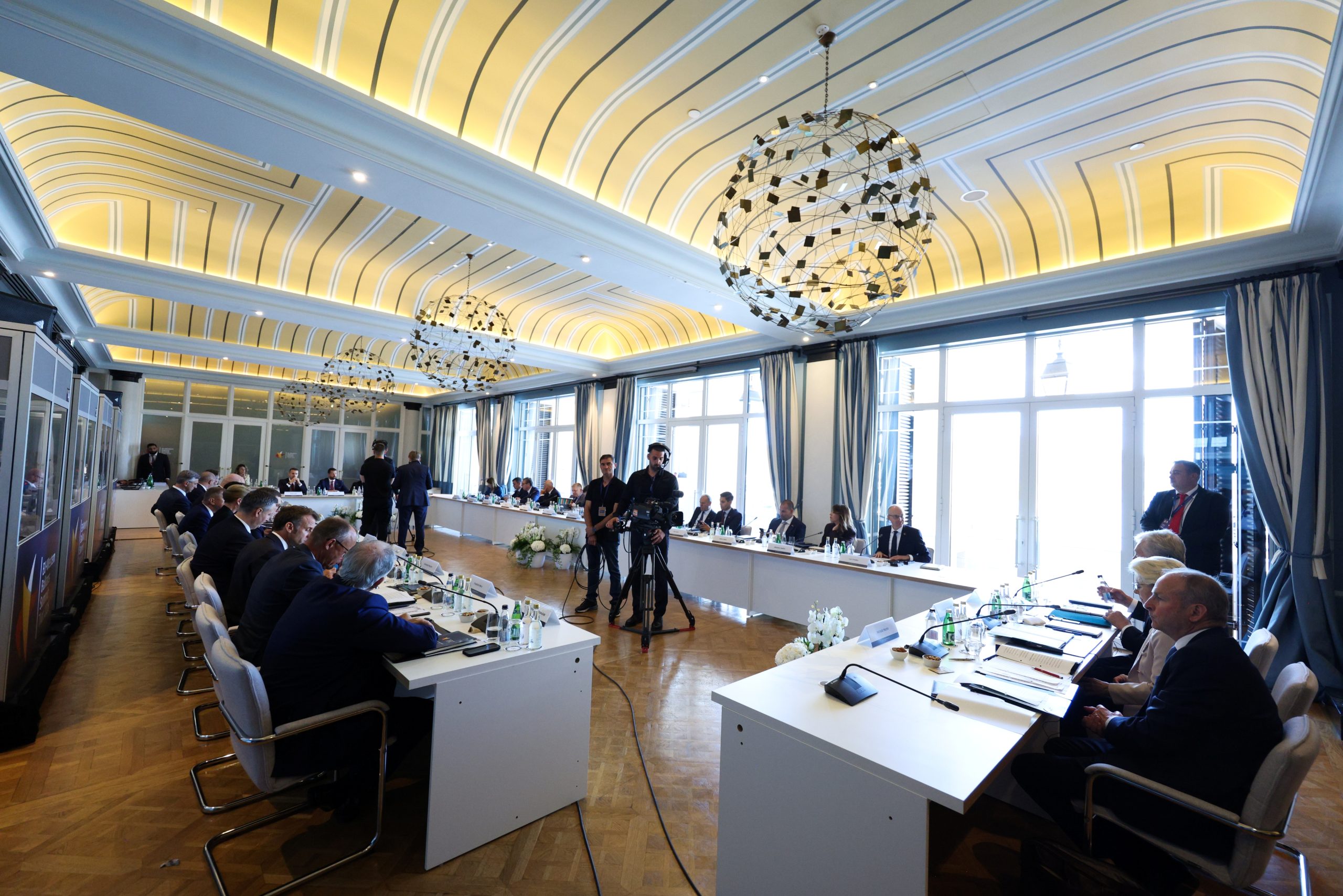
The European Union remains committed to enlargement, and the Western Balkans are an integral part of its future and a key geopolitical investment for the Union, European Council President António Costa said at the EU-Western Balkans Summit held on 5 June in Tivat, Montenegro. The summit was hosted by Montenegro’s President Jakov Milatović and focused on the theme “Shared Prosperity and Stability of the EU and the Western Balkans”.

My message to the Western Balkans is clear: now is the time to seize the momentum and deliver reforms. During my tour, I exchanged views with the leaders of all the countries, representatives of civil society and students at the College of Europe in Tirana. We reviewed all the progress achieved since our last summit six months ago. I would like to highlight several important milestones that demonstrate the momentum behind enlargement. Last month, the EU began drafting Montenegro’s Accession Treaty, paving the way for the country to become the Union’s 28th member by 2028. Last week, we held an Intergovernmental Conference with Albania, which opened a new phase in the accession process after the Commission proposed the closure of three negotiating chapters. The Government of Serbia presented a concrete timetable for adopting the remaining elements of electoral legislation reform and completing judicial reform in line with the recommendations of ODIHR and the Venice Commission. And, very importantly, this week we are unlocking the process for opening the first enlargement cluster with Ukraine and Moldova. This demonstrates that reforms and engagement by all sectors of society pay off and that the European Union remains committed to enlargement,” Costa said, stressing that he had encouraged all partners to make the most of the current momentum and take all necessary steps to accelerate their progress towards EU membership.

The summit took place six months after a similar meeting in Brussels and followed Costa’s visits to all the Western Balkan partners. Discussions focused on assessing progress in the gradual integration of the Western Balkans into the EU, particularly through the Growth Plan, as well as strengthening security and defence cooperation. The EU is prepared to facilitate food exports from the Western Balkans to the EU and remove various barriers and checks, provided that certain conditions are met. One of these is a serious commitment to combating corruption.

European Commission President Ursula von der Leyen said that the summit in Tivat demonstrated how Europe and the Western Balkans are drawing closer together.

“We are opening sectors of the Single Market to companies from the Western Balkans, and therefore the countries of the region must implement reforms and create a level playing field for businesses, because our investments follow reforms,” von der Leyen said.
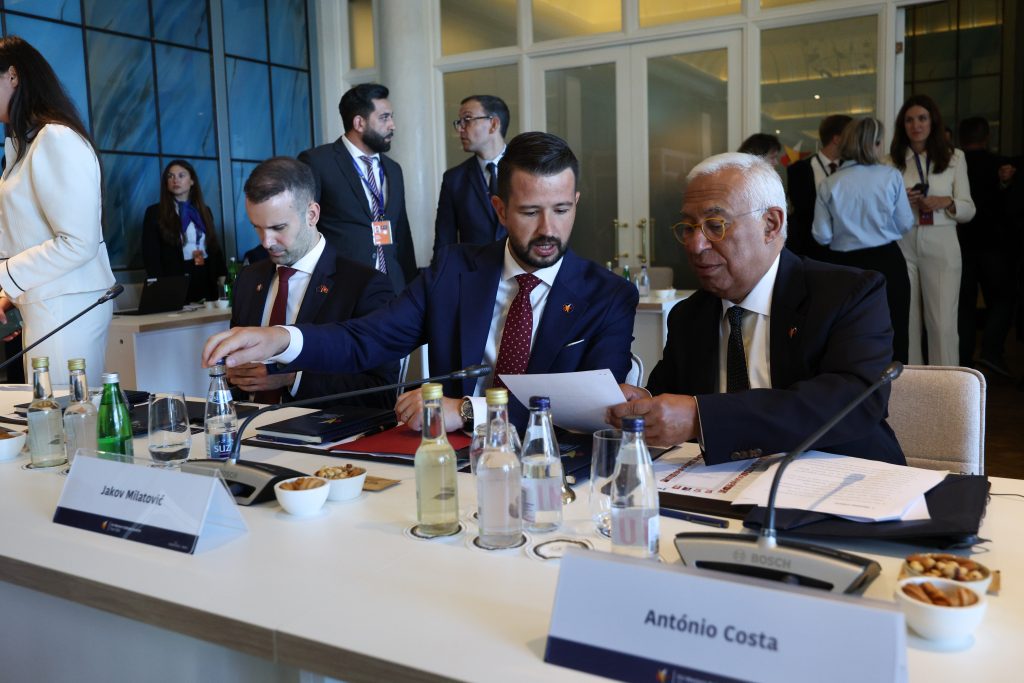
Costa also stated that the Western Balkans can count on the continued support of the European Union, which remains the region’s most reliable partner.

The full alignment of our Western Balkan partners with the EU’s Common Foreign and Security Policy remains an essential expression of our unity. The EU is a community of values and a project of peace, prosperity and security. It is a project on which we all continue to work. The Western Balkans are an integral part of the EU’s future. Their accession remains our priority and a key geopolitical investment. The process is, and will remain, based on merit and credible reforms.” Costa said, emphasising that fostering good neighbourly relations and regional cooperation remains a fundamental priority for ensuring the region’s security and economic prosperity.

The summit did not conclude with a joint declaration. However, as Costa had visited all the Western Balkan partners in the days leading up to the meeting, he delivered specific messages for each of them.

In Albania, he stressed that the time had come for the country to enter a new phase of the accession process focused on implementation and the delivery of tangible results through concrete projects and policies benefiting citizens, including access to the Single Euro Payments Area (SEPA), gradual integration into the EU Single Market, participation in the regional roaming system, and the DiscoverEU rail pass scheme.

In Bosnia and Herzegovina, he emphasised the need for political leaders to focus on their objectives, accelerate the pace of reforms, begin implementing the Reform Agenda, adopt the remaining two judicial reforms and appoint a chief negotiator. He warned the authorities that the country had already lost €108 million, while a further €373 million remained at risk.

In Kosovo, he recalled that the EU had invested €3.7 billion in education, infrastructure, energy, environmental protection, businesses, human rights and the rule of law, and that it was prepared to do even more. He stressed that the EU welcomed Kosovo’s full and voluntary alignment with the Union’s Common Foreign and Security Policy, but also underlined that dialogue between Belgrade and Pristina, as well as the normalisation of relations, are essential for the European future of both Kosovo and Serbia.
In North Macedonia, he stated that the adoption of the agreed constitutional amendments remains the sole condition for the formal opening of accession negotiations with the EU.

In Serbia, he stressed the need to focus on three key priorities: fostering good neighbourly relations and regional cooperation; aligning with EU policies and values, particularly the Common Foreign and Security Policy; and implementing the reforms necessary to advance the accession process (the rule of law, media freedom and electoral reform in line with ODIHR recommendations ahead of the next elections).

This was the first major gathering of the highest representatives of the European Union and the Western Balkan partners to be held in Montenegro, coinciding with the country’s celebration of 20 years since the restoration of its independence and its progress towards EU membership. The European Union has approved the establishment of an ad hoc group tasked with drafting an accession treaty for a candidate country, something that is happening for the first time in 17 years. Montenegro is expected to become the EU’s 28th member by 2028. Regular EU-Western Balkans summits have been held since 2020, when Croatia, then holding the Presidency of the Council of the European Union, proposed annual meetings of regional leaders in recognition of the Western Balkans’ European perspective.

Superschools Youth Camp 2026 brings together over 100 young people in Zlatibor under the 4th Open Call

As part of the 4th Open Call of the Superschools programme, the Regional Youth Cooperation Office (RYCO) brought together more than 100 young people from across the Western Balkans for the Superschools Youth Camp 2026, held in Zlatibor from 14 to 19 May.  

Building on five years of Superschools and a decade of RYCO’s work in fostering regional cooperation, the Youth Camp served as a vibrant space where young people could connect , develop essential life skills, and experience firsthand the power of intercultural dialogue and cooperation. From the very first day, participants were immersed in a welcoming and inclusive environment, engaging in structured activities designed to help them get to know each other, build trust, and establish a strong sense of group belonging, setting the tone for a week centered around collaboration and shared experiences.  

Throughout the programme, the Youth Camp combined interactive workshops with experiential learning, placing a strong focus on teamwork, communication, and problem-solving. Through a series of group-building sessions, participants worked together on practical challenges that strengthened cooperation, improved active listening, and fostered mutual trust, while daily reflection sessions provided space to process experiences, share insights, and deepen learning.  

Reflecting on the programme, Teodora Vučković, a student from Montenegro, said: 

“Superschools is a great opportunity to meet new people, have a good time, connect with others, and create new experiences.” 

Echoing this spirit, Gabriela Gjoreska student from North Macedonia added: 

“Superschools gives young people the chance to step outside their everyday environment, take on new challenges, and learn from peers with different perspectives. It is a space where friendships are built through shared experiences, and where young people can grow, connect, and better understand one another.” 

A key highlight of the camp was the combination of Adventure Park challenges and Sports for Development (S4D) activities, where participants were encouraged to step out of their comfort zones, test their limits, build resilience, and rely on one another to complete both individual and group tasks, reinforcing a strong sense of solidarity and collective achievement.  

In parallel, the programme placed a strong emphasis on values-driven learning through dedicated RYCO thematic workshops focusing on identity and intercultural understanding, where participants explored diversity, reflected on their own perspectives, and engaged in meaningful discussions on shared values and coexistence in the region.  

For Noara Isufi from Albania, this sense of connection became one of the most meaningful outcomes of the programme: 

“Superschools helped me find a new family. It truly helped me connect with people whom I didn’t think I would ever connect with. So now I could positively say that I have three sisters”

The Youth Camp reached its peak on 18 May with the Superschools Regional Education Conference, which brought together participants, educators, and stakeholders to reflect on the achievements of the programme and discuss its future impact, providing a platform for young voices to be heard and for experiences from the exchanges to be shared more broadly across the region. The camp concluded with evaluation sessions, certificate distribution, and a collective farewell, marking not just the end of a programme, but the beginning of lasting connections and continued collaboration among participants, who return to their communities as ambassadors of dialogue, cooperation, and positive change. As part of the 4th Open Call of Superschools, this Youth Camp once again reaffirmed the programme’s role in building bridges between young people and contributing to a more connected, inclusive, and cooperative Western Balkans. 

About the Superschools program  

“Superschools” is a program for school exchanges in the Western Balkans. Its objectives are to support peacebuilding, reconciliation, and intercultural learning and dialogue among schools, students, and their communities. The program is part of the multi-donor project “Western Balkans School Exchange Scheme,” co-financed by the European Union and the German Federal Ministry for Economic Cooperation and Development (BMZ), and implemented by the Deutsche Gesellschaft für Internationale Zusammenarbeit (GIZ) together with the Regional Youth Cooperation Office (RYCO). 

Albania one step closer to the EU after meeting fundamentals benchmarks

Albania has reached a defining milestone on its path to EU membership. At the eighth meeting of the Accession Conference, held under the Cyprus presidency of the Council of the EU, Member States confirmed that the country has, overall, met the interim benchmarks for Cluster 1: Fundamentals, covering the functioning of democratic institutions, public administration reform, the rule of law chapters and economic criteria.

The decision means Albania becomes the second candidate country, after Montenegro, to meet the interim rule of law benchmarks. With this step, the EU and Albania are now in a position to start closing negotiating chapters, opening a new, more demanding phase of the accession process focused on implementation, solid track records and lasting results.

“Today’s milestone for Albania confirms the fulfilment of the interim benchmarks for the fundamentals cluster. It demonstrates the country’s commitment to further advance its path towards EU membership,” said Marilena Raouna, Deputy Minister for European affairs of the Republic of Cyprus, speaking on behalf of the presidency. “Enlargement is a geopolitical necessity for the EU and a top priority for the Cyprus presidency. It is a merit-based process, in which determined reforms lead to concrete progress towards accession.”

European Commissioner for Enlargement Marta Kos described the moment as the result of more than a decade of work by Albania and its people. “Albania adopted laws to protect fundamental rights and vulnerable groups. It strengthened the right to a fair trial. It vetted hundreds of judges and prosecutors. It built new judicial institutions to reduce political influence in the justice system,” she said. “It’s a moment to celebrate. But it is also a moment for Albania to double down on reforms, involve all political forces, listen to civil society and deliver changes that matter to people’s daily lives. A big step forward. And now, back to work.”

Today’s meeting builds on the opening of all negotiating clusters with Albania, concluded with the cluster on Resources, agriculture and cohesion on 17 November 2025. The EU has also set benchmarks for the provisional closure of the chapters under cluster 1, and the Accession Conference will return to this cluster at an appropriate moment. Monitoring of Albania’s alignment with and implementation of the EU acquis and European standards will continue throughout the negotiations.

About the cluster system

Under the revised methodology for accession negotiations introduced in 2020, negotiating chapters are organised into six thematic clusters: Fundamentals; Internal market; Competitiveness and inclusive growth; Green agenda and sustainable connectivity; Resources, agriculture and cohesion; and External relations. The fundamentals cluster is the first to be opened and the last to be closed, and progress under this cluster determines the overall pace of negotiations, making today’s confirmation a particularly significant signal of Albania’s momentum on its European path.

Media literacy safeguards democratic processes and trust

Nearly 25,000 people across Kosovo took part in a range of media literacy events held between October 2025 and February 2026 in Pristina, North Mitrovica, Podujevo, Gračanica and Gjakova, with the support of the European Union and organised by the European Union Office in Kosovo in cooperation with Purple Consulting.

The European Union’s engagement in media literacy in Kosovo is part of a broader commitment to supporting informed, resilient and democratic societies. In today’s complex information environment, the ability to engage critically with information is essential for meaningful participation in public life,” explains Enisa Rashlanin Kasemi, Communications Officer at the European Union Office in Kosovo. She emphasises that, from the EU’s perspective, media literacy empowers citizens by fostering critical thinking and contributing to trust in democratic processes.

In Kosovo, media literacy and online safety are not part of formal education, although there are initiatives in this area. At the same time, awareness is growing of the risks posed by disinformation and digital manipulation, as well as the need to better equip young people with critical thinking skills. As a result, these topics are most often addressed through external projects, workshops and civil society activities,” says Rashlanin Kasemi.

The Glass Room is an internationally recognised exhibition concept focused on making complex digital issues accessible to the public. Developed by Tactical Tech in Berlin, it helped organisers in Kosovo avoid building the project “from scratch” and instead adapt proven models to the local context. They explain that the concept offers an innovative and engaging way to address topics such as disinformation, online behaviour and the protection of personal data through interactive and visual formats that encourage reflection and critical thinking. Organisers believe this approach enabled visitors to better understand how the digital environment influences their choices and how to navigate it more responsibly.

In addition to multimedia exhibitions, the project included a series of interactive workshops, discussions and digital engagement activities delivered by a team of experienced journalists and media literacy experts, including Kreshnik Gashi, Darko Dimitrijević and Visar Prebreza, who provided practical and locally relevant guidance on recognising disinformation and protecting personal data.

The workshops lasted around two hours and used interactive modules such as “Facts vs Feelings” and “Spot the Design Tricks”. They included hands-on exercises, group discussions, games and real-life case analysis, while tablets, video content, quizzes and digital installations were used to actively engage participants.

Visitors included pupils, teachers and educators who play a key role in developing critical thinking, as well as journalists, media professionals, representatives of civil society organisations and NGOs, along with institutional representatives and members of the wider public. The audience was truly diverse, which enabled meaningful discussions and an exchange of perspectives,” say Florina Bajraj Salihu and Ardian Jashari from Purple Consulting.

They highlight that the exhibition opening alone attracted 1,200 visitors, while more than 300 people attended the DISICON conference dedicated to media literacy, nearly 200 participated in workshops, and over 10,000 people saw content produced within the project on social media. Visitor reactions were engaged and participatory, demonstrating a high level of reflection and involvement.

Above all, participants were introduced to practical tools for fact-checking and verifying sources, equipping them with skills applicable in everyday life. They learned how to recognise disinformation and common manipulation techniques, as well as how emotions can shape the way information is perceived and shared. The exhibitions and workshops helped them identify phenomena such as deepfakes, clickbait and misleading content, while also raising awareness about how personal data is collected, used and often misused online,” says Bajraj Salihu, while Jashari adds that visitors asked numerous questions and shared their own online experiences and habits, turning sessions into open discussions rather than one-way presentations.

Many expressed a willingness to pass on what they had learned to colleagues, friends and family members. There was particular curiosity about why people believe misinformation, how algorithms and digital design influence behaviour, and what concrete steps individuals can take to better protect their personal data,” says Jashari.

Both Bajraj Salihu and Jashari note that they, too, learned from these encounters.

Gaps in media literacy are widespread across all age groups, even when it comes to basic concepts such as verifying sources. This highlights the need for foundational education in this area, as disinformation has the power to distort facts, undermine public trust and ultimately harm democratic processes. At the same time, many citizens do not understand how their personal data is used or how to protect it,” they explain, adding that the project showed strong public interest when topics are presented in a visual and interactive way. They also stress that local context is crucial for ensuring understanding and engagement, and that interactive formats are far more effective than traditional lectures.

The activities were implemented in close coordination with the European Union Office in Kosovo, ensuring quality, reach and consistency. Organisers emphasise that it would have been difficult to achieve the same scale and quality without EU support, as the EU provided funding, facilitated cooperation with Tactical Tech and supported the overall implementation of events across Kosovo.

The EU is Kosovo’s strongest and most reliable partner and its largest provider of financial assistance – €3.7 billion since 1999.

Don’t Get Confused, Man: A Media Literacy Game for Silver Surfers

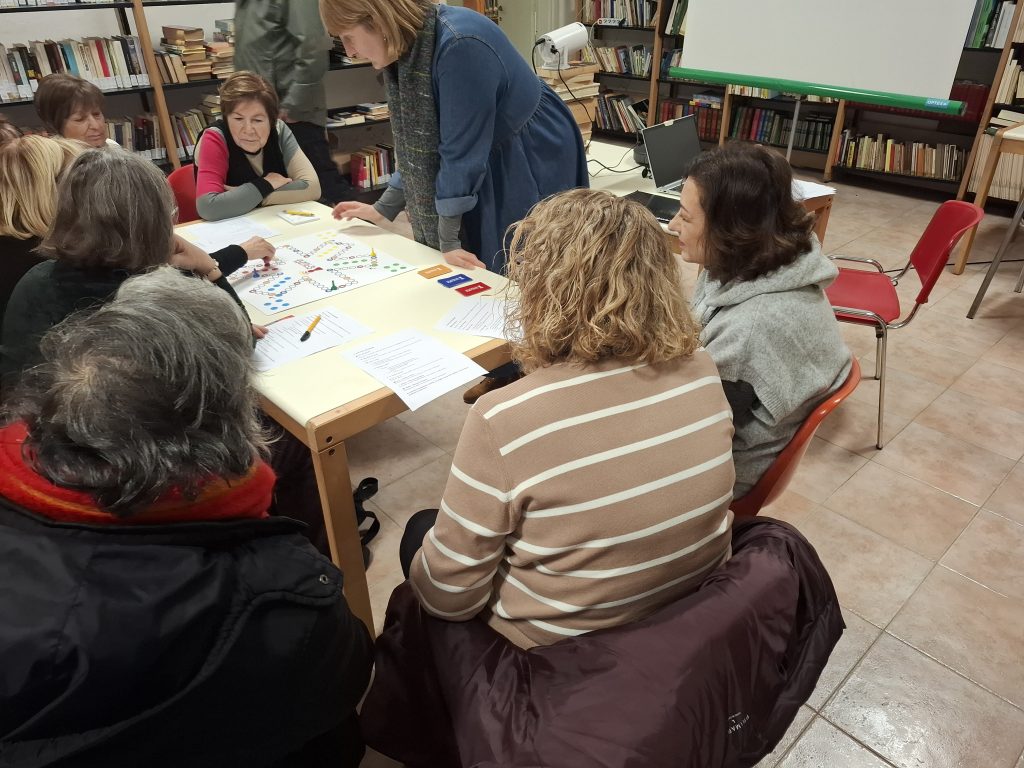
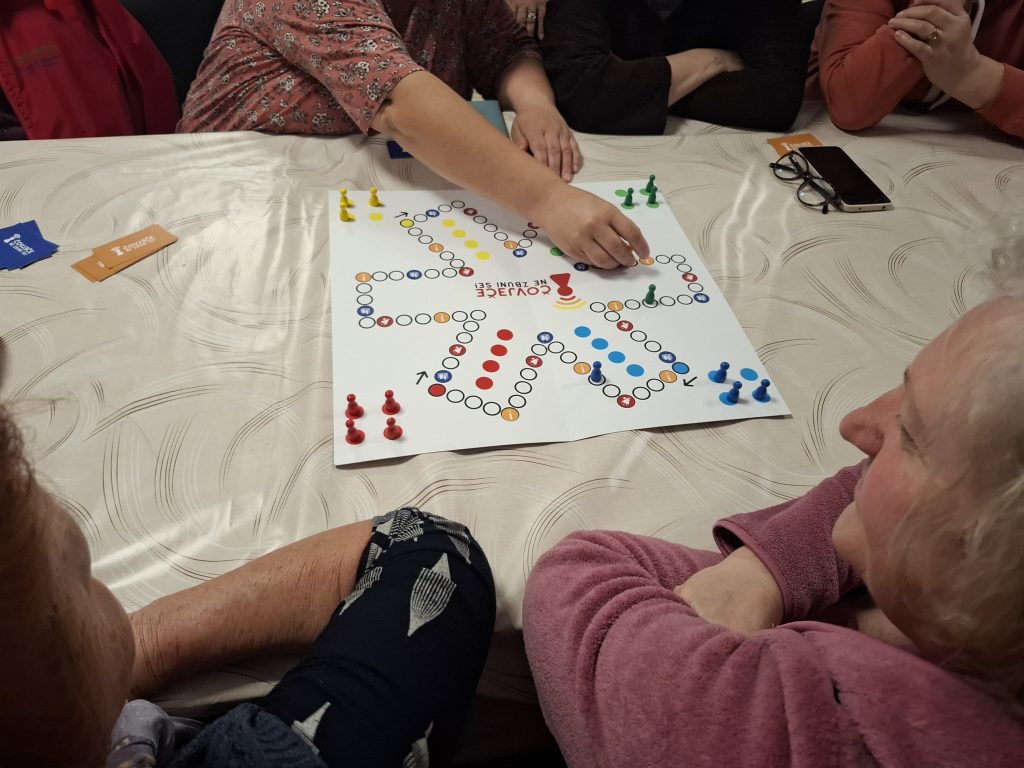
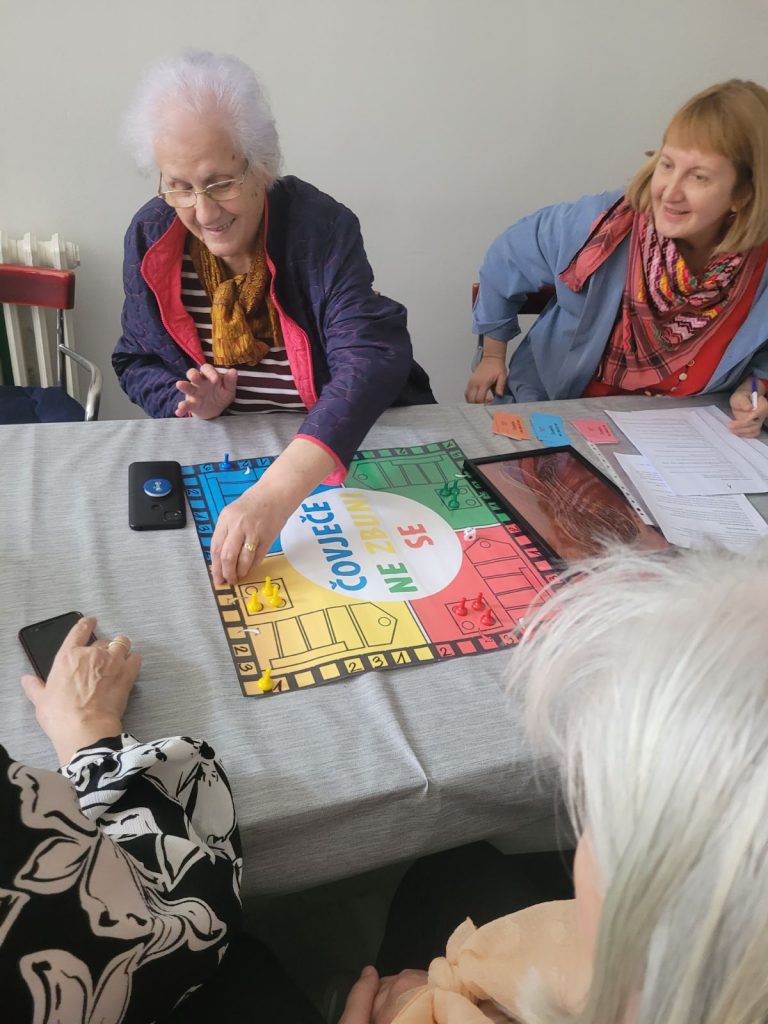
Somewhere between Italy and Bosnia and Herzegovina, with financial support from the National Endowment for Democracy (NED) and the European Union, the board game Don’t Get Confused, Man (“Čovječe, ne zbuni se”) was created as a tool to help older people develop media literacy skills and use the internet more safely.

The game was developed at the beginning of 2025 as part of an educational pilot programme on media literacy for older people launched by the Mediacentar Foundation Sarajevo within the activities of the Naš Most Association. My aim was to bring media literacy closer to older people in a way that would not feel like a lecture or a school lesson, but rather as something familiar, relaxed and enjoyable. It turned out that older generations know the game well and are very happy to play it,” explains Lidija Pikser, a freelance journalist working in Bosnia and Herzegovina and Italy.

Data from the study Media Habits of Adults in Bosnia and Herzegovina (BiH) show that around 40 per cent of people over the age of 65 use social media, while more than half of respondents do not verify information they encounter online. Pikser says she was particularly concerned by the finding that 63,16 per cent of respondents aged over 65 use social media to follow news and political topics, while 61,05 per cent follow content related to health and medicine.

From this, it became clear to me how important these subjects are in the everyday lives of older people. That is why I incorporated them into the game through three groups of challenges: Check the Source, Click with Caution and Recognise Fake News. Each group contains ten questions inspired by real conversations and the experiences of members of the association. The reactions were extremely positive because people felt they could learn without pressure and without fear of making mistakes. I was particularly interested to see how much the game encourages discussion, the exchange of experiences and mutual co-operation among participants,” says Pikser, adding that during the testing phase she adjusted the questions, the pace of the game and the examples she uses in response to players’ feedback.

That is why I like to say that the game is ‘alive’. Older people have enormous life experience, but they often lack confidence in the digital environment. Through developing the game, I learned how important it is to adapt the way we communicate to the audience we are addressing, as well as how essential humour, empathy and patience are in the learning process. I also realised that people learn best when they feel they are participating as equals, without fear of being ridiculed or of not knowing something,” says Pikser, stressing that she believes the game works because it opens up space, through play, to discuss serious issues.

Maida Muminović, Executive Director of the Mediacentar Foundation Sarajevo, recalls that the foundation has been developing media and information literacy programmes for the past ten years. During that time, it has worked with young people, teachers, parents and educators, and since the coronavirus pandemic it has been developing programmes specifically designed for older citizens.

Developing an educational programme that responds to users’ needs and addresses the challenges of today’s media environment requires extensive research, learning, establishing contacts with user groups and building trust. For such work to be successful, it requires continuity, consistency and the time needed to connect with groups and individuals. It was precisely in this way – by bringing together remarkable people, encouraging expert collaboration and testing the concept in a real-life environment – that the board game Don’t Get Confused, Man was created. In this effort to preserve and ensure continuity, funding and co-financing from the European Union have played a significant role,” says Muminović.

Mensch ärgere Dich nicht (known in English as Ludo) is one of the world’s most popular board games. It traces its origins to ancient India and acquired its modern form in Germany at the beginning of the twentieth century, when it was patented by Josef Friedrich Schmidt. It subsequently became a staple in almost every German household before spreading across Europe and the rest of the world.

We borrowed the first board from a children’s version of the game, then drew our own and printed it at a local copy shop. The final version was designed by Vanja Lazić,” says Pikser.

So far, the game has been presented in Italy and Bosnia and Herzegovina.

In both countries, I notice a very similar sense of uncertainty when it comes to recognising disinformation and using digital media safely. That is why I plan to test the game in Italy with intergenerational teams of grandmothers, grandfathers and grandchildren, because I believe that playing together can create space for a much more honest and natural conversation about the media and the internet,” Pikser announces. Media literacy is important for all generations, but it is particularly significant for older people because they are less frequently included in training on digital tools and, due to limited knowledge, are more exposed to scams, fake news and manipulative content. In Western European countries, there are numerous programmes and initiatives aimed at improving older people’s digital skills and media literacy. These are often supported through European projects offering training sessions and workshops, e-learning platforms for independent study, and peer-to-peer education, where older people learn from one another or with the support of younger volunteers. In Bosnia and Herzegovina, however, much still depends on individual initiatives and civil society organisations. Don’t Get Confused, Man is available to anyone wishing to use it in their work at www.lidijapisker.com. It can be used as a stand-alone activity or as part of a broader educational programme. The questions can be adapted to different groups and needs.

Education for the EU market: Digital communication is not self-promotion but a tool

The vast European Union market is open to everyone, primarily to young people with knowledge and ideas from member states, but also from candidate countries, and in this context EU institutions support education and empowerment, particularly of young people. With EU support and in cooperation with Jasna Pejović, Director of DigitalBee and Flourish, the Europe House in Montenegro organised the workshop “Career Skills for the Future of Europe” as part of the broader educational programme for young people and start-up businesses entitled “Digital Communication, LinkedIn and EU Opportunities”.

The programme has been designed as a practical educational cycle that introduces young people to how the modern EU ecosystem functions – from projects and mobility opportunities to start-up initiatives and international partnerships. Many participants emphasise that the programme helped them define their professional goals more clearly and improve the way they present themselves in an international environment,” says Ana Barada from Europe House Montenegro. She explains that the focus of the training is on skills that are essential for professional development in the European context, but which are often not part of formal education: digital communication and clear presentation of ideas, building professional identity and credibility, strategic use of LinkedIn, content marketing and communicating values and projects, networking and initiating cooperation in an international environment, and understanding how EU organisations select partners and projects.

The Europe House Montenegro programme consists of four interconnected workshops combining theory, practical exercises and work on concrete examples, while the acquired skills enable young people to present their ideas and initiatives in a way that is relevant and understandable within the EU context. Although these topics may seem familiar, the implementation of this series of workshops highlights the difference between the everyday use of digital tools and their professional application.

Among other things, participants in this programme learn how to clearly articulate their professional story, how to build a high-quality and authentic LinkedIn profile, how to create content that builds trust and visibility, and how to establish first contact with EU partners and organisations,” Barada emphasises, adding that the workshops are part of the regular format of free educational events at Europe House called “Chat Thursdays at Europe House” which aims to bring relevant topics closer to young people and the wider public through an interactive approach. She notes that the lecturers are experts in digital communication, work on EU projects and the development of the start-up ecosystem, with practical experience in international cooperation. Participants in the training sessions are primarily young people – students, young professionals, entrepreneurs and all those wishing to develop their skills and better understand EU opportunities – who apply through a public call announced on social media, with selection made on a “first come, first served” basis.

Workshop leader Jasna Pejović, Director of DigitalBee and Flourish, says that particular emphasis was placed on LinkedIn as a tool important for professional visibility, networking and opening up new opportunities.

It was important for me to present digital communication not as ‘self-promotion’, but as a tool for building trust, credibility and professional development. My goal was for the workshop to be practical, modern and useful to young people who are at the beginning of their careers or building their professional path, and that is precisely why I focused on how to use LinkedIn to present more clearly who they are, what interests them, what they are building and in which direction they want to develop,” says Pejović. She explains that she prepared the workshop based on her own long-term professional experience in digital transformation, leadership and entrepreneurship as the founder of the start-up Flourish and as someone who actively builds a professional presence and community on LinkedIn, while she also drew information and inspiration from many years of teaching experience in Marketing and Digital Marketing, from working with students and young professionals, and from a very concrete understanding of how professional visibility, networking and trust-building function today in the digital and international context.

What I noticed was that many arrived feeling that they lacked sufficient experience or that they ‘had nothing to say’, especially when it comes to LinkedIn and professional communication. During the workshops, this changed significantly – they began to recognise that they too, whether students, young professionals, representatives of the NGO sector, entrepreneurs or start-up founders, have valuable stories, experiences and development paths that they can communicate effectively and authentically. There were many questions, much interaction and very strong engagement, which for me was the best indication that the topics were relevant and well chosen,” Pejović explains.

Barada says that participants were highly satisfied and left the workshops with concrete results such as improved LinkedIn profiles.

“Many highlighted that the programme helped them define their professional goals more clearly and improve the way they present themselves in an international environment,” Barada explains, adding that participants in the workshops gained practical and applicable knowledge, a better understanding of EU projects and opportunities, and greater confidence in professional communication.

Alongside free educational opportunities such as this one organised by Europe House in Montenegro, employment services in many EU countries and candidate countries offer vouchers for free education in this field.