
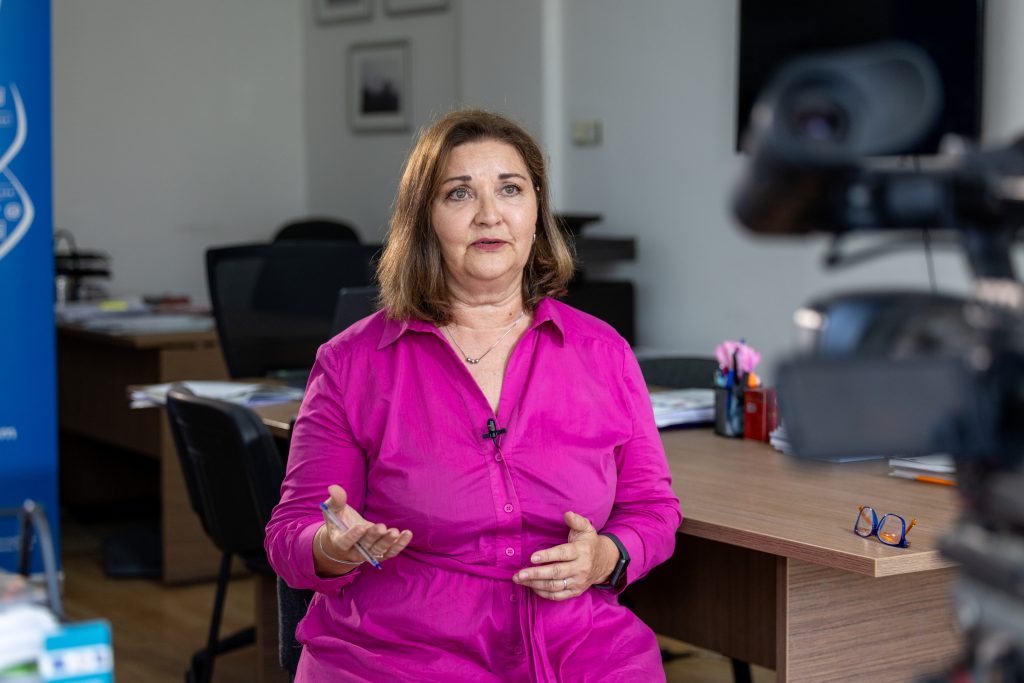
Credibility Is Journalism’s Strongest Argument
After nearly four decades in journalism, Biljana Georgievska knows that technologies, formats and newsrooms may change, but the profession’s fundamental responsibility does not: protecting the public interest by helping people distinguish facts from noise, truth from manipulation, and credible information from disinformation.
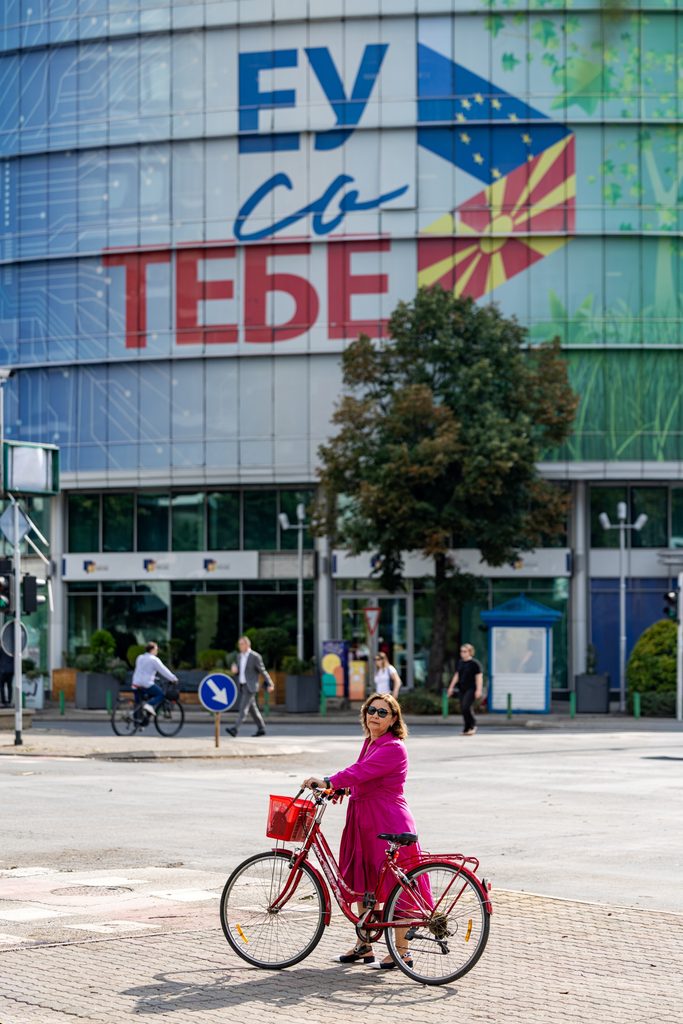
When Biljana Georgievska cycles through the streets of Skopje on her way to work, she is travelling through a media landscape almost unrecognisable from the one in which she began her career nearly four decades ago.
She started as a freelance contributor at Radio Skopje and went on to work across newspapers, radio and television. From 1996 to 2011, she was a correspondent and producer for the BBC Macedonian Service, working in both Skopje and London.
During those years, she reported on events that shaped the region and Europe: the Kosovo refugee crisis, the armed conflict in North Macedonia, the enlargement of the European Union into Eastern Europe and anniversaries of German reunification, alongside stories about science, healthcare and everyday life.
The platforms have changed dramatically since then. Broadsheet newspapers have been joined by websites, social networks, podcasts, YouTube channels and countless other sources competing for people’s attention.
But for Biljana, one thing has not changed – journalism has a responsibility towards the public.
“I’ve been a journalist for four decades. Since I started as a freelance contributor at Radio Skopje, the media landscape has changed dramatically – from broadsheet newspapers to podcasts. But journalism carries the same responsibility, whether reporting on wars and natural disasters, science, or healthcare,” she says.
For experienced journalists, protecting the public interest is not an abstract principle written into professional codes. It is something learned through years of reporting, checking facts, speaking to people, asking difficult questions and understanding the consequences that information can have on people’s lives. And credibility remains journalism’s strongest argument.
Credibility is the backbone of journalism
A journalist can have access to the newest technology, the fastest distribution platform and the largest possible audience. None of it matters for long if the audience does not believe the information being provided. Credibility is therefore not simply one professional quality among many. It is the backbone of journalism. It is also what connects Biljana’s previous life inside newsrooms with her work today.
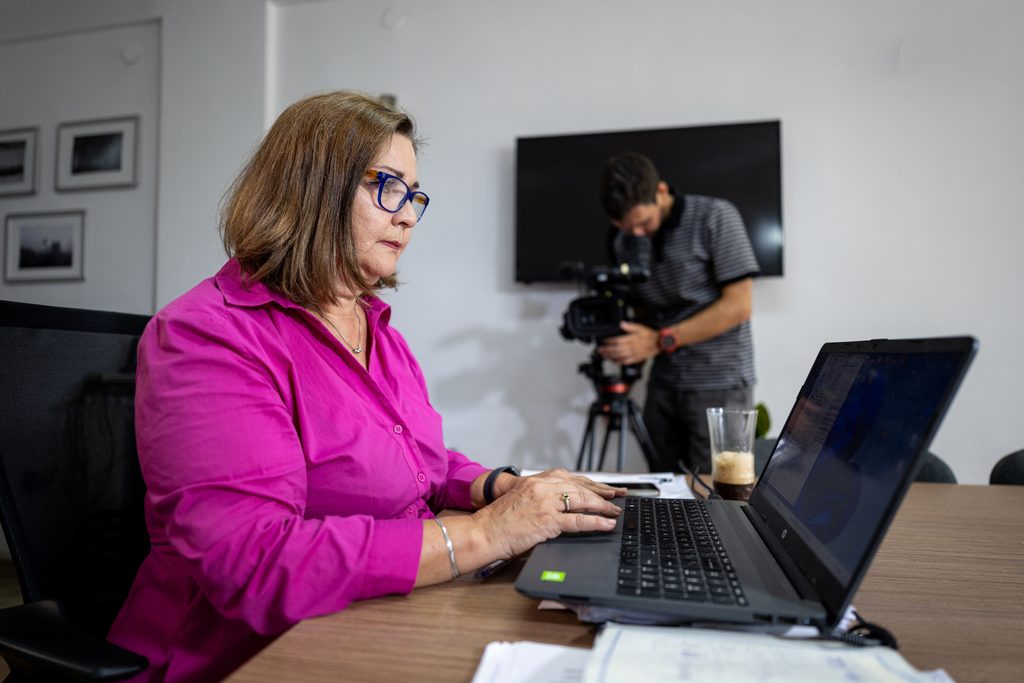
Over the past three years, she has served as Executive Director of the Council of Media Ethics of Macedonia, advocating for free and responsible journalism from a different position.
Rather than producing the news herself, she now works to protect the professional standards on which trustworthy journalism depends. According to Biljana, the Council provides citizens with a mechanism to respond when they believe journalism has breached professional or ethical standards. At the same time, it works to defend media freedom from political and business pressure and promotes media literacy among citizens.
Much of its work focuses on young people, particularly high-school and university students. Through workshops and discussions, they explore media self-regulation, professional standards, disinformation and the consequences of hate speech. The objective is not simply to teach people how media work. It is to help them understand how to recognise information they can trust.
Journalism that helps people understand
For Biljana, good journalism has always ultimately been about people. News matters because it helps citizens understand what is happening around them and make decisions about their everyday lives. Sometimes that means explaining a political crisis. Sometimes it means reporting from a conflict or humanitarian emergency. But it can equally mean explaining healthcare, education, environmental risks, economic decisions or changes affecting someone’s local community. The subject may change. The obligation does not. Journalists must ask whether information is accurate, relevant and presented fairly — and whether publishing it serves the public interest.
That understanding becomes even more important in an information environment where citizens are confronted every day with an enormous volume of content of very different quality. Journalism is no longer competing only with journalism. Professional news organisations now share the same digital space with podcasters, YouTubers, influencers, independent content creators, anonymous accounts, automated content and increasingly sophisticated artificial intelligence systems.
Artificial intelligence changes the tools, not the need for trust
Artificial intelligence will inevitably transform journalism. It can already help journalists analyse information, transcribe interviews, translate material, identify patterns and produce content more efficiently. Its role will almost certainly become considerably greater over the coming years. But technology cannot remove the fundamental question that audiences ask when they receive information:
Can I trust this?
That is why Biljana does not believe journalism will disappear. “One of the biggest challenges will remain safeguarding media independence and strengthening resilience against political and business influence,” she says. “In the digital age, another key challenge is the ethical use of artificial intelligence.”
Journalism will continue moving deeper into digital spaces, while independent content creators will remain an important part of the information environment.
The challenge will increasingly be distinguishing journalism that follows professional standards from content that may be attractive, emotional or immediately shareable but lacks verification, context or accountability.
“Distinguishing responsible journalism from superficial content will become increasingly difficult,” Biljana says. “However, with greater awareness of media literacy, I expect people to become more capable of identifying and choosing trustworthy sources of information.”
Artificial intelligence may therefore change how information is produced. It may even blur the boundaries between authentic and artificially generated content. But it does not eliminate the human relationship at the centre of credible journalism. That relationship is built on trust. It is built when journalists check information before publishing it. When they correct mistakes. When they distinguish facts from opinion. When they resist political or commercial pressure. And when audiences know that somebody has taken professional responsibility for the information placed before them. In an age of disinformation, that relationship may become more valuable rather than less.
Protecting journalism as a public good
The work of the Council of Media Ethics is supported through two European Union-funded projects: Building Trust in Media in South-East Europe: Support to Journalism as a Public Good and Media Councils in the Digital Age.
The support helps sustain the Council’s Complaints Commission, media literacy work and cooperation with European counterparts.
“The support we receive from the European Union, through a regional project implemented by UNESCO, is what enables the Media Ethics Council to continue its work,” Biljana said and added: “It sustains the work of the Complaints Commission and our media literacy activities for citizens. It also allows us to keep pace with our European counterparts and exchange knowledge and experience.”
For Biljana, such support ultimately has a very practical purpose. It contributes to journalism that provides citizens with better, timelier and more reliable information, while supporting reforms in the media sector in line with European standards. And this brings the story back to where journalism begins and ends: the public.
Trust is built every day
Media ethics does not exist to protect journalists from criticism. It exists because citizens need information they can rely on. After almost four decades in the profession, Biljana has experienced journalism from almost every angle: as a reporter, correspondent and producer, and now as someone working to defend its professional and ethical standards. Technologies have changed. Newsrooms have changed. Audiences have changed. But one principle remains remarkably constant and it is not is not speed, technology, reach or even influence. It is trust


