
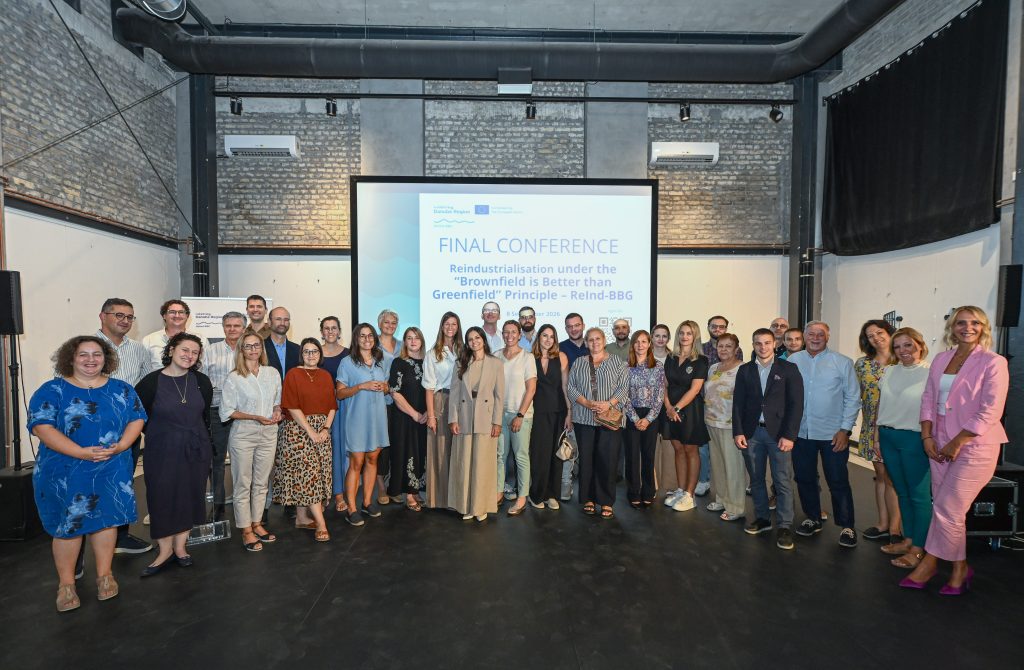
Every city has places that once worked.
Factories where hundreds of people had jobs. Warehouses filled with goods. Industrial yards connected to roads, electricity and other infrastructure. Then production stopped, businesses closed and the gates stayed locked.
What remains can sit unused for years, even though the land, buildings, infrastructure and location still have value.
That is the idea behind the EU-supported ReInd-BBG project: help cities turn inactive industrial sites into places that can support new business, investment and community life.
ReInd-BBG, supported through the Interreg Danube Region Programme, brought together 16 organisations from eight countries. Six cities and municipalities tested approaches to regeneration, including Sombor in Serbia, Zenica in Bosnia and Herzegovina and Nikšić in Montenegro, alongside Hrastnik, Reșița and Vratsa.
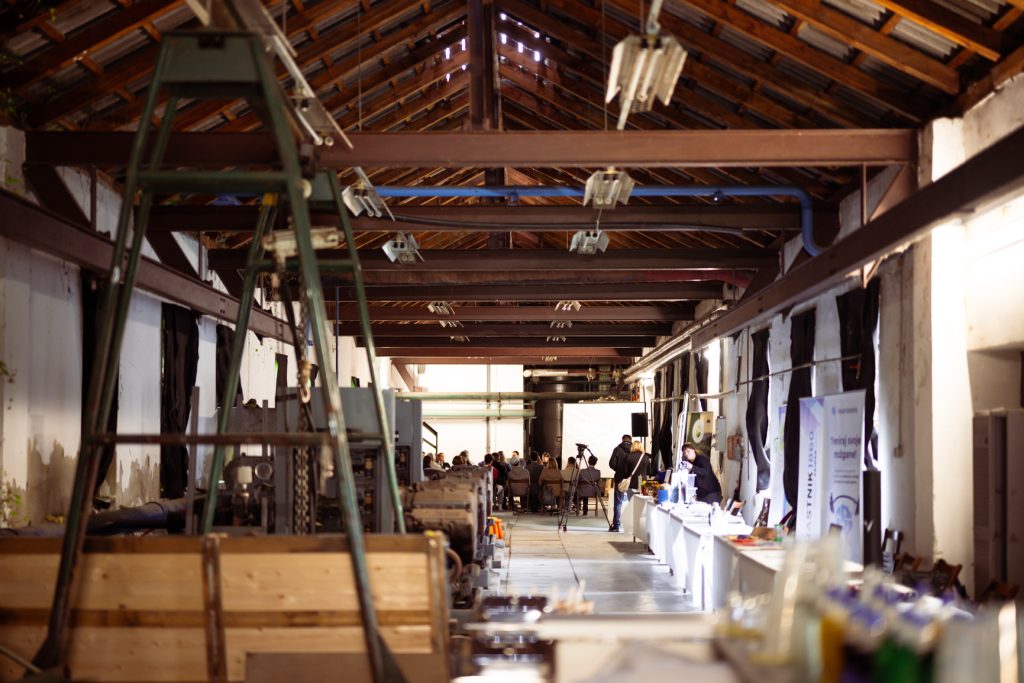
When empty space becomes economic space
In Sombor, the project focused on the former Agrosavez site, once occupied by a trading company active in wholesale wood, construction materials and other goods.
Local stakeholders discussed how it could become part of the city’s future economy. One proposal is to develop a new business zone with space for trading goods, a modern refrigeration facility for agricultural products and potentially a business incubator where new ideas and companies could develop.
A site like this can create value in several directions at once. It can support farmers and food producers, give entrepreneurs space to start, attract companies and generate demand for workers, suppliers and services.
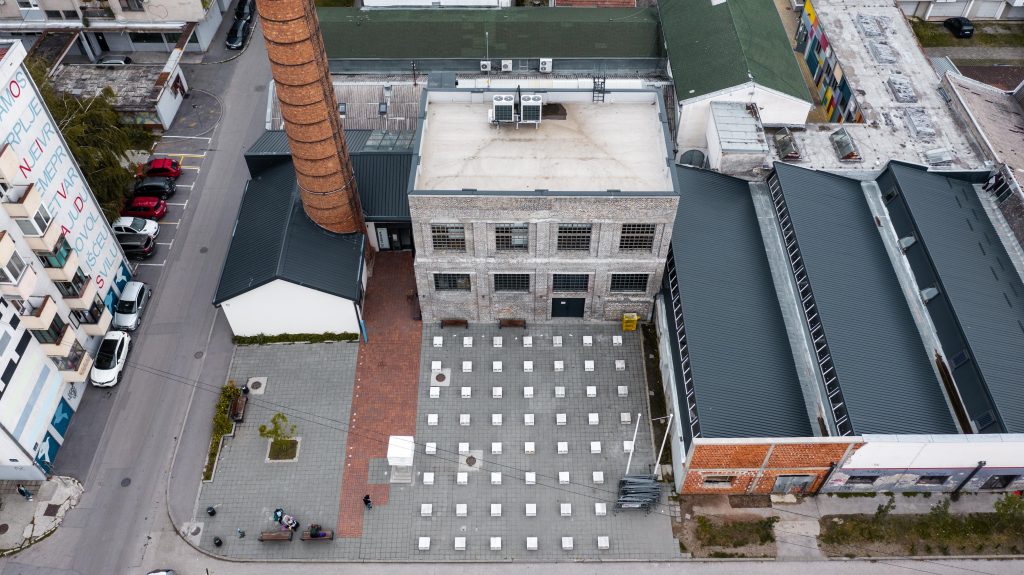
In Zenica, 20,000 square metres are waiting for their next chapter
Within Zenica Business Zone 1, around 20,000 square metres of unprivatised space remained available when the project organised an open day bringing together businesses, urban planners, students, development specialists and city representatives.
For a city shaped by industrial transition, the question is what new economic activity that space can support and how that activity can feed back into the community through jobs, services and new opportunities.
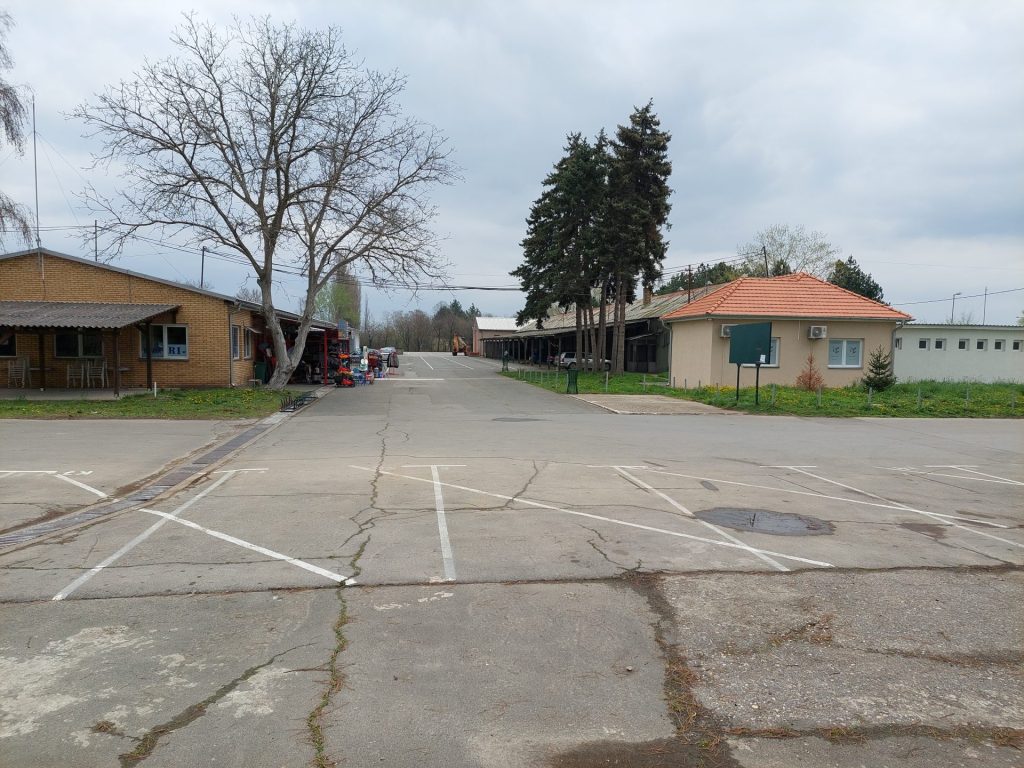
Learning from places that have already changed
The project also looked at examples where transformation is already visible.
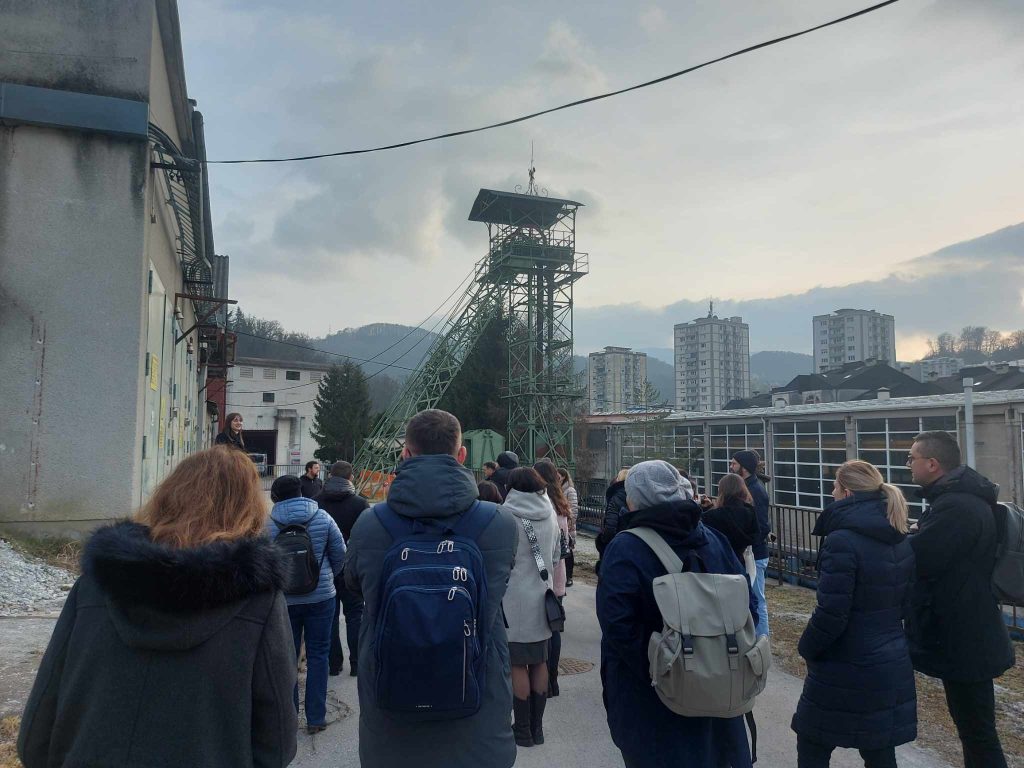
In Hrastnik, Slovenia, a former compressor station is being turned into Kompreshaus, a business incubator designed to provide space for entrepreneurs and new business ideas.
And when ReInd-BBG partners gathered for their final conference in Novi Sad on 8 September 2026, they met in another repurposed industrial building: Svilara Cultural Station, now used for cultural and community activities.
The examples show that there is no single model. One site may return to production. Another may become a business incubator, commercial area, cultural space or mixed-use neighbourhood.
From an idea to an investable site
The difficult part is turning potential into something that can actually happen.
Ownership, contamination, planning rules, infrastructure, financing and redevelopment costs can all slow the process down.
That is why ReInd-BBG also focused on mapping and analysing sites, preparing municipalities and making potential projects easier for investors to understand. At the final conference, the six pilot cities presented what they had learned, while partners introduced a roadmap and recommendations that other local authorities can use.
For Sombor, Zenica and Nikšić, the aim is to create a clearer path from inactivity to a realistic new use.
The core idea is simple: spaces once associated with lost jobs and decline can become active assets again, generating economic activity while bringing more life back into the communities around them.


