
Choosing not to Remain Silent
For more than a decade, human rights activist Rina Braimi has challenged prejudice, defended people whose voices often go unheard and helped create spaces where solidarity can become social change. Her most important work is not always the most visible: an evening phone call from someone seeking help, responding to a situation requiring urgent intervention, providing information to a person who does not know where to turn or helping someone realise that a support network exists.
Every morning, as Rina Braimi walks through the streets of Pristina on her way to work, she carries with her the stories of people who are too often pushed to the margins.
These people come to her. Some need information. Others need legal assistance, protection or simply the reassurance that they are not alone. For Rina, giving them support is not merely a profession. It is a choice she has made every day for more than a decade: to speak when silence would be easier, to challenge injustice when looking away would be more comfortable, and to stand beside those who need someone in their corner.
Rina is a sociologist, human rights activist and Programme Director at the Center for Equality and Liberty – CEL. Her working day usually begins over coffee with colleagues, as they discuss current developments and decide where their attention is most urgently needed.
In human rights work, however, plans can change in an instant. “Sometimes, a single event can completely change the course of the work we had planned,” she explains.
Behind that daily unpredictability lies a deeper commitment—one that began during her first years at the University of Pristina. Sociology helped her understand how inequalities are created, how power operates and why some people are given opportunities while others repeatedly encounter barriers. But understanding inequality was not enough. Rina wanted to confront it.
Challenging the room
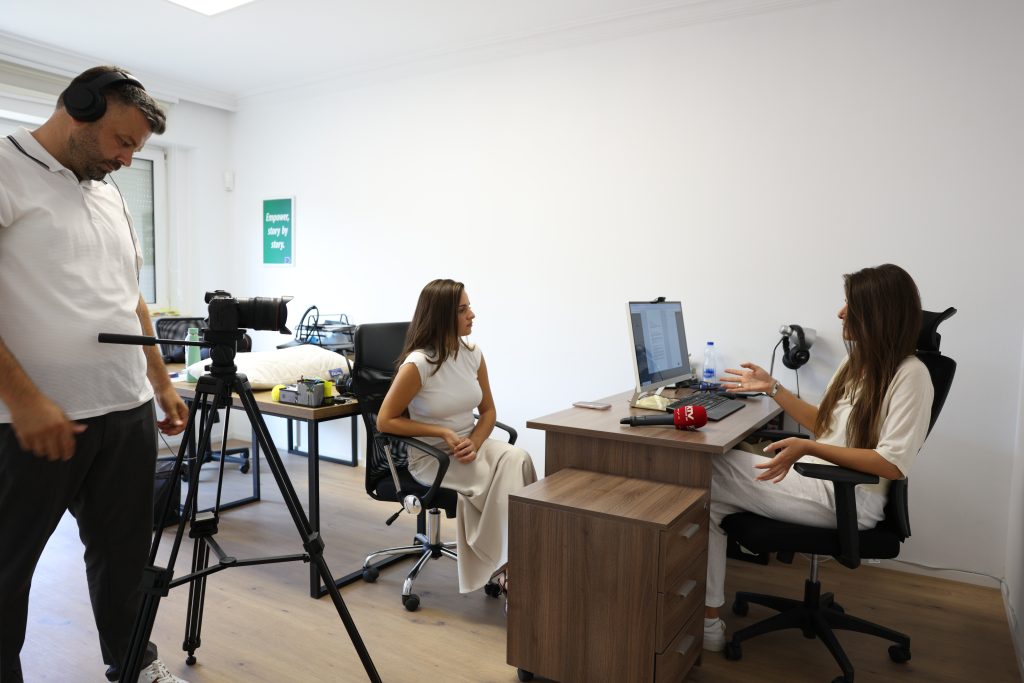
While still a student, she deliberately chose subjects considered to be taboo for her university assignments. Each presentation became an opportunity to begin a conversation about human rights, question established attitudes and challenge the norms present in the classroom.
Not everyone welcomed those discussions. Some professors openly questioned the very principles she was defending. Rather than discouraging her, their resistance strengthened her determination.
“Whenever I stood up to present something, people would say, ‘Oh yes, here she goes again with human rights,’” Rina recalls and adds “I tried to use every space I had to discuss and challenge the norms that were overwhelmingly present in the classroom.”
She understood something early that continues to guide her work today: change often begins when one person is courageous enough to challenge opinion of others—not for the sake of confrontation, but to create space for a different way of thinking.
“I believe that helped shape me personally, but it also gave my colleagues an opportunity and support them. Maybe I even genuinely changed someone’s mind.”
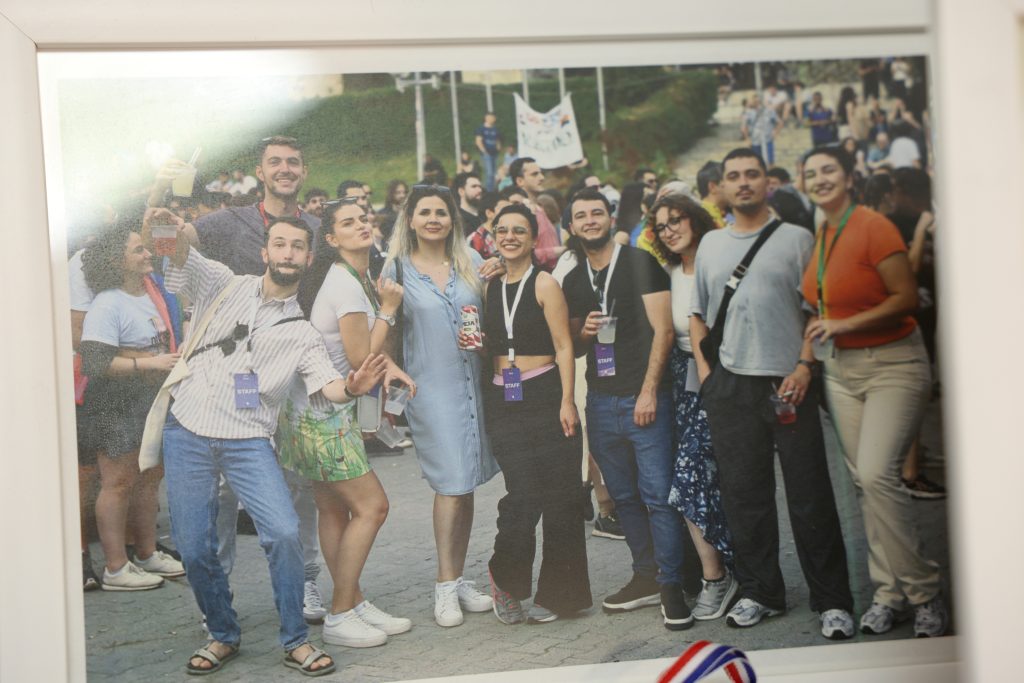
During those early years, Rina also helped initiate the feminist collective “We March, We Don’t Celebrate,” which continues to organise the annual 8 March protest. What began as student engagement, gradually became a lifelong commitment to equality and human dignity.
Activism does not end at five o’clock
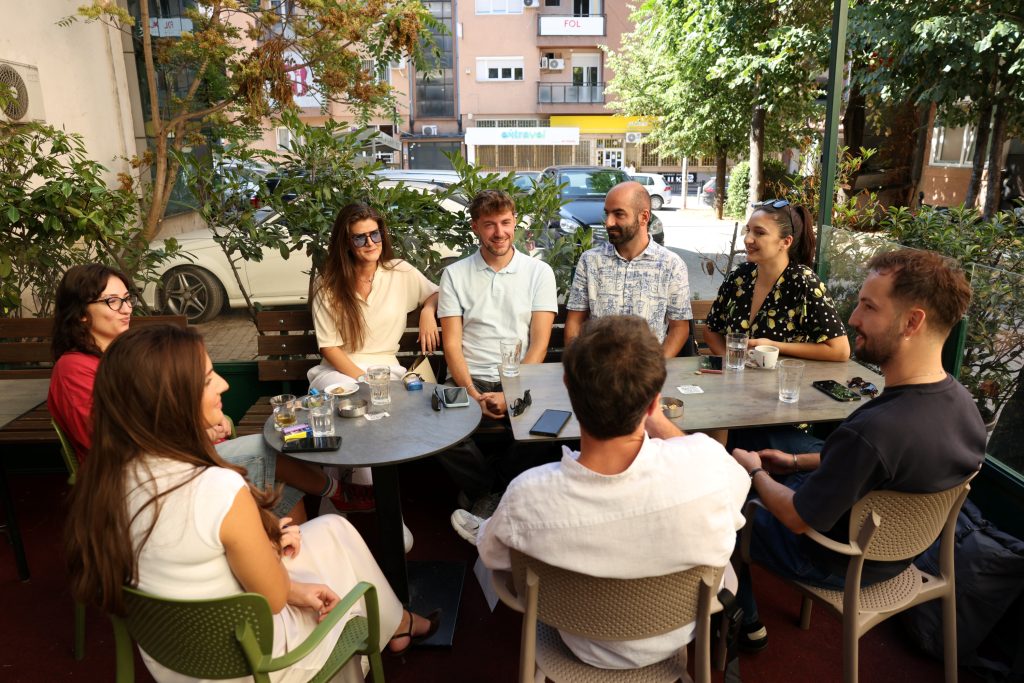
Rina has been part of CEL since 2016. Her work encompasses advocacy, training, cooperation with institutions, awareness-raising activities and direct engagement with young people and communities.
But the most important work is not always the most visible. It may take the form of an evening phone call from someone seeking help. It may mean responding to a situation requiring urgent intervention, providing information to a person who does not know where to turn or helping someone realise that a support network exists.
“I see activism as a way of life,” Rina says. “It does not begin when I enter the office and end when I leave it. A phone call in the evening may be about something that someone in the community needs. It is not something where you can finish work at five and simply say that the day is over.”
People who stand at the forefront of change are often described as fearless. In reality, courage is not the absence of exhaustion, doubt or difficulty. It is the decision to continue despite them.
For Rina, that courage is sustained by other people. She does not believe in the image of the lone activist changing the world single-handedly. Lasting progress, she says, is built through teamwork, trust and solidarity.
“Without a doubt, you cannot function without a team. I strongly believe in the power of coming together and in solidarity” she said
Turning support into lasting change
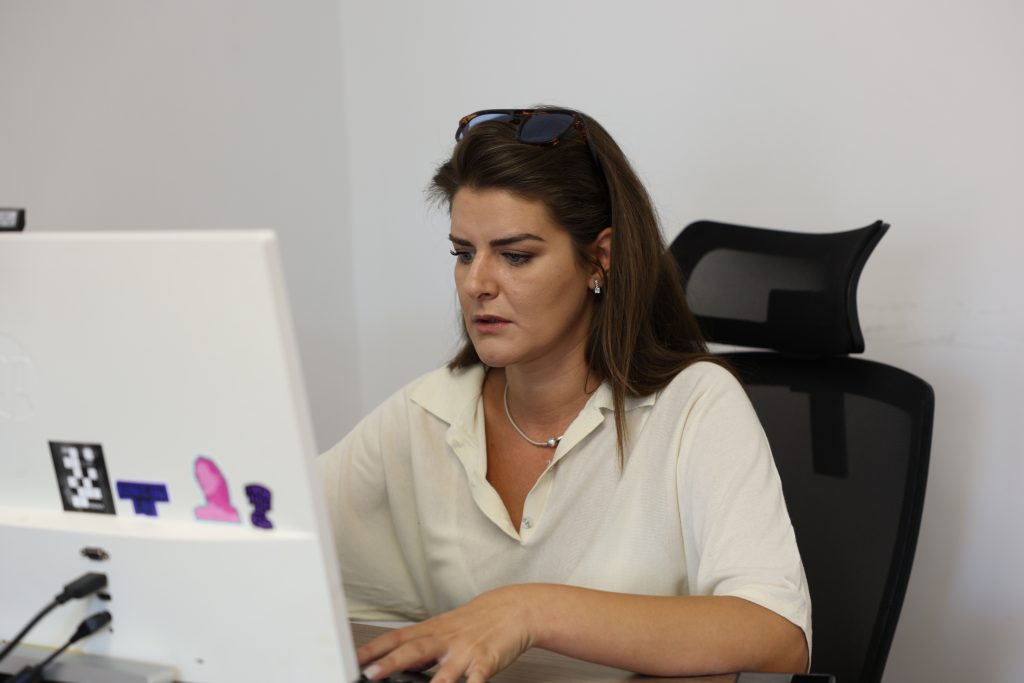
Part of Rina’s work is implemented through projects supported by the European Union. This support has helped CEL strengthen its organisational capacities and build a more sustainable foundation for its future work. It has also enabled the organisation to monitor hate speech, provide free legal assistance, develop public-awareness campaigns and create dialogue with institutions on advancing human rights in Kosovo.
“The support of the European Union has been very important, not only for our organisation but also for many other civil society organisations,” Rina said.
At a time when hate speech spreads rapidly through social media and organised opposition to equality is becoming increasingly visible, this work has urgency. In recent years, Rina has focused closely on the rise of the anti-gender movement in Kosovo—examining how harmful narratives take shape and how they affect people’s rights and freedoms.
Her background in sociology allows her to look beyond individual incidents and understand the structures behind them. “Sociology has helped me understand social structures much better—how inequalities emerge, how power relations function, and how existing inequalities are created and maintained.”
A victory does not have to be visible to matter
Human rights work rarely offers quick or simple victories. Progress can be slow, difficult to measure and almost invisible to those outside it. For Rina, however, change is not defined only by new policies, public campaigns or institutional commitments. Sometimes it is found in one person discovering that they are not alone.
“If we have helped even one person realise that they have a circle of people they can turn to—people they can get information from and people who can support them—then even that is very important to me.”
This is the quieter side of activism: work that may never appear in the headlines but can transform someone’s life. Outside the office, Rina spends time with family and friends and enjoys learning new languages. She tries to maintain a balance between her professional and personal life, although separating the two is not always possible.
Human rights, she explains, are not simply a subject she works on. They have become part of how she understands the world.
There is no perfect moment to begin
After more than a decade of activism, Rina’s message to young people is simple: do not wait until you feel completely ready. There may never be a perfect moment. The circumstances may never be ideal. No one begins with all the answers. “You learn along the way, constantly, and you keep changing,” she emphasized.
Activism can begin in a classroom, with a difficult question. It can begin in a conversation that challenges prejudice, in a public demonstration, in an offer of help or in the simple decision to stand beside someone who has been left to face injustice alone.
As another working day ends and the streetlights come on across Pristina, Rina’s work continues—in the conversations she has opened, the people she has supported and the spaces she has helped make safer. Because change may be slow, but it begins with courageous people who choose not to remain silent.


