
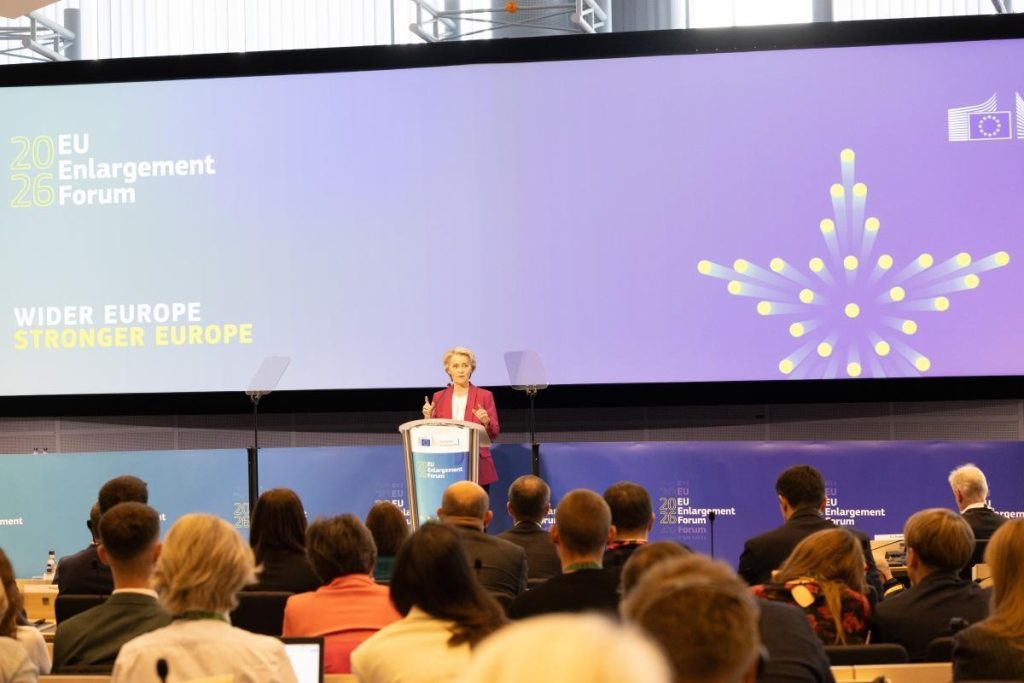
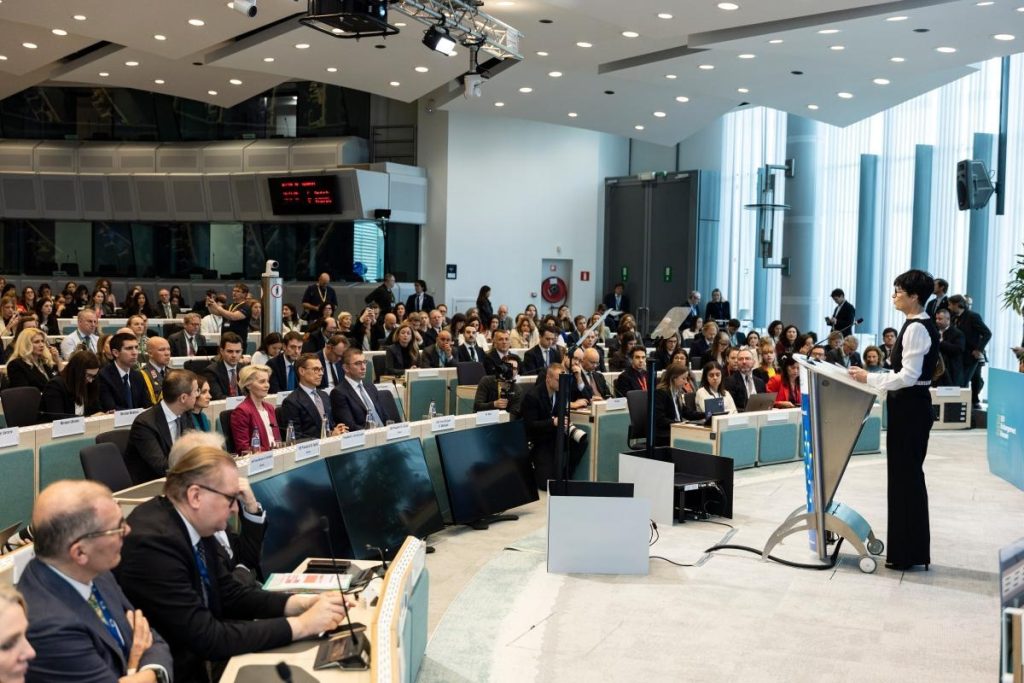
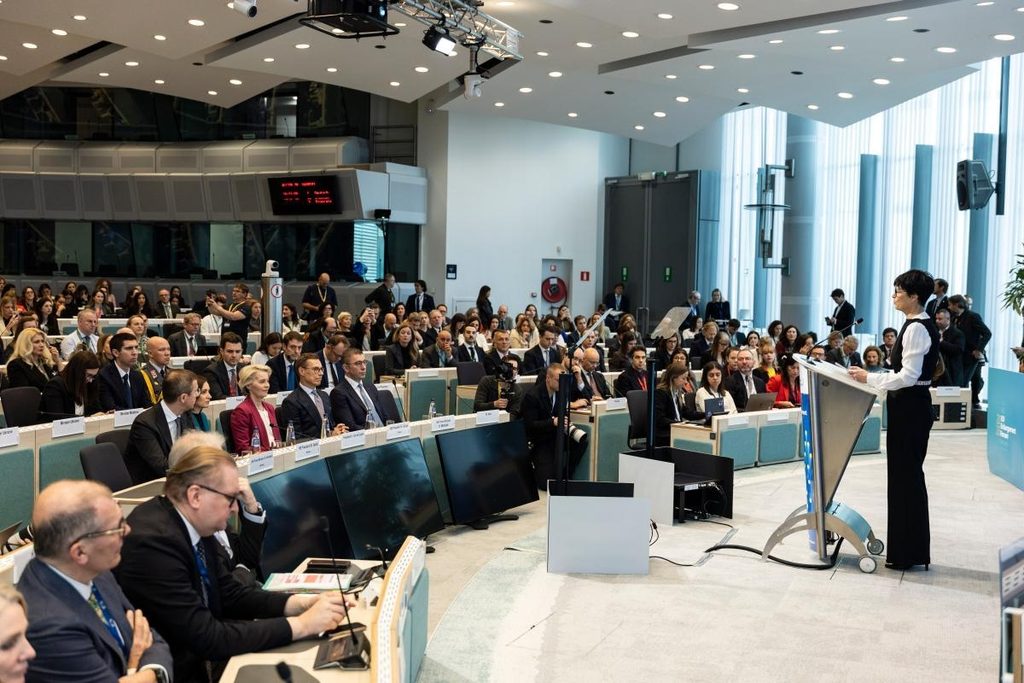
European leaders, policymakers, civil society representatives and young people gathered in Brussels on 16 November for the EU Enlargement Forum 2026, under the theme “Wider Europe – Stronger Europe.” Hosted by European Commissioner for Enlargement Marta Kos, the Forum explored how reforms, investment and closer cooperation can advance EU integration and contribute to a stronger, more resilient Europe.
Opening the Forum, European Commission President Ursula von der Leyen described enlargement as a long-term investment in Europe’s peace, stability and security, emphasising the importance of a fair, predictable and merit-based accession process.
“Enlargement is a geostrategic imperative for us and a long-term investment in our peace, stability and security,” she stated.
Commissioner Marta Kos highlighted the progress achieved over the past year:
“We have made more progress on enlargement this year than in any year since 2002.”
Western Balkan leaders discuss reforms and growth
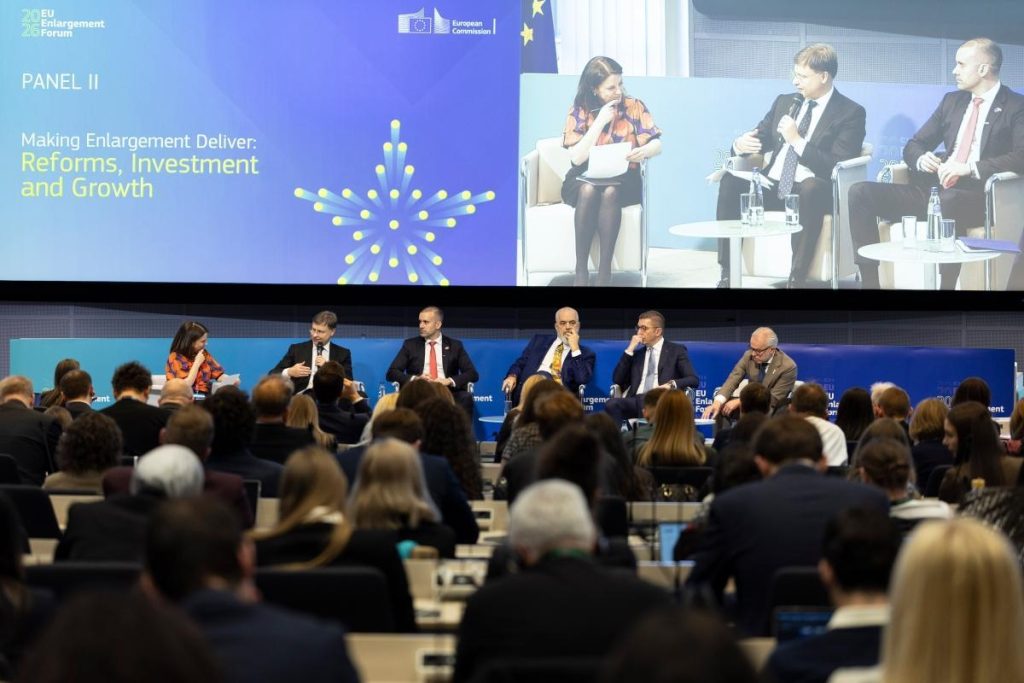
The Western Balkans featured prominently in the Forum’s discussions, particularly during the panel “Making Enlargement Deliver: Reforms, Investment and Growth.”
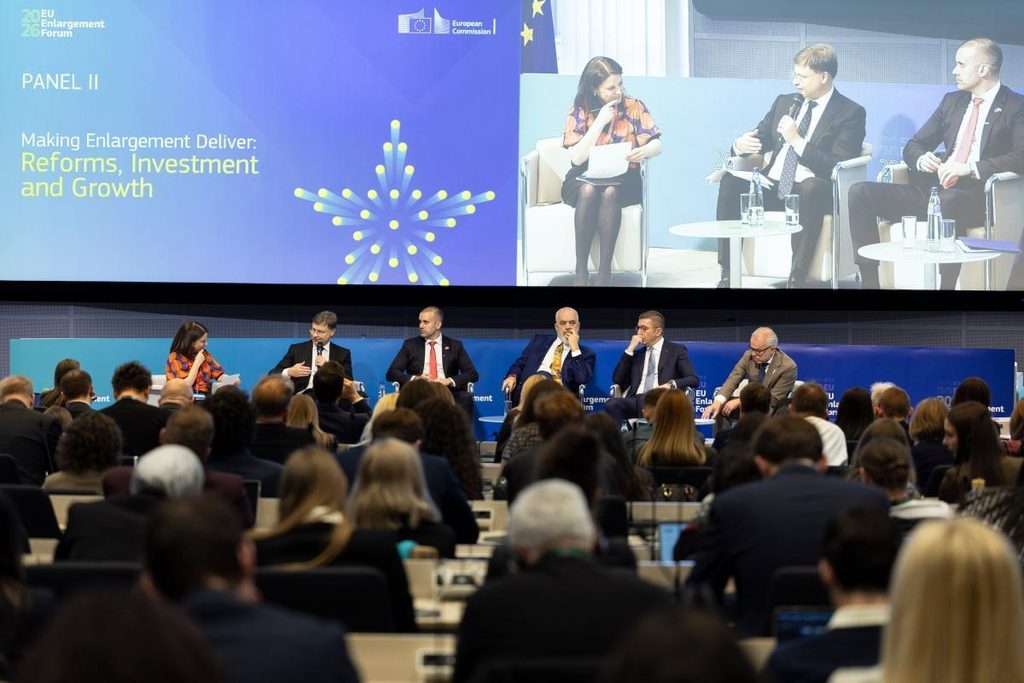
The session brought together Albanian Prime Minister Edi Rama, Montenegrin Prime Minister Milojko Spajić and North Macedonian Prime Minister Hristijan Mickoski, alongside European Commissioner Valdis Dombrovskis and Member of the European Parliament Thijs Reuten.
During the discussion, the three Western Balkan leaders shared their perspectives on the next steps towards EU membership.
Montenegrin Prime Minister Milojko Spajić highlighted his country’s progress in accession negotiations, noting that Montenegro had submitted its positions on all negotiating chapters to the European Commission. He also emphasised the importance of continued diplomatic engagement with EU Member States.
Albanian Prime Minister Edi Rama reiterated his country’s commitment to a merit-based accession process, while recognising Montenegro’s progress towards membership.
North Macedonian Prime Minister Hristijan Mickoski reaffirmed the strategic importance of EU integration, highlighting the need for continued reforms and a clear, credible European perspective.
The discussion reflected the importance of translating progress towards EU membership into economic opportunities, stronger institutions and closer integration with the European Single Market.
These priorities are closely connected to the EU’s Growth Plan for the Western Balkans, which supports reforms and economic convergence while enabling Western Balkan partners to benefit progressively from closer integration with the EU.
Young voices and democratic participation
The Forum also provided space for younger generations and civil society to contribute to discussions on Europe’s future.
A notable contribution came from Aleksandar Baucal, representing Serbia’s Student List, who addressed the Forum on the importance of democratic institutions, the rule of law and Serbia’s European path.
“This is not only about the European Union helping Serbia protect democracy. It is also about a democratic Serbia contributing to a stronger and more resilient Europe,” Baucal said, according to reporting published following his address.
His intervention brought a citizen-focused perspective to the enlargement debate, highlighting the relationship between democratic reforms, public trust and European integration.
Other discussions explored the contribution of civil society, local authorities and businesses, as well as the role of reconciliation and good neighbourly relations in building a shared European future.
Reconciliation and regional cooperation at the heart of enlargement
The Forum also highlighted the importance of reconciliation and good-neighbourly relations in advancing the EU enlargement process.
During the dedicated session, Through Reconciliation Towards EU Enlargement, civil society representatives from across the Western Balkans, including Munira Subašić, President of the Movement of Mothers of Srebrenica and Žepa, Denis Džidić from BIRN Bosnia and Herzegovina, and Donika Emini from d-square Think Tank, explored the role of reconciliation in building a shared European future.
The session brought attention to the legacy of past conflicts and the importance of strengthening trust, dialogue and regional cooperation alongside institutional reforms. Reconciliation also featured in the Forum’s broader discussions, reinforcing its relevance to the region’s European integration.
Turning commitments into tangible progress
The Forum took place following the publication of the European Commission’s 2026 Enlargement Package, which assessed progress and identified reform priorities for enlargement partners.
Across the discussions, enlargement was presented not only as an institutional process but also as an opportunity to strengthen economic cooperation, democratic governance and connections between people.
As Commissioner Kos emphasised, “Enlargement offers us the opportunity to build a stronger Europe, able to shape its own future.”
For the Western Balkans, the Forum reinforced the importance of sustained reforms, regional cooperation and meaningful citizen participation in bringing the region closer to the European Union.


