
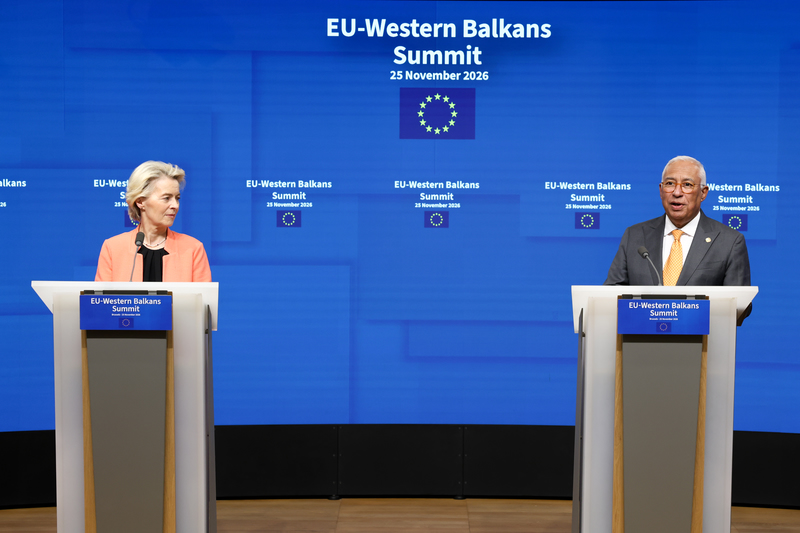
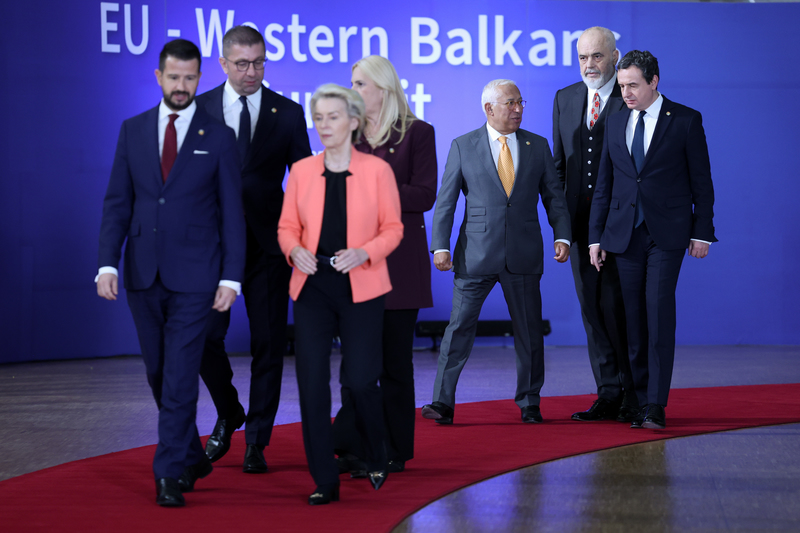
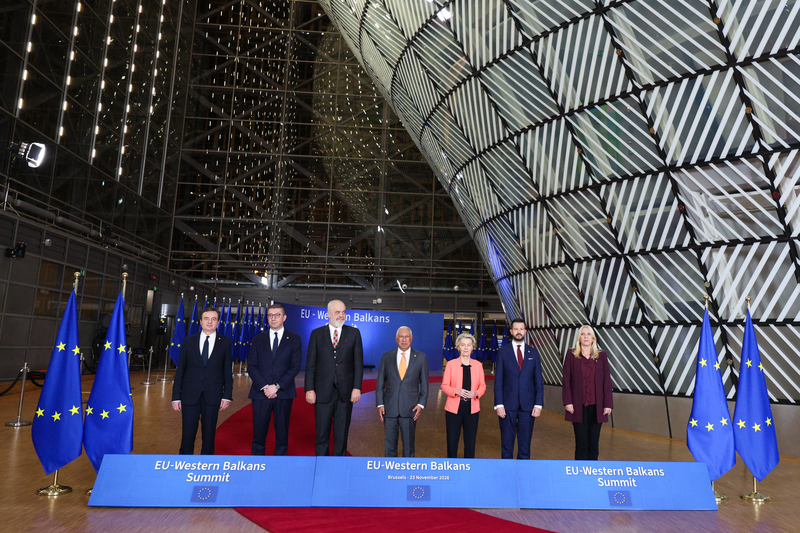
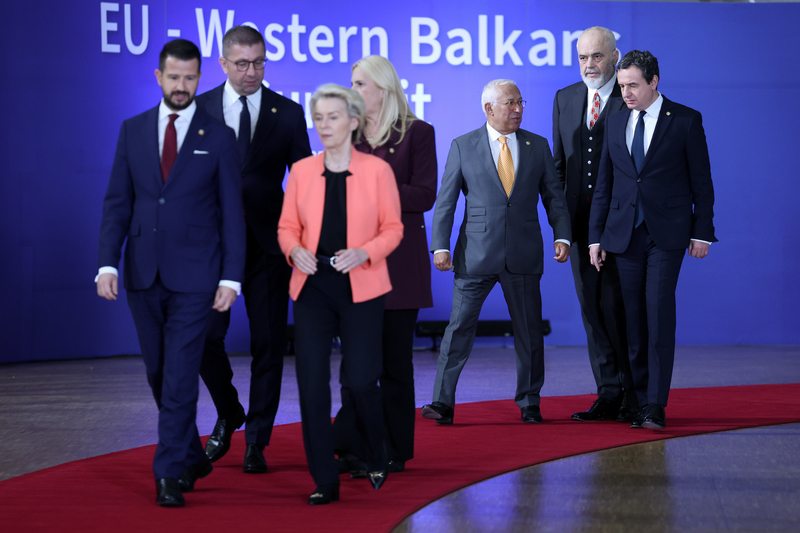
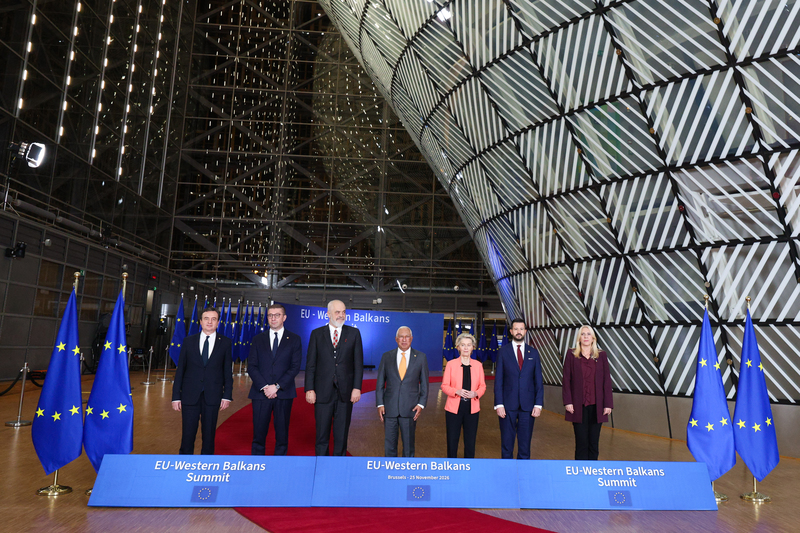
EU and Western Balkan leaders met in Brussels on 25 November for their second summit of 2026, highlighting concrete progress towards EU membership and new opportunities for closer integration. From accession milestones in Montenegro and Albania to advances in digital connectivity and cross-border payments, the meeting focused on bringing the benefits of European integration closer to citizens.
Chaired by European Council President António Costa, alongside European Commission President Ursula von der Leyen, the EU–Western Balkans Summit reviewed developments since the previous meeting in Montenegro in June and set out priorities for further cooperation.
EU membership: A realistic opportunity
One of the summit’s key messages was that EU enlargement is moving forward, with tangible progress for the most advanced Western Balkan partners.
In his remarks following the summit, President Costa pointed to two important milestones: the beginning of work on Montenegro’s Accession Treaty, the first such step in more than a decade, and Albania’s progress in provisionally closing negotiating chapters.
“The progress made by Montenegro and Albania proves that the accession to the European Union is not an illusion but a real opportunity for those who engage,” Costa stated.
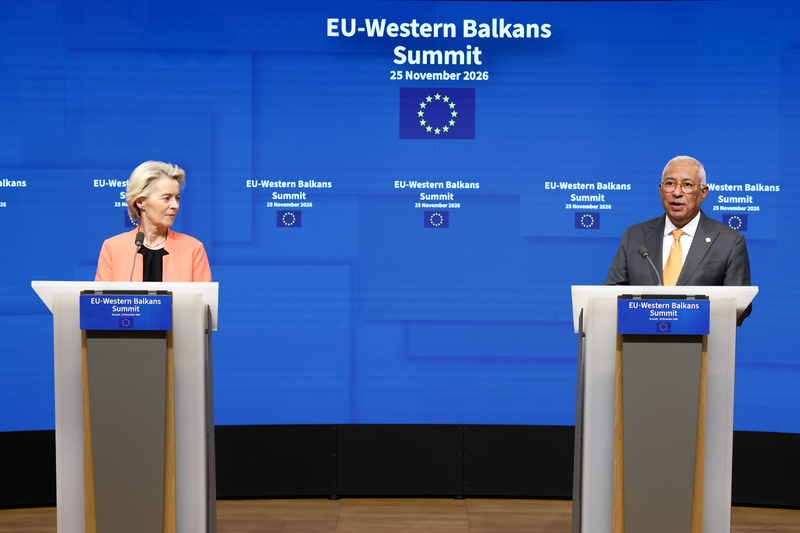
He also encouraged Western Balkan partners to maintain the pace of progress:
“My message to all partners is clear: keep up the momentum and deliver on the reforms that will bring you to the European Union.”
The Brussels Declaration reaffirmed the EU’s commitment to the region’s European future:
“We reiterate our full and unequivocal commitment to the EU membership perspective of the Western Balkans. The future of the Western Balkans is in our Union. Enlargement is a realistic possibility, which should be seized.”
The declaration described enlargement as a strategic investment in European peace, security, stability and prosperity, while calling for faster and credible reforms, particularly in democracy, the rule of law and fundamental rights.
It also emphasised the importance of reconciliation and respect for European values, stating:
“Any glorification of war criminals, genocide denial, and revisionism contradicts the most fundamental European values.”
Regional cooperation, reconciliation and good neighbourly relations were identified as essential to advancing the accession process.
Bringing the EU closer to everyday life
Beyond accession negotiations, the summit highlighted progress in initiatives designed to deliver practical benefits to Western Balkan citizens and businesses even before EU membership.
These include the participation of four Western Balkan partners in Single Euro Payments Area (SEPA) schemes, the rollout of regional instant payment systems and the completion of 500 public Wi-Fi hotspots under the WiFi4WB initiative.
Leaders also welcomed ongoing work to extend the EU’s Roam Like at Home scheme to the Western Balkans, alongside efforts to modernise border crossings, improve transport connectivity and develop digital identity solutions.
As the Brussels Declaration underlined:
“Bringing partners closer to the EU already during the enlargement process remains a strategic focus.”
These initiatives are supported by the Growth Plan for the Western Balkans. With up to €6 billion available for reforms and investments, the Plan aims to accelerate economic convergence and bring the region closer to the EU Single Market.
The declaration also called for timely implementation of reforms to make full use of the opportunities offered by the Growth Plan:
“The EU reiterates its call for the Western Balkans partners to make the most of this unprecedented opportunity as it enters its final phase, through timely implementation of reforms.”
The declaration highlighted the Common Regional Market as an important step towards deeper European integration, including through reduced trade barriers and improved opportunities for small and medium-sized enterprises.
A stronger partnership in a changing Europe
The summit also reflected the growing geopolitical importance of EU–Western Balkans cooperation.
The Brussels Declaration noted:
“The increasingly unstable geopolitical situation, marked by Russia’s war of aggression against Ukraine, conflicts in the Middle East and intensifying global competition, underscores the need for ever stronger ties between the EU and the Western Balkans.”
Leaders discussed energy security, transport connections, cybersecurity, defence cooperation and resilience against emerging threats. The declaration also emphasised the importance of alignment with the EU’s Common Foreign and Security Policy and stronger cooperation on security and defence.
Reaffirming the importance of international cooperation, the declaration stated:
“We will continue to invest in multilateralism and cooperate with the Western Balkans partners to uphold international law.”
On connectivity, the declaration highlighted continued EU support for diversified energy supplies, cross-border infrastructure and the green transition. It also identified Corridor VIII, connecting the Adriatic and Black Seas, as a strategic transport priority.
Regional cooperation and reconciliation remained central themes, with the declaration reaffirming support for the EU-facilitated Belgrade–Pristina Dialogue and encouraging tangible progress towards implementing existing agreements.
Looking ahead, the summit called for continued reform momentum and deeper regional cooperation, with the shared objective of advancing the Western Balkans’ European integration.
As President Costa concluded, “Our Western Balkans partners can count on the European Union. We are your most steadfast partner, and we will remain so.”
Read the full Brussels Declaration of 25 November 2026 for the complete conclusions and commitments of the summit.


