
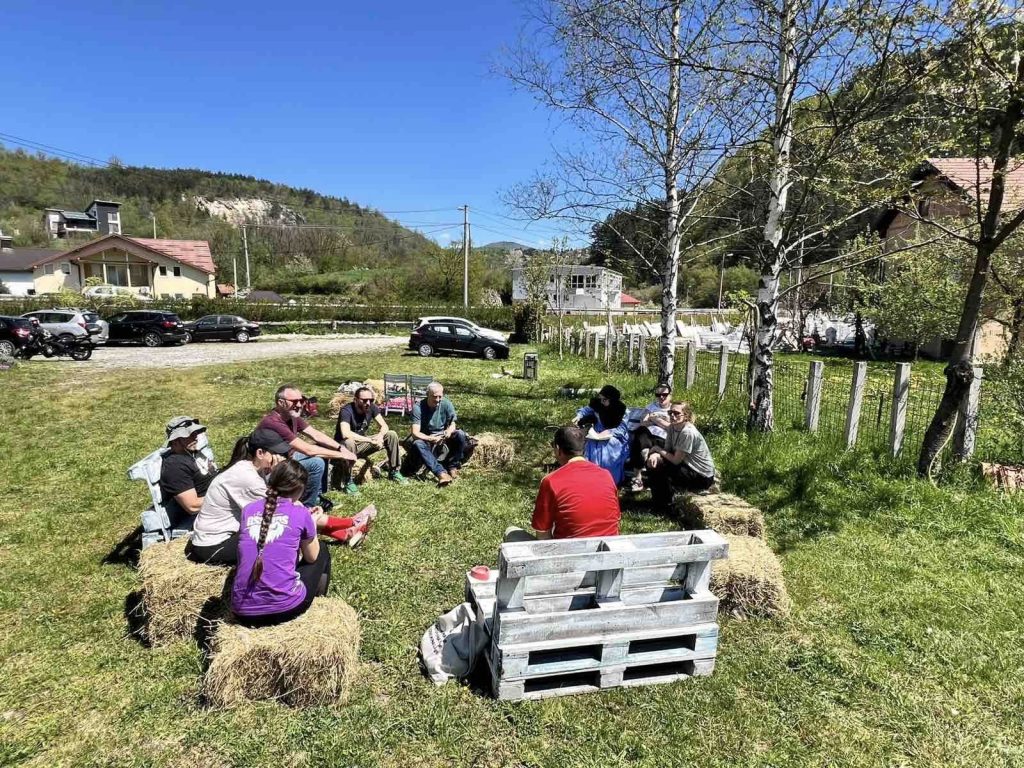
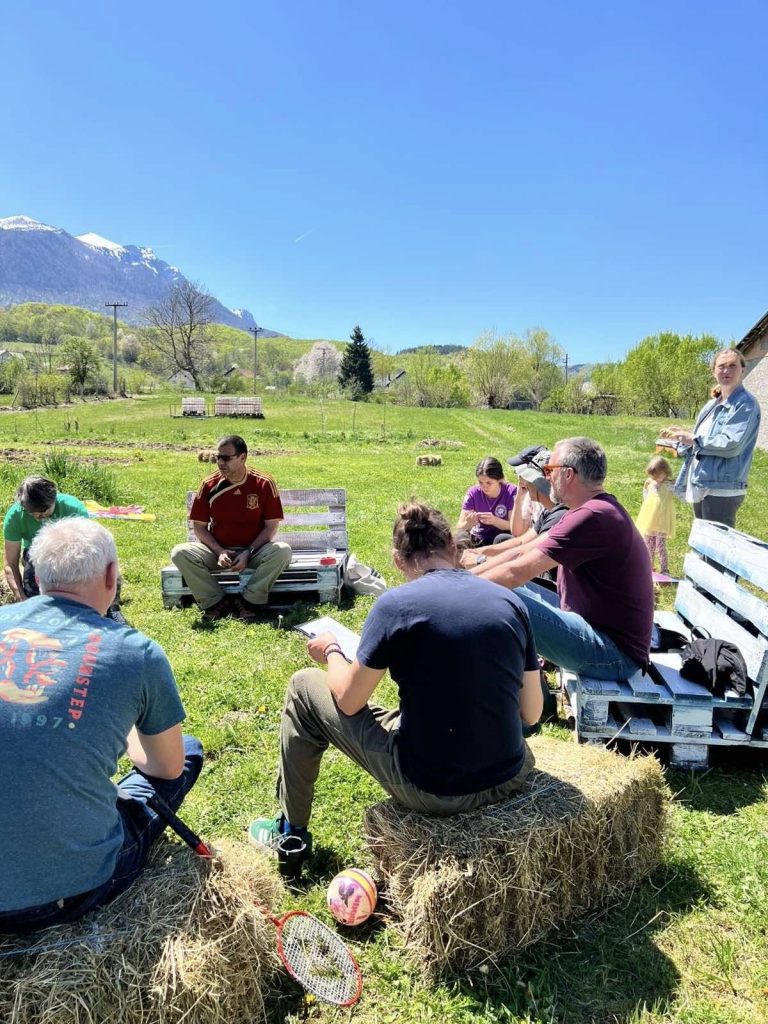
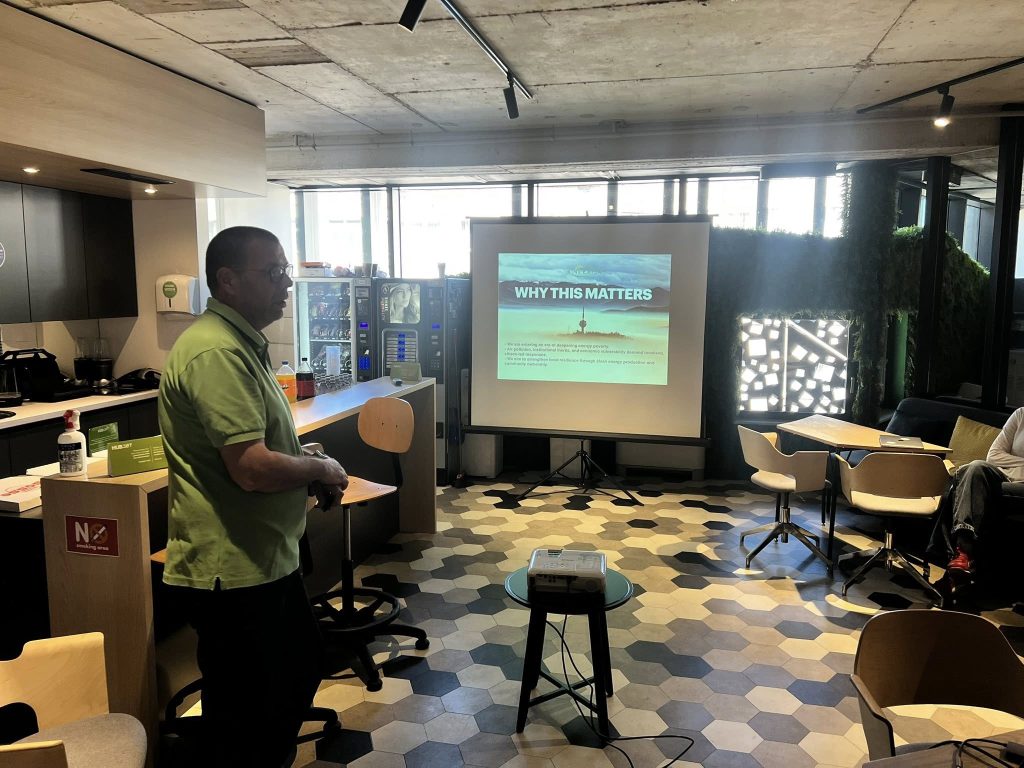
The General Agricultural Cooperative Sinergija Plus from Bosnia and Herzegovina has become a member of the REScoop.eu network. Their idea is for an energy community in the Pazarić settlement near Sarajevo to provide electricity for at least five socially vulnerable households, two small or medium-sized enterprises, and the Cooperative’s agrivoltaic facility. However, their ambition is to reach the level of Krk Island in Croatia, where for several years now almost everyone has been generating electricity for their own needs – for lighting, heating, cooling, cars and bicycles… and they may soon begin selling electricity to other islands as well. On Krk, everything began with waste separation, and they are now also considering desalinating water to prepare for periods of severe drought.
“We hope to establish an agrivoltaic installation covering one dulum of land, beneath which we will grow berries, aromatic herbs and certain vegetables that can thrive in these conditions. At present, we have the enthusiasm, the idea, the plan, funding from the European Union, and the residents of Pazarić are very interested. They know very little about energy communities and electricity sharing, but they are eager to learn and they like the concept. Membership of REScoop is important to us because it enables us to obtain answers to many questions and dilemmas, to see practical solutions, and to network with others who are working on similar initiatives,” says Darjan Bilić, one of the Cooperative’s founders.
He explains that the members of the Cooperative are still learning.
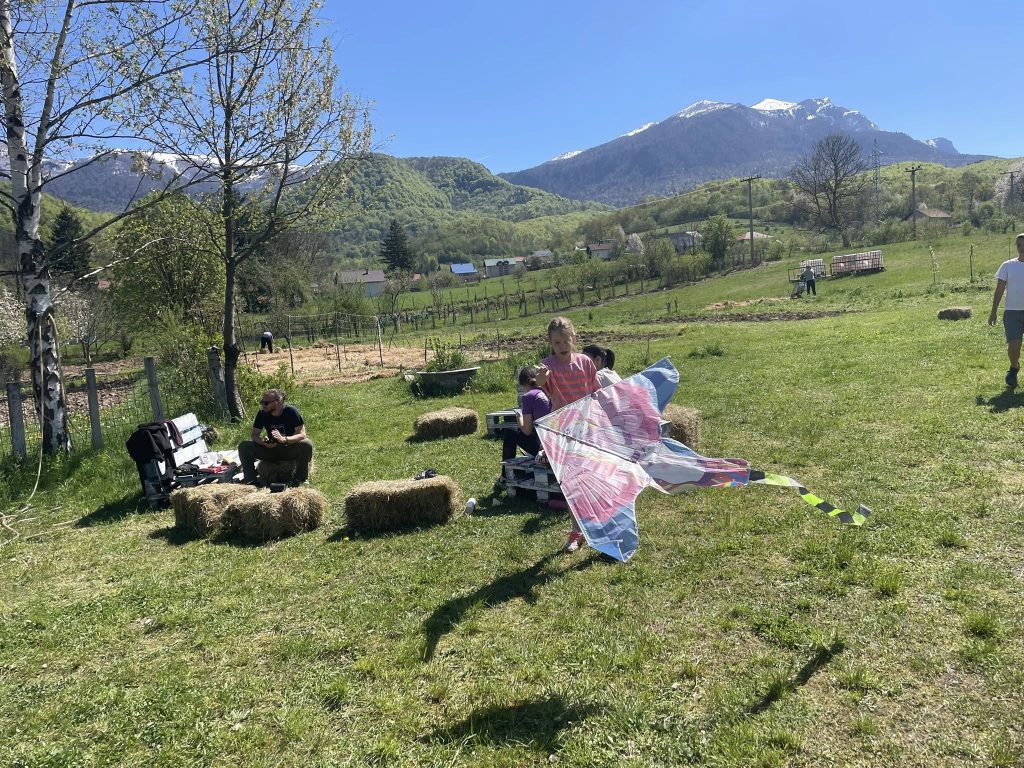
“Across Europe there are cooperatives supplying electricity to more than 60,000 people, heating or cooling entire neighbourhoods, and it is not limited to solar power and heating or cooling. Cooperatives also renovate houses and buildings for their members to improve energy efficiency, while addressing transport, storage and sustainable circular solutions to many of the challenges we face,” Bilić says. He emphasises that non-governmental organisations, women’s associations and informal citizens’ groups can also establish cooperatives and become members of REScoop with relatively little effort and a willingness to learn.
The REScoop.eu network is a growing federation of 2,500 energy communities across Europe, bringing together more than two million citizens who are actively involved in the energy transition. The network operates according to seven cooperative principles defined by the International Cooperative Alliance.
Energy cooperatives are officially recognised under the European Union’s Clean Energy Package as “citizen” and “renewable” energy communities. This is a business model in which citizens jointly own and democratically manage renewable energy or energy efficiency projects. REScoop.eu is also involved in numerous projects financed through European Union funds, covering a wide range of themes aimed at finding solutions for the energy transition towards energy democracy.
For the time being, the founders of Sinergija Plus are promoting this idea in the community where they intend to build their own energy community.
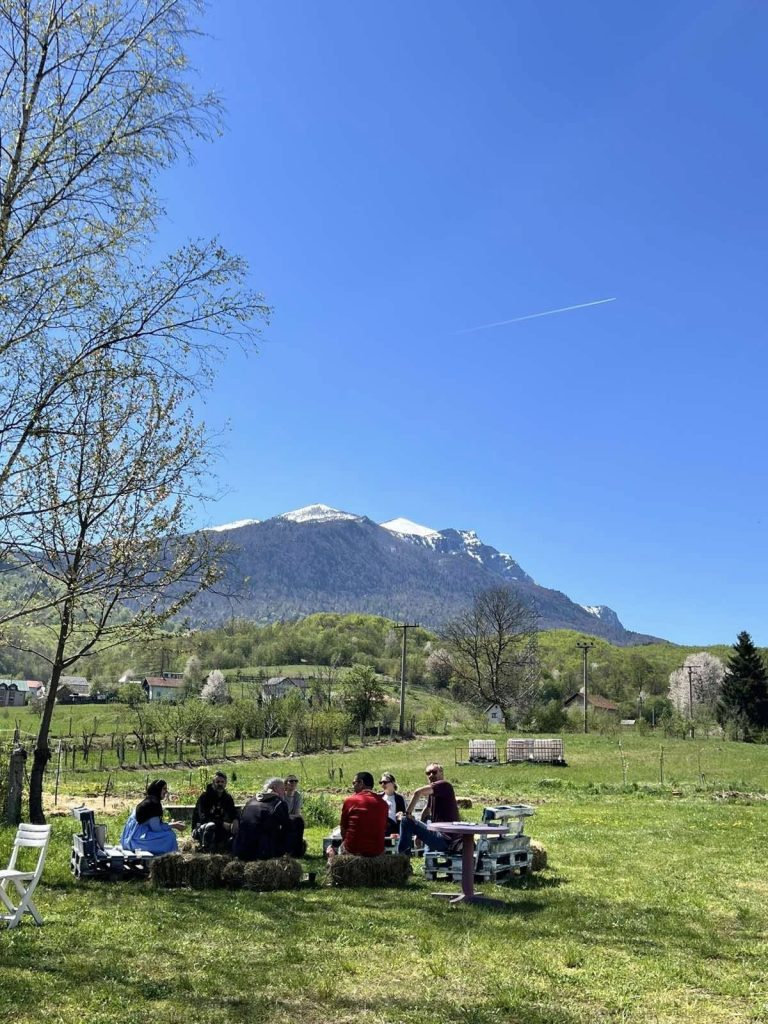
“Electricity sharing in Bosnia and Herzegovina has not yet been clearly regulated. We face problems caused by differing interpretations of legislation at different levels of government – a real patchwork of inconsistencies. Our aim, however, is to move forward gradually and offer people an alternative. We are bringing together households with flat-roofed houses where systems of up to 5 kW can be installed, and we plan to provide small batteries so that residents can immediately experience the benefits,” Bilić explains.
He adds that the Cooperative’s core idea is that energy should not remain exclusively in the hands of large systems and monopolies, and that the added value created should not leave local communities and disappear into unknown pockets. Instead, the benefits of energy production should remain within the local community.
“When schools, municipalities, citizens and local businesses participate together, energy becomes a tool for a safer, fairer and more resilient future. Energy does not divide – it brings people together and offers opportunities to communities and individuals who have long been overlooked,” says Bilić.
There are still relatively few energy communities across the Western Balkans. Croatia has the largest number, while Serbia and Montenegro have only a handful. In Bosnia and Herzegovina, alongside Sinergija Plus, two additional initiatives are currently being developed with the support of experts from ReSET. At the same time, the German development agency GIZ is working with local authorities, municipalities and cities to establish dozens more energy communities.
REScoop.eu is also involved in numerous projects financed through European Union funds, covering a wide range of themes aimed at finding solutions for the energy transition towards energy democracy.
As a federation, REScoop has four clearly defined objectives: to represent the voice of citizens and energy communities before European decision-makers; to support new and existing energy communities through tools, knowledge and contacts that help them grow and develop; to facilitate international cooperation and the exchange of experience among energy communities; and to promote the cooperative business model in the energy sector.
REScoop.eu was established in 2013 as a Belgian non-profit association, but it operates according to cooperative principles. It is a member of Cooperatives Europe, the European branch of the International Cooperative Alliance, which represents more than 160,000 cooperative enterprises and 123 million members across Europe. REScoop.eu is also one of the co-founders of the European cooperatives REScoop MECISE and The Mobility Factory, through which it provides financing services and electric vehicle sharing solutions. It also collaborates with other European organisations through the Community Power Coalition network.


