
European Commission President Ursula von der Leyen’s visit to the Western Balkans was marked by friendly and optimistic messages. Montenegro could become the EU’s 28th member by 2028, while North Macedonia can expect further EU investment and progress towards unblocking its accession negotiations. Even before the Commission President had left Montenegro, large video screens in the capital, Podgorica, were displaying the message “28th by ’28”.
Kosovo and Albania also received encouraging messages – the EU stands by them, but Kosovo needs to significantly accelerate reforms and establish fully functioning institutions, while Albania needs to maintain its focus on reforms ranging from the judiciary to environmental protection.
During her three-day visit to the Western Balkans, von der Leyen did not visit Belgrade or Sarajevo because election campaigns were under way: elections were held in Bosnia and Herzegovina on 4 October and are due in Serbia on 25 October.
Albania
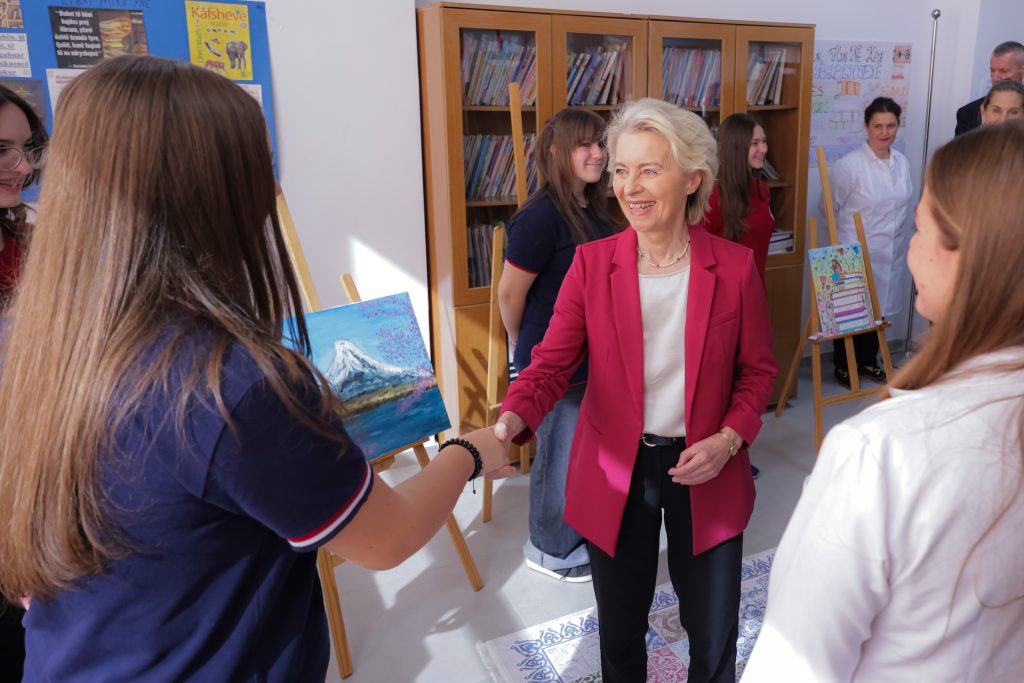
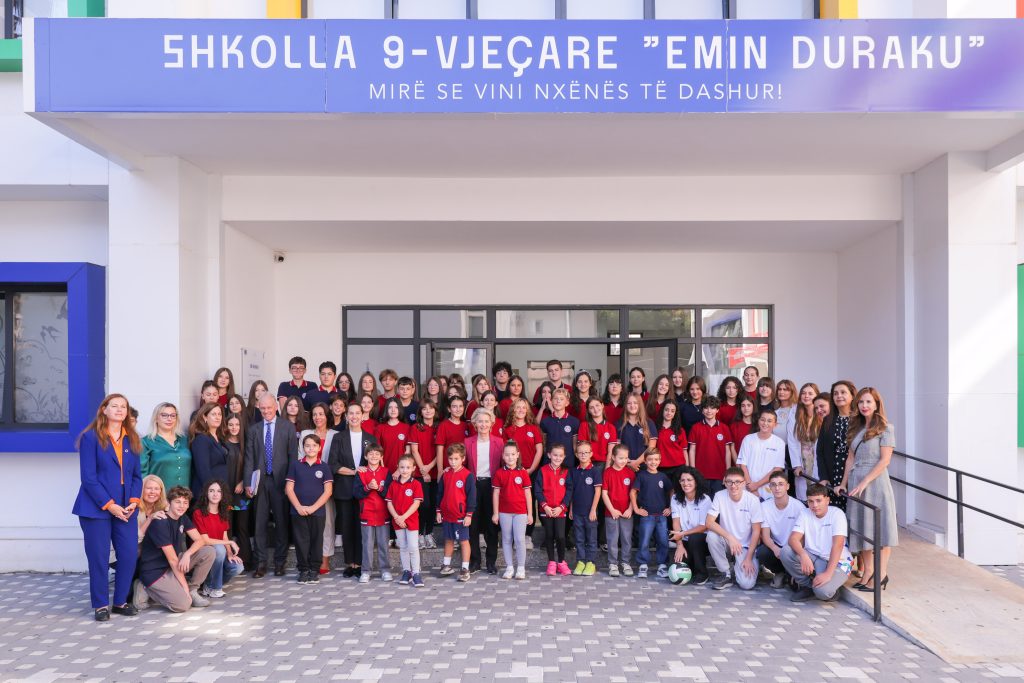
The tour began in Albania, where von der Leyen was hosted by Prime Minister Edi Rama.
“You are working hard to turn Albania’s European dream into reality. Keeping the focus on reforms, from the judiciary to environmental protection, is crucial, while maintaining a strong dialogue with society. The goal is in sight. This is how we will achieve it together,” the European Commission President said.
She stressed that Albania is among the frontrunners in the accession process and that the European Commission is preparing accession roadmaps for all frontrunner countries, setting out concrete steps towards membership.
She recalled that the EU had stood by Albania in difficult times, including after the 2019 earthquake, which led to the establishment of the EU4Schools programme, through which 63 schools were rebuilt.
Montenegro
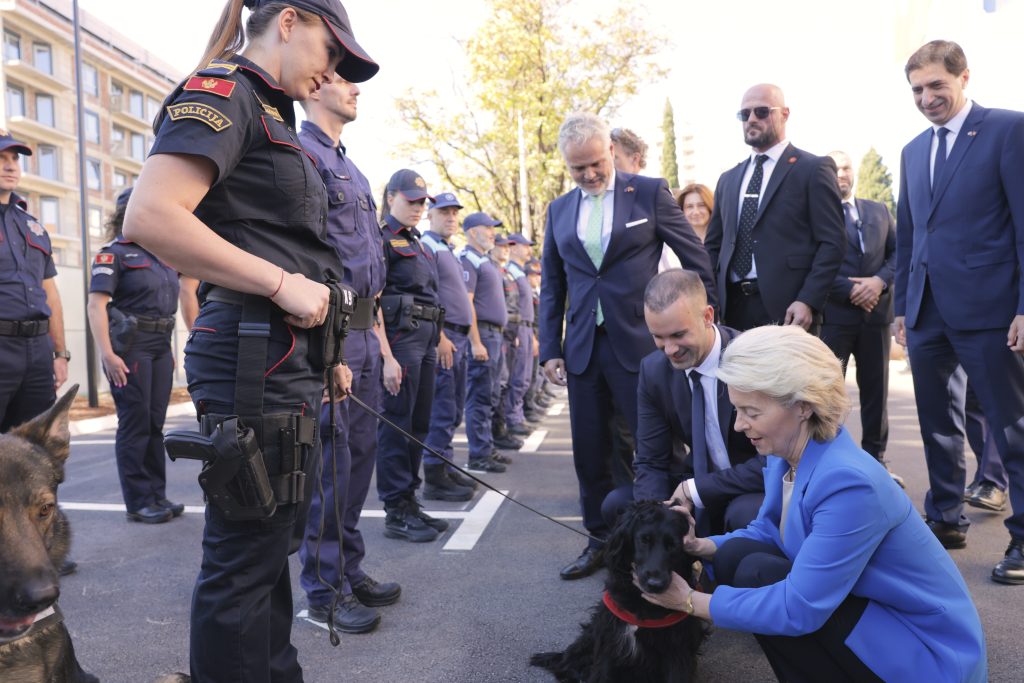
In Montenegro, von der Leyen attended the official opening of the new National Coordination Centre for the Border Police and stressed that the EU, too, is preparing for Montenegro’s borders to become European Union borders.
“Work is advancing on preparing your Accession Treaty. Next week, the European Commission will present its pre-enlargement policy reviews to ensure that the EU is ready to welcome new members. You are getting ready, and so are we. We believe Montenegro will be the 28th by ’28, and we will support you every step of the way. The finish line is in sight, and reaching it would send a powerful message across the Western Balkans that reforms deliver results and that EU membership is within reach,” von der Leyen said.
Her host in Montenegro, Prime Minister Milojko Spajić, said that Montenegro was “always one step ahead on its path towards the EU”.
North Macedonia
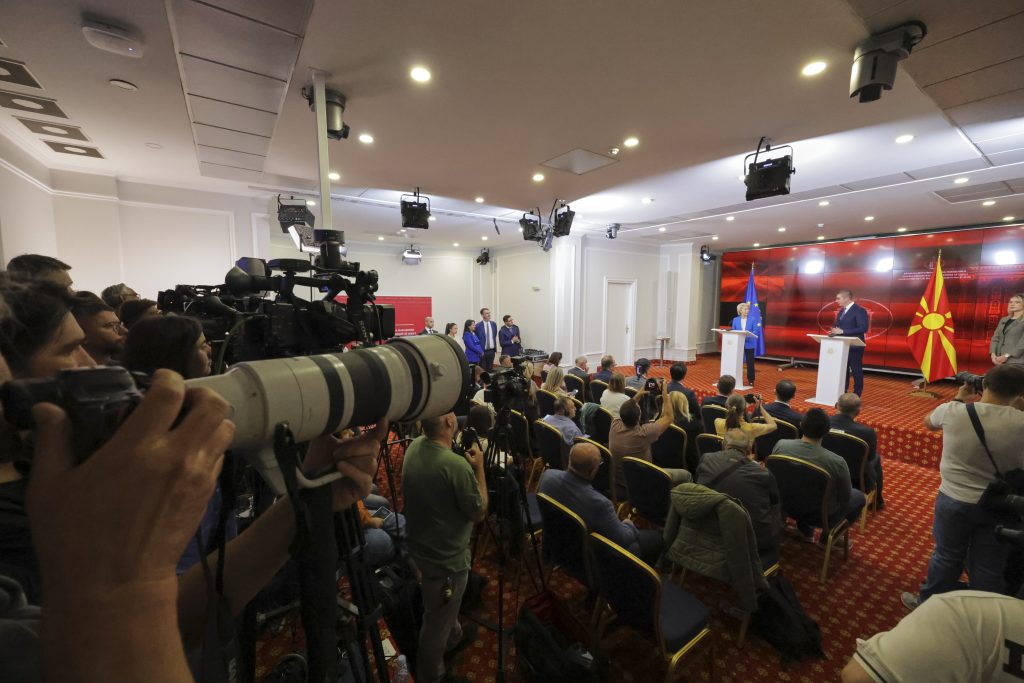
In Skopje, the European Commission President met Prime Minister Hristijan Mickoski and President Gordana Siljanovska-Davkova.
“North Macedonia has made the Growth Plan a real success. More EU investment will be coming soon. We are also moving closer together in the field of artificial intelligence through our new AI Factory Antenna, VEZILKA. This is gradual integration at its best,” von der Leyen said.
She stressed that North Macedonia belongs in the European Union, that the enlargement process is gaining momentum and that “there is one key step North Macedonia needs to take in order to move forward”, adding that the country should seize the opportunity.
Von der Leyen expressed confidence that the dispute between North Macedonia and Bulgaria could be overcome through intensive and comprehensive meetings and dialogue, which should begin as soon as possible.
“My personal opinion is that we can move very quickly with North Macedonia, because we are already working intensively on the reforms that are necessary,” von der Leyen said.
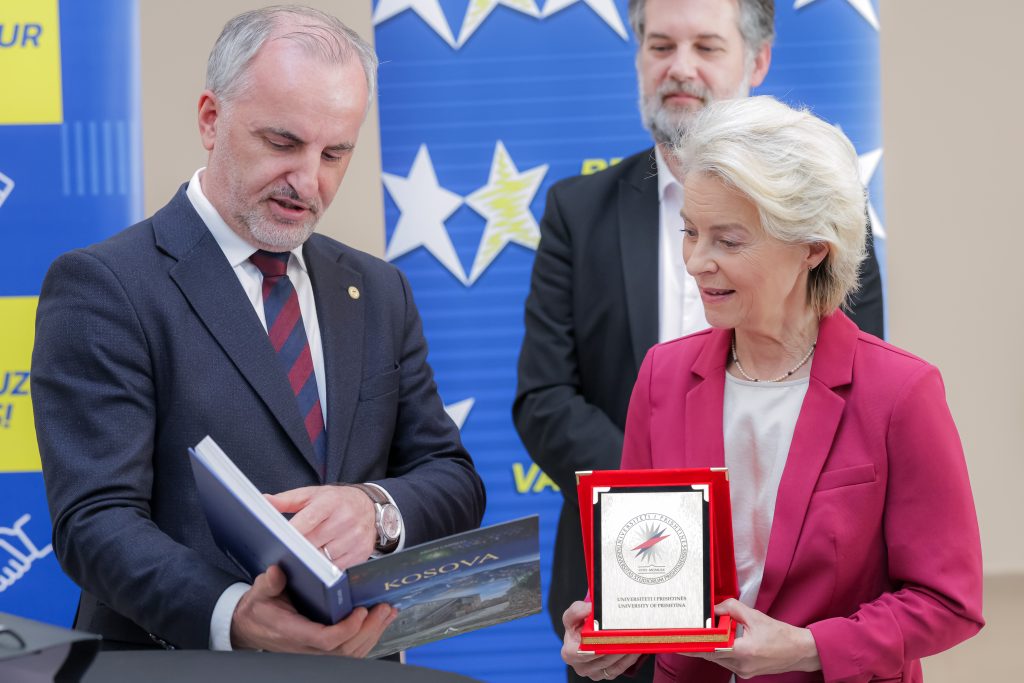
Kosovo
In Kosovo, von der Leyen held talks with Prime Minister Albin Kurti and acting President Albulena Haxhiu, and visited the Faculty of Mathematics and Natural Sciences in Pristina, where she spoke with students.
“These are precisely the students who will drive innovation in their countries. Start companies, create jobs and contribute to economic growth. And prepare Kosovo for its European future,” she said.
During the talks, she stressed that institutional stability is crucial for Kosovo, as the foundation for reforms, growth and progress on its European path.
“We know how European the people of Kosovo feel. Already today, we can bring Kosovo closer to the EU, from roaming to investment, and the Growth Plan can help fulfil your aspirations. This requires a significant acceleration of reforms and fully functioning institutions.” von der Leyen said.
She recalled the repression and humanitarian crisis of 1999, while highlighting the European Union’s continued support for Kosovo.
“Nothing and no one can rewrite Kosovo’s history. The year 1999 is deeply embedded in Europe’s collective memory: the violent repression, the humanitarian crisis and the suffering your people endured,” she said, stressing that the EU had supported reconstruction, economic development, reforms and the building of a modern and democratic Kosovo whose future lies in the European Union.
Throughout the visit, von der Leyen’s message was consistent: the EU stands by its Western Balkan partners, and the pace of each country’s reforms will decide how quickly it moves towards membership and EU integration processes.


