Reflections from the student seminar in Poland


Reflections from the student seminar in Poland
Written by Jana Andreska, Young European Ambassador from North Macedonia
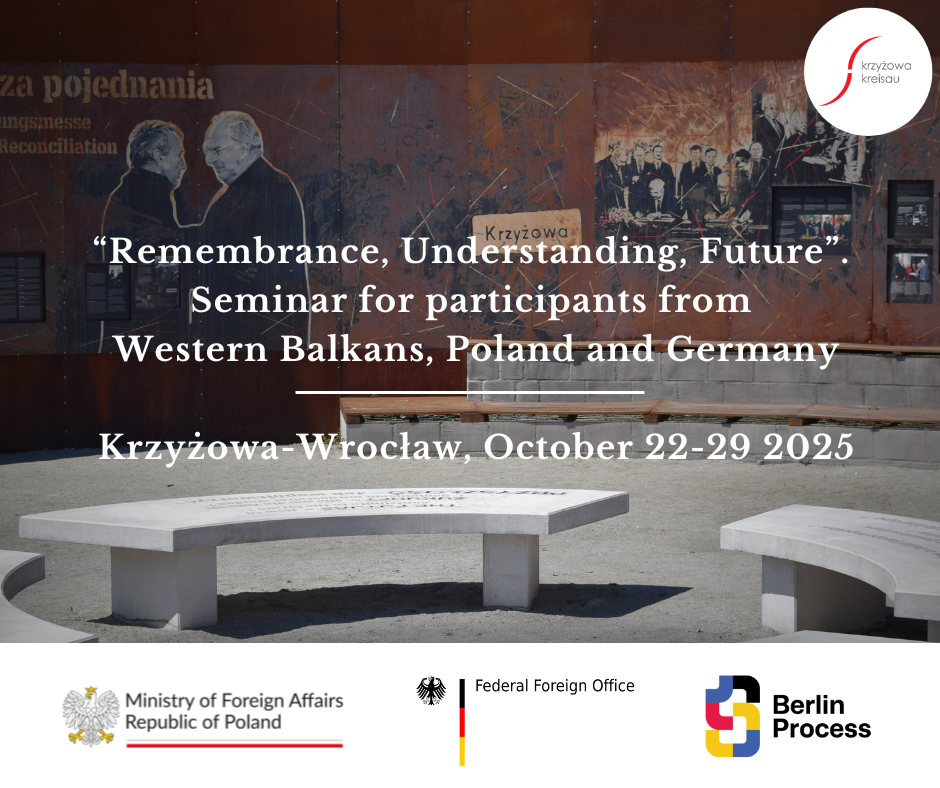
The Fifth Edition of the “Remembrance, Understanding, Future” seminar took place on 22 – 29 October in Krzyżowa and Wrocław. The seminar is a joint initiative of the Ministry of Foreign Affairs of the Republic of Poland, the Federal Foreign Office of the Federal Republic of Germany, and the “Krzyżowa” Foundation for Mutual Understanding in Europe. In addition to participants from the Western Balkan Six, Poland, and Germany, this year’s seminar also welcomed participants from Bulgaria and Croatia, bringing together a total of 30 participants from 10 countries for the 2025 edition.
I had the privilege of attending this seminar as a representative of the YEA Network, and the experience was far more inspiring than I had imagined. In this blog, I want to share some of the lessons I learned, the moments that stayed with me, and why this seminar left such a lasting impression.
LESSONS FROM HISTORY: The path toward Polish-German reconciliation
The student seminar aimed to present the experience of the Polish-German reconciliation process after World War II overcoming a difficult and traumatic past, and to emphasize contemporary examples of Polish-German dialogue, while highlighting the lessons that youth from the Balkan countries can learn from the successful Polish-German example of cooperation and reconciliation, despite a burdensome history.
On our first day, in the lecture “Polish-German Relations 1939 -1989 – 2025,” presented by Dr. Tomasz Skonieczny, Deputy Head of the European Academy at the Krzyżowa Foundation, we explored key historical developments as well as several landmark moments remembered today as important steps toward reconciliation, moments marked by remorse, and gratitude.
One of the first attempts of reconciliation after the tragedies of the Second World War was the Letter of Reconciliation of the Polish Bishops to the German Bishops in 1965, which marked a historic moment in post-war Europe. Commonly referred to by its most memorable phrase, “We forgive and ask for forgiveness”.
Following, on 7 December 1970, Chancellor Willy Brandt and Polish Prime Minister Jozef Cyrankiewicz signed the Warsaw Treaty. Before signing the treaty, Brandt laid a wreath at the Monument to the Unknown Soldier and at the Monument to the Victims of the Warsaw Ghetto. Unexpectedly, after laying down the wreath, Chancellor Brandt knelt on both knees as a symbol of penance and remorse. As the Chancellor rises to his feet, he has made history. From this day on, the world will talk about the ‘Kniefall von Warschau’ (‘the Genuflection of Warsaw’).
At the beginning of the 80s, in Western Germany a spontaneous action was organized in support of the activities of the “Solidarity” movement. Also, civil society played an essential part in the Polish-German reconciliation. Endless NGOs were involved in activities and projects bridging the two nations together. Youth camps, historical tours, exchange programs and joint projects contributed to a shared sense of community.
In the following lectures, we turned our focus to the development of the Polish-German history textbook, guided by a lecture and discussion with Prof. Igor Kąkolewski, Director of the Centre for Historical Research of the Polish Academy of Sciences in Berlin. In 1972, the German-Polish Textbook Commission was established. Comprising historians, geographers, and educational specialists from both countries, the Commission aimed to confront and replace distorted narratives with historically accurate and balanced interpretations. In 2008, it initiated work on the “Joint German-Polish History Book,” a groundbreaking project intended to create a shared perspective on European and national history. This long-term cooperation resulted in the publication of the first volume in 2016, titled “Europe – Our History.”
WHERE HISTORY LIVES: Learning through places of memory
In addition to thematic lectures and interactive discussions, study visits to historical sites contributed to the seminar’s dynamic nature. During our stay in Wrocław, we explored the Four Denominations District, had a reception at the Consulate General of the Federal Republic of Germany, as well as a guided tour of the ‘Wrocław 1945 – 2016’ exhibition at the Zajezdnia History Centre.”
Wroclaw was the biggest city in Poland’s Western Territories that came within Poland’s borders after World War II and where the entire exchange of the population took place as a result of post-war migrations from 1945. The most impressive sight was seeing many little gnomes adorning the city’s landscape. As adorable as they are, these Polish gnomes carry a deeper significance. They serve as mini memorials to Poland’s Orange Alternative resistance – an underground anti-communist movement active in cities across Poland during the 1980s.
We continued our journey in Krzyżowa, located in the region of Lower Silesia, about 60 km to the south west of Wrocław. The village also became notable due to a significant historical event: the Reconciliation Mass, held in the courtyard of today’s meeting centre on 12 November 1989.
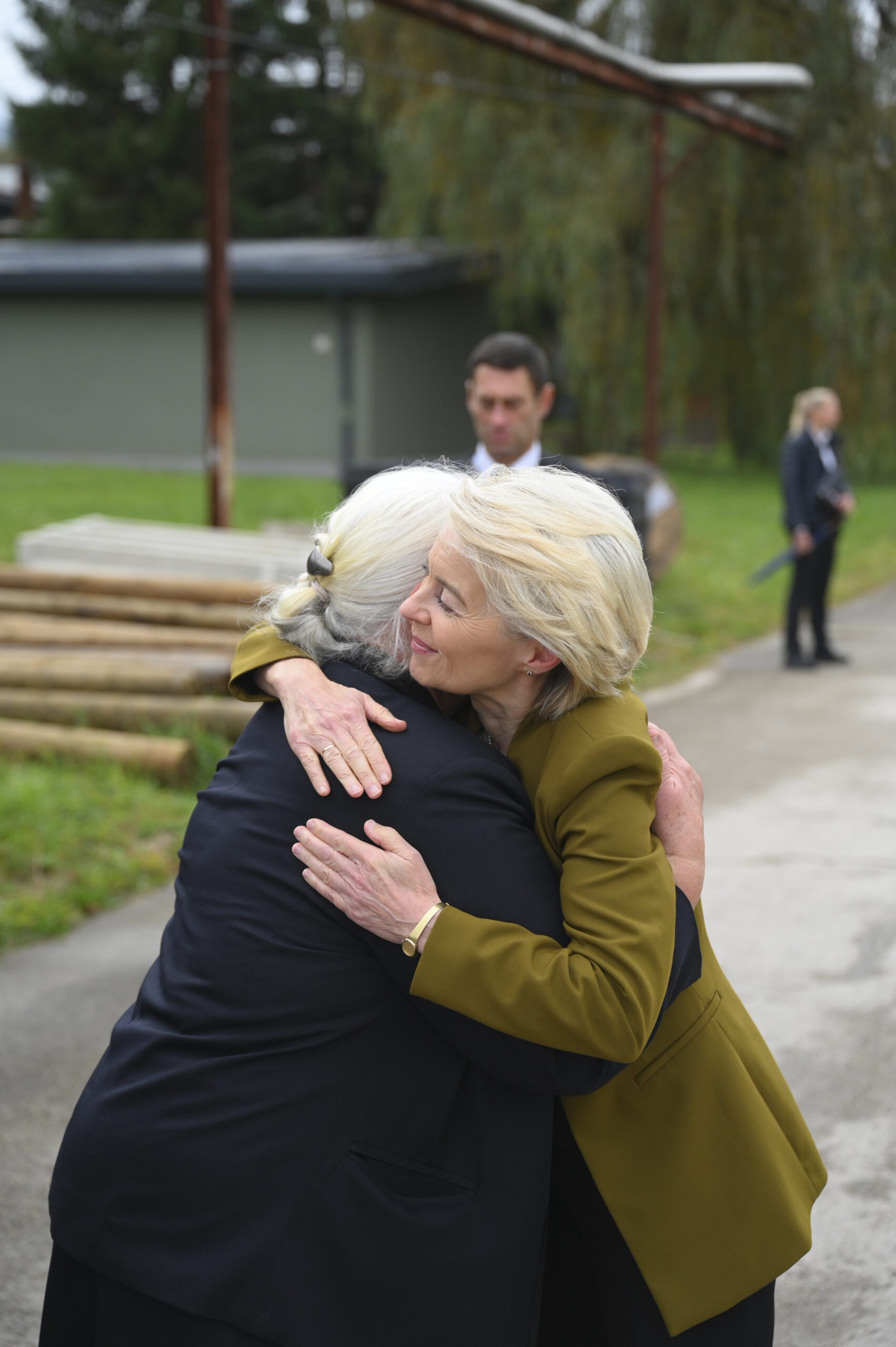
For me, our stay in Krzyżowa truly showed the spirit of connection among youth, built in the peaceful atmosphere of the village.
Our visit to Gross-Rosen in the following days left a deep emotional impact, reminding us of the human suffering endured there. Today, the Gross-Rosen Memorial site serves as a place of remembrance and education, providing a comprehensive understanding of the camp’s history and its role in the Holocaust.
As our final destination, we visited the twin cities of Görlitz and Zgorzelec, a perfect culmination of our journey, where we could see firsthand the inspiring results. Görlitz in Germany and Zgorzelec in Poland are two cities divided by the Neisse River, forming a unique cross-border urban area just across the bridge. When you walk or drive across, you might not even notice that you have just crossed the border if you don’t pay attention to the language on the signs. In Görlitz, we met with students from Augustum-Annen-Gymnasium, who presented their bilingual-binational German-Polish educational programme, as well as listened to presentations from local authorities about cooperation, reconciliation and cultural exchange of the two cities.
CONCLUSION
As a Young European Ambassador and political science student this seminar was a valuable opportunity for me to engage in the themes of history, reconciliation and critical reflection, not only an act of remembrance but as a way to inspire active youth participation in peacebuilding.
Through lectures, discussions, late-night debrief sessions, eating pierogi, exploring the culture and history of the cities, laughter, tears and everything in between, this program became rich not only in knowledge but also in memories, friendships, and hope.
Reconciliation cannot succeed without the human touch, without empathy, and without building trust by learning first from the past rather than being trapped by it. That, above all, was the true message of the seminar.