Media Literacy Week at the European House


Media Literacy Week at the European House
Written by Anastasija Dobrilović
The end of October brought a week full of learning, connection, and inspiration, a week dedicated to one of the most important skills of our time: media literacy. As Young European Ambassadors, together with the European House, we had the privilege to organize and participate in a series of events focused on critical thinking, fact-checking, and understanding how media shape our world.
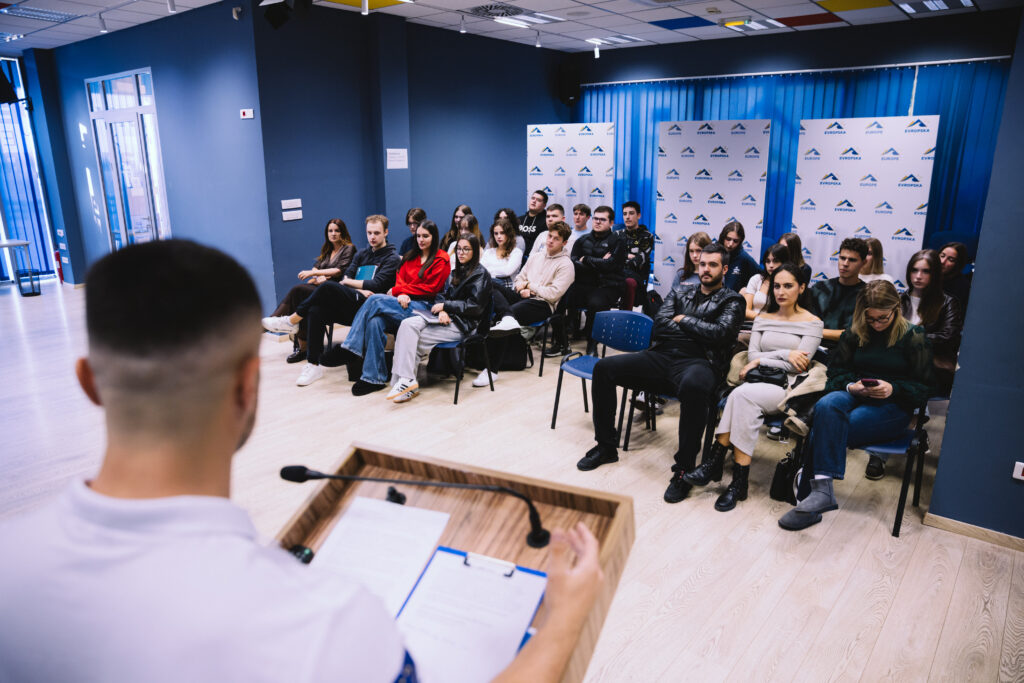
We began on October 27 with an interactive workshop called “Facts Come First.” Our Young European Ambassador Aldo opened the session by sharing the idea behind the whole initiative and reminding us that media literacy is not just about recognizing fake news. It is also about understanding how media influence our perceptions, decisions, and even our sense of reality.
The workshop was followed by a lively panel discussion where Emina, Vasilisa, and me, as representatives of the YEA network, shared our experiences alongside our guest, Montenegrin influencer Filip Petrović. Emina presented the Facts Come First campaign, screened a short video, and spoke about her experience from a regional event that brought together journalists and fact-checkers from across the Western Balkans. I spoke about the outcomes of the campaign and the importance of keeping the conversation alive beyond a single project. Vasilisa then energized the audience with a short quiz that revealed how much more there is to learn when it comes to identifying reliable sources.
One of the most inspiring moments of the day was our talk with Filip. He spoke openly about the responsibility influencers carry, the challenge of staying authentic, and how every post we share can have a greater impact than we realize. The discussion with the audience was dynamic and thoughtful – we explored how young people can help spread accurate information and be more mindful of what they share online. Filip’s words stayed with us: “I would tell young people to pause and think, to try to understand what is really behind a message. Check the source, compare facts, and ask who benefits from that information. These are the steps that help us build critical thinking. It’s important to keep learning, both formally and informally, because only then can we recognize manipulation and make informed decisions.”
A few days later, on October 29, we continued with an event dedicated to disinformation and digital literacy. Our guest, media expert Snežana Nikčević, led an engaging and practical workshop showing how disinformation spreads, how to recognize it, and how to think critically when consuming online content. The YEA team supported the organization and actively participated in discussions and group exercises, making the session interactive and eye-opening.
We closed Media Literacy Week on October 31 with “Youth Voices for Media Literacy.” The atmosphere was relaxed but buzzing with energy and creativity. We started with the classic “Telephone” game. There was plenty of laughter, but also a clear reminder of how easily messages can change as they are passed along, just like news can get distorted when it’s not shared carefully. Participants, divided into teams of primary school students from Podgorica, were tasked with creating and presenting a news story (either true or false), while the rest had to guess which was which. The activity brought fun, surprises, and meaningful reflection. Each team showed, in their own way, how important it is to think critically and not take information at face value. Together with Vasilisa, Boris, Marija, and Elif, we helped guide the process and made sure everyone felt included and empowered to share their ideas.
As the week came to an end and we exchanged impressions, one message stood out: this is what media literacy is truly about – to pause, to think, to verify, and to remember that not everything we hear is true. Being media literate means being responsible, informed, and aware of the influence each of us has in the digital space. Throughout Media Literacy Week, we were reminded that facts really do come first, but even more importantly, that finding them takes curiosity, teamwork, and an open mind willing to understand the world around us.