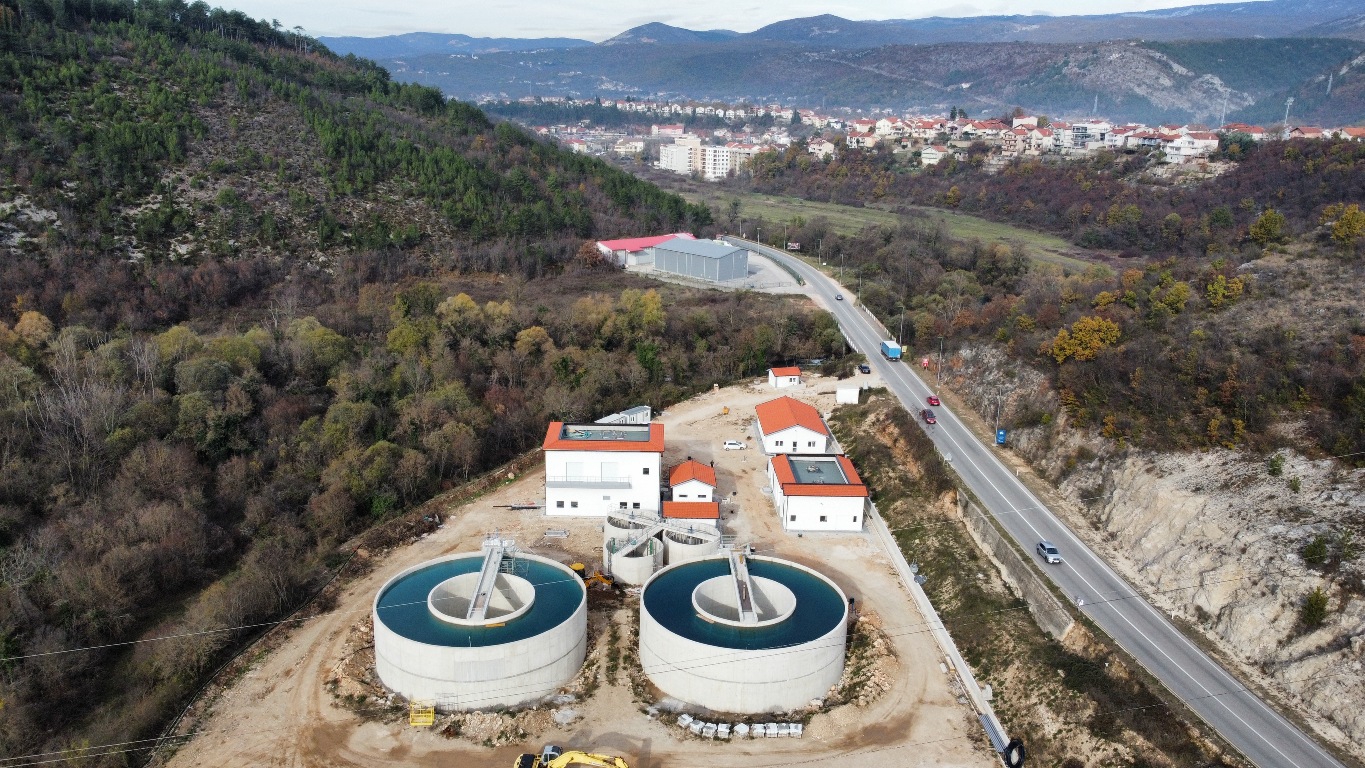
On the basis of support from the European Union in Bosnia and Herzegovina, thousands of households gain access to clean water, improved wastewater management and more reliable services. In this way, the EU helps to protect water resources and enhance public health.
One of more than 40 local communities to receive support is the city of Lukavac, with a population of around 54,000 and an annual budget of approximately €17 million. Mayor Edin Delić says that this assistance feels like winning the lottery, as the city has lacked drinking water for 30 years, while the authorities have been seeking a solution for more than a decade.
“Most residents buy water or carry it in canisters, and through this project the city is addressing the most fundamental human rights issue and the essential needs of its citizens. I know that some of our fellow citizens will not live to see drinking water flowing from their taps, but many will. With the support of the European Bank for Reconstruction and Development and the European Union, we will build a water treatment plant, replace the distribution pipeline, construct a reservoir and carry out many additional works. This is the largest investment we have ever undertaken, amounting to €15 million – €8 million in grants and €7 million in development loans. Previously, we estimated that the treatment plant alone would require €20 million, entirely financed through loans, whereas now we will repay only €7 million and deliver four times as much”, Delić explained.
He further clarified that Lukavac lost its continuous water supply because the city expanded rapidly in the early 1990s, while the water infrastructure failed to keep pace with that growth.
“Personally, I was surprised that at this stage of Bosnia and Herzegovina’s EU accession process, and amid widespread Euroscepticism, when some politicians here question which direction we should take, we received such substantial support. This should serve as encouragement to all local communities, as it clearly demonstrates that someone is observing, monitoring and recognising the real needs of citizens, seriously assessing our plans and determining what is worthy of attention”, Delić said, stressing that his personal confidence in the EU has also been strengthened.
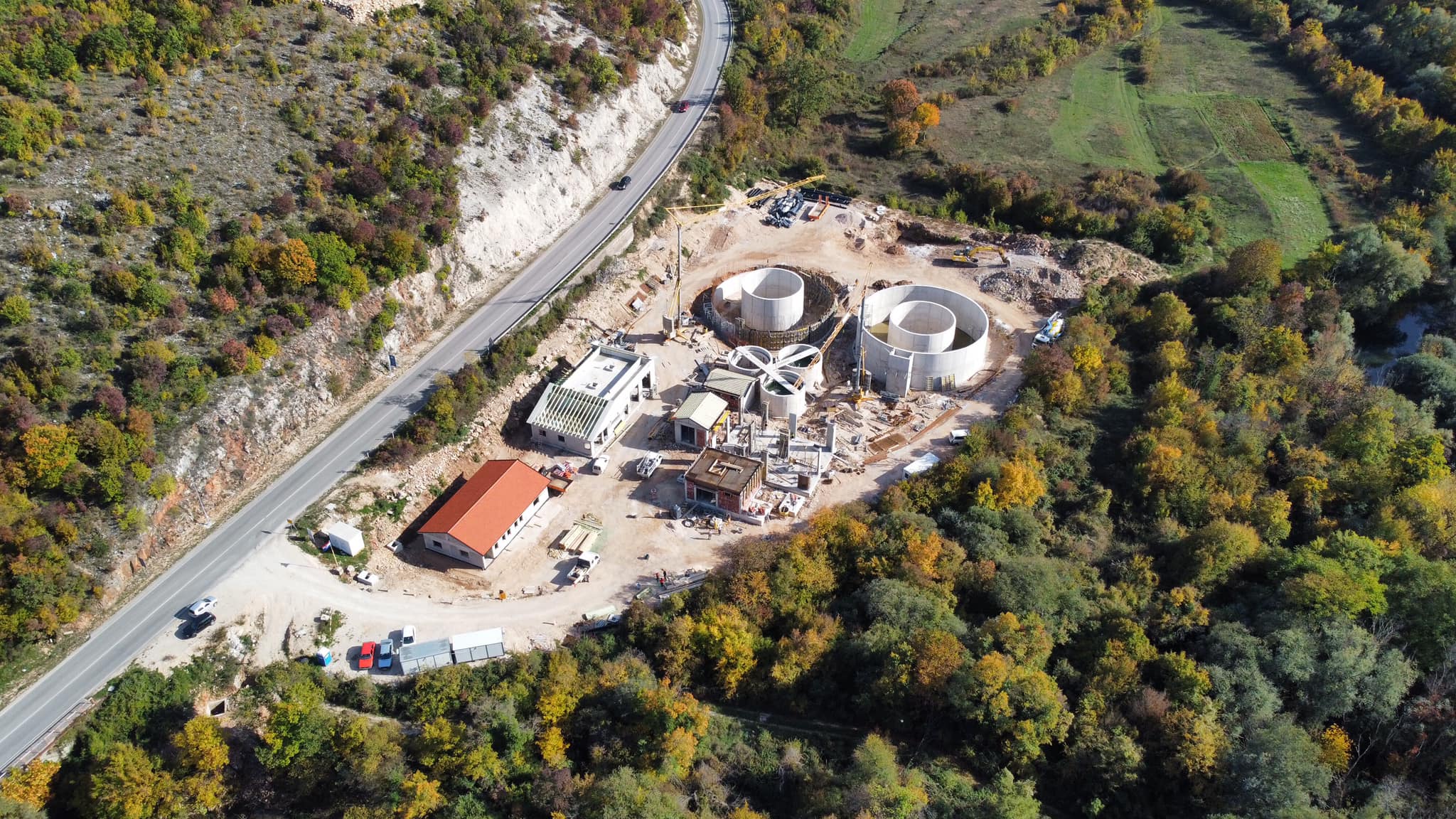
In the far south of Bosnia and Herzegovina, Trebinje — a city of around 30,000 inhabitants with a budget of approximately €33 million — is, with an European Union grant and a loan from the European Investment Bank, undertaking the reconstruction and expansion of its water supply network, increasing reservoir capacity, stabilising water supply to settlements distant from the city centre, and rehabilitating the wastewater treatment plant.
“We have reduced losses in the network, improved the quality of treated wastewater discharged into the river and stabilised water supply across the city. These investments lay the foundation for a long-term, sustainable and efficient system. Going forward, we will continue with regular investment maintenance, digitalisation and enhanced network monitoring, reduction of technical and commercial losses, and strengthening public awareness of responsible water consumption”, officials from the City Administration stated.
They explained that problems in Trebinje developed gradually due to a lack of funds for regular investment maintenance and expansion of the network, and that the wastewater treatment plant was built more than 40 years ago, with no major reconstruction having been carried out since then. “Without the support of the EU and international financial institutions the benefits for environmental protection, public health and citizens’ quality of life would have been delayed. EU support has made it possible to address these issues in a systematic rather than a piecemeal manner”, they concluded.
The project also includes Široki Brijeg, with a population of around 30,000 and a budget of approximately €12.5 million. Two sewerage collectors and a wastewater treatment plant have been constructed to serve 10,000 residents, with the possibility of expansion to 15,000.
“Through this project, we have been able to construct a system for the collection and treatment of urban wastewater. This has created opportunities for the city to further upgrade and refine the system in order to ultimately achieve good water status in this area. Without EU support, materialised through EIB loan funds and IPA grant funding, we would not have been able to implement this project”, said Boro Đolo from the Project Management Unit.
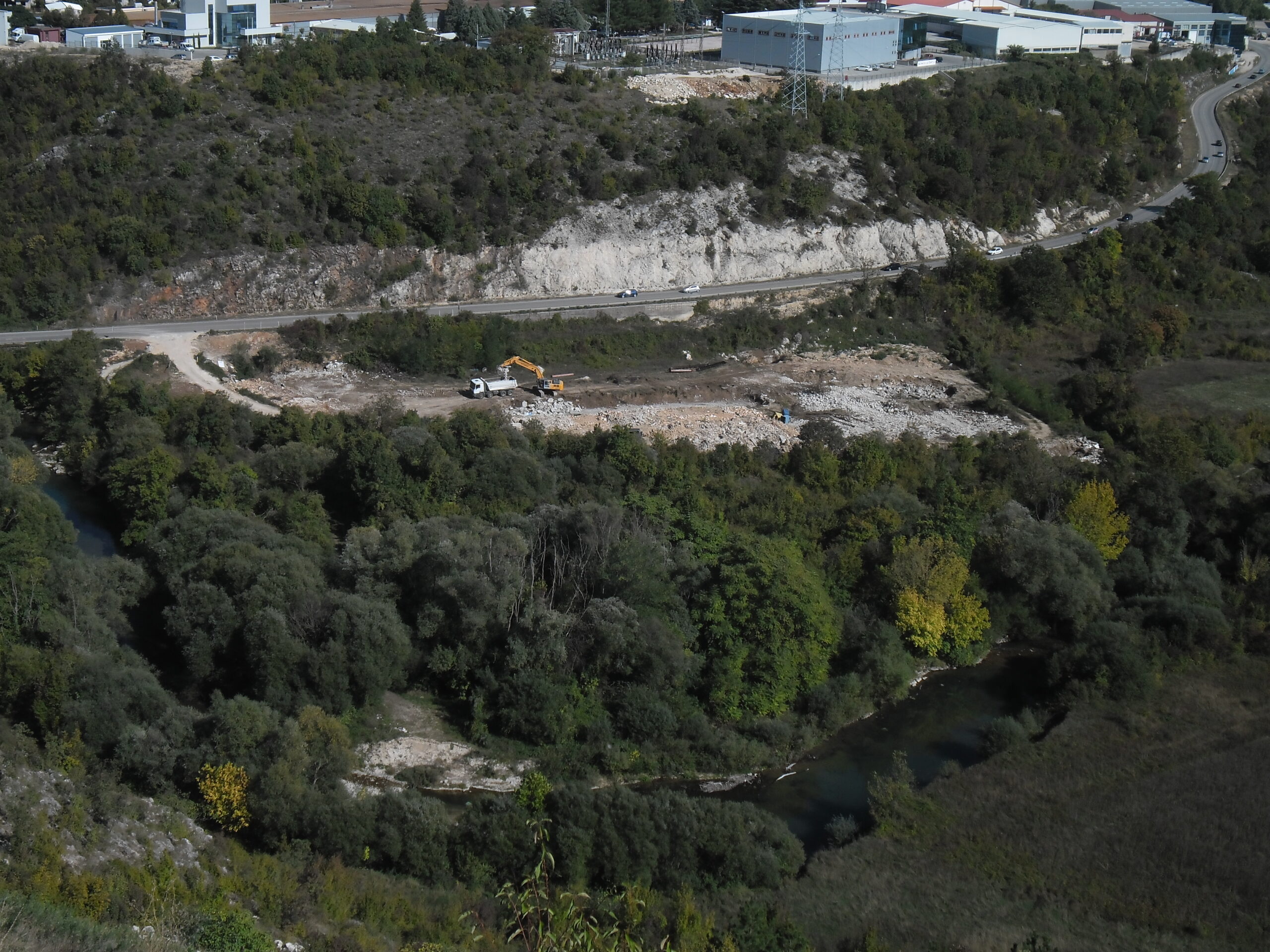
Since 2008, the European Union has been supporting Bosnia and Herzegovina through the Water and Sanitation Programme (WATSAN), with a total value exceeding €215 million. Through a combination of EU grants and EBRD loans, amounting to approximately €58 million, significant improvements are currently under way in municipalities across the country. The city of Sarajevo has also received EU and EBRD support for the modernisation of its outdated water supply network and for reducing water losses within the system.
In the far south of Bosnia and Herzegovina, Trebinje — a city of around 30,000 inhabitants with a budget of approximately €33 million — is, with an European Union grant and a loan from the European Investment Bank, undertaking the reconstruction and expansion of its water supply network, increasing reservoir capacity, stabilising water supply to settlements distant from the city centre, and rehabilitating the wastewater treatment plant.
“We have reduced losses in the network, improved the quality of treated wastewater discharged into the river and stabilised water supply across the city. These investments lay the foundation for a long-term, sustainable and efficient system. Going forward, we will continue with regular investment maintenance, digitalisation and enhanced network monitoring, reduction of technical and commercial losses, and strengthening public awareness of responsible water consumption”, officials from the City Administration stated.
They explained that problems in Trebinje developed gradually due to a lack of funds for regular investment maintenance and expansion of the network, and that the wastewater treatment plant was built more than 40 years ago, with no major reconstruction having been carried out since then. “Without the support of the EU and international financial institutions the benefits for environmental protection, public health and citizens’ quality of life would have been delayed. EU support has made it possible to address these issues in a systematic rather than a piecemeal manner”, they concluded.
The project also includes Široki Brijeg, with a population of around 30,000 and a budget of approximately €12.5 million. Two sewerage collectors and a wastewater treatment plant have been constructed to serve 10,000 residents, with the possibility of expansion to 15,000.
“Through this project, we have been able to construct a system for the collection and treatment of urban wastewater. This has created opportunities for the city to further upgrade and refine the system in order to ultimately achieve good water status in this area. Without EU support, materialised through EIB loan funds and IPA grant funding, we would not have been able to implement this project”, said Boro Đolo from the Project Management Unit.
Since 2008, the European Union has been supporting Bosnia and Herzegovina through the Water and Sanitation Programme (WATSAN), with a total value exceeding €215 million. Through a combination of EU grants and EBRD loans, amounting to approximately €58 million, significant improvements are currently under way in municipalities across the country. The city of Sarajevo has also received EU and EBRD support for the modernisation of its outdated water supply network and for reducing water losses within the system.
Please wait while your video is being uploaded...
Don't close this window!