Block the Hatred, Share the Love 2.0 – Youth leading the way forward


Block the Hatred, Share the Love 2.0 – Youth leading the way forward
Written by YEA Mila Mihajlović
Young Leaders walking the talk – knowledge, expertise and leadership as main tools for democratic change
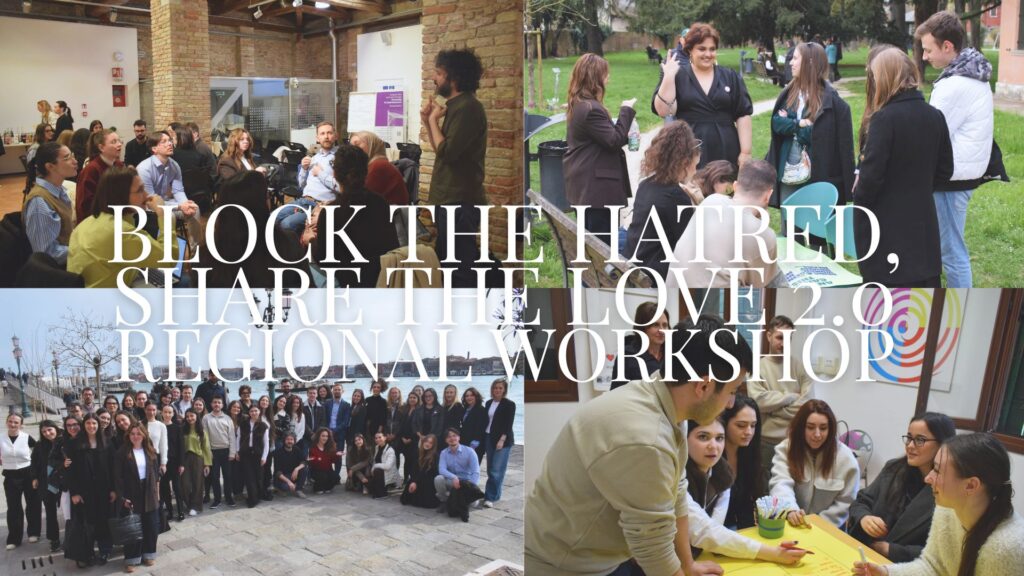
During March of 2026, Young European Ambassadors from the regions of the Western Balkans (WeBalkans), Caucasus and Eastern Europe (EU NEIGHBOURS East) had a chance to learn, exchange good practices, and build up on action plans for upcoming projects at the Block the Hatred, Share the Love 2.0 closing workshop in Venice, Italy, organized by the Council of Europe. The participants were joined by experts coming from different walks of life in order to discuss strategies to combat hate speech in both in-person and virtual settings.
The activity lasted for 3 days, from 18th to 20th March, and it was a wrap-up of the program for this cohort. Beyond expanding knowledge on diverse national contexts of their colleagues in the given field, YEAs were able to visit a country globally renowned for its historical and cultural heritage, and a city that’s one of a kind worldwide, which has further shaped a perfect environment for building connections, sharing perspectives and showcasing leadership.
Main activities
The kick-off activities of the event were held in a vibrant educational hub of Venice – CFZ (Cultural Flow Zone) Zattere – Biblioteca Area Linguistica. From getting to know each other to the official welcome delivered by Mr Mario Schwetz, the Director of the CoE Office in Venice, the day was off to a bright and promising start. Mr Schwetz extended his warmest regards to everyone present and delivered a remarkable speech concerning the history of Venice, from the times of the Republic to what’s now one of the most visited cities in the world.
Subsequently, Mrs Angela Longo, Head of the Anti-discrimination Cooperation Unit at the Council of Europe shared insights about the unit’s work and mission, as well as the ‘’Block the Hatred, Share the Love’’ initiative, which was followed by speeches of Mrs Selena Tasić, Public Diplomacy Manager at WeBalkans and Mrs Ana Kuprava, the group leader of the East. They spoke about the respective networks, their working mechanisms, and the participation of young people in change-making processes at both the local and regional levels. This was consecutively followed by exchanges of YEAs in a couple of small groups, where we discussed our previously undertaken initiatives that had the sole purpose of combating hatred through counter and alternative narratives and were implemented as an integrated part of the program.
The initiatives were diverse, ranging from organised workshops to social media campaigns, but most importantly, all were efficient in delivering concrete results, building impact, and therefore showcasing that the power of love will never be defeated. Alongside that, we had an opportunity to discuss the challenges we face on a daily level due to our activist engagements that are often overlooked, misinterpreted, or even undermined. This part of the day was facilitated by Mr Claudio Tocchi, Consultant, Council of Europe.
Right after that, we had the pleasure of receiving a highly inspiring and educational lecture tackling the international and European legislative tools on equality and combating hate speech, which was delivered by Professor Sara de Vido from the Ca’ Foscari University in Venice and Marija Andreeva, Project Officer, Council of Europe. We had the opportunity to dive deeper into how the circulation of hatred and hate speech is monitored and sanctioned by the responsible organs of the EU and the international framework, which is a must-know in the field. However, what happened after that was more than just networking, but rather the beginning of connections that felt closer.
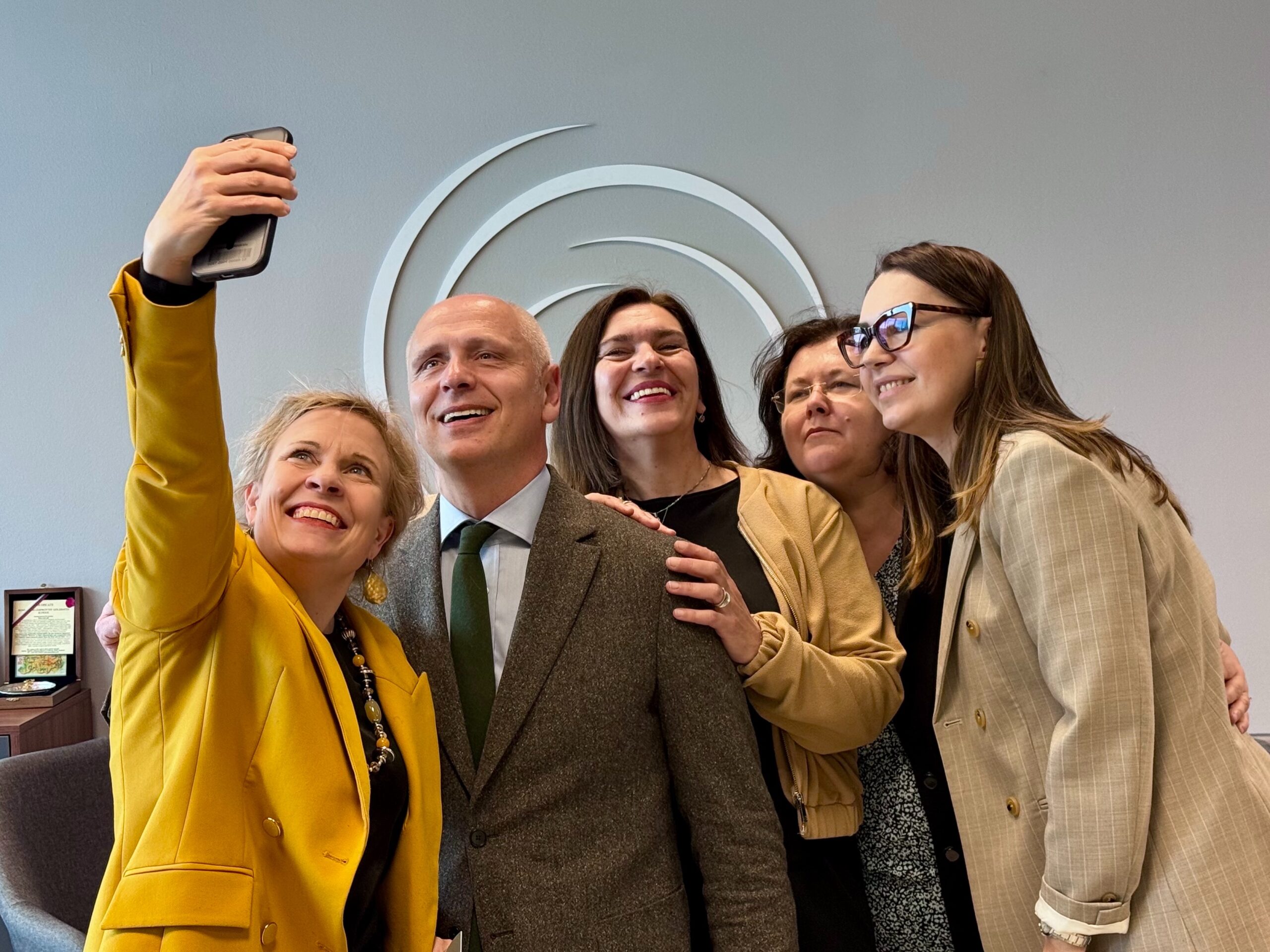
YEAs were joined by the students of Ca’ Foscari University to expand the dialogue and explore different viewpoints. We shared perspectives, listened to the new ones, amplified the existing educational grasp of countering stereotypes, building online campaigns and leading the change, but most importantly, we’ve built friendships that might last a lifetime if cherished properly – which is a huge win! Seeing how many commonalities we possess, how many similar experiences we have gone through and how much of a yearning passion to change the world into a better place we collectively and wholeheartedly cultivate, this workshop felt like the right place to be.
Followed by a short voyage we grouply embarked on, we have arrived at the Centro don Lorenzo Milani/Youth Centre in Mestre, Venice. Besides being greeted in an incredibly kind and welcoming manner by the members of the Centre’s staff, we had the chance to encounter a completely new standpoint on what it truly means to be a youth worker and a young person who engages in activities of this particular youth centre.
As of what we’ve heard, the Centre has a history of a strong philanthropic base. Explained by one of the leading faces of the facility, Mrs. Irene, they offer a space for young people to access informal education activities, but also seek psychological support and help in combating hard times caused by any sorts of inconveniences – which shapes it into a second home for everyone who uses the services or feels like the environment that promotes learning and growth is the right fit for them. This conversation felt beyond enriching.
What followed, however, was a cherry on top of the pie – a workshop curated by brilliant four youth workers: Gaia, Giulia, Fabrizio and Francesco, in which we joined three different learning games that had an aim to make us step out of our roles for a moment and switch the roles with those who aren’t socially included and are denied of practicing their fundamental rights.
Both the 2nd and the 3rd day activities took place at the Council of Europe Office in Venice and were followed by the presentation of studies and interactive lectures delivered by Mr Stefan Manevski, Senior Project Officer, Council of Europe. Mr Manevski shared tips and tricks on how to make effective campaigns that go beyond generating views – but actually inspiring change and building legacy. What’s the right way to send a message? How to curate a campaign or an initiative that invites the target groups to act? And most importantly, what’s the effectiveness of the counter-narratives to hate speech?
Another presentation was held by a Serbian influencer, activist and founder of Tampon Zona, Mrs Iva Parađanin Lilić, who took us through her work. In her podcast, she features different guests with whom she addresses various topics through an intersectional, feminist lens. Being one of the leading female voices regarding menstrual poverty in the Western Balkans, she told us about the reality of her journey, mentioning the struggles of female creators who are more commonly exposed to hate speech.
Besnik Baka, Communication Officer, Council of Europe, spoke about the design and implementation of communication and awareness-raising activities. He demonstrated the importance of attracting and building an audience or target group, as well as paying attention to visual and other details when implementing projects, especially ones that are meant for online publication.
For the concluding activity, YEAs were split into 4 groups with a mission to generate audio-visual content during specifically assigned tours of different parts of the city. Some of the locations included in the tour maps of groups were the Jewish Ghetto, Santa Maria della Salute, the Accademia Bridge, and the local green market.
The luggage is unpacked and ready for a new journey – what have we brought home that stays?
In a time that flies mercilessly, it’s incredibly hard to even keep memories close to your heart. They fly away with the wind into the unknown, and you usually have to dig through your memory lane just to remember that single sentence you were told you must remember. However, I believe it was a slightly contrasting case this time.
- The importance of listening:
Being a change-maker isn’t a mission for those who are not ready to hear what others want to share. Predisposition for success isn’t knowing everything, but understanding how much knowledge you lack. Different lives, countries, and realities might equal different realities and experiences. However, the sure equation is listening = learning. There are a lot of temporary riches in this world, whilst knowledge remains the permanent wealth and door to the world that embraces differences. As you are reading this, just imagine how far we’d go if we only knew a bit more about the people that we share this planet with. Right?
- Another LinkedIn connection or an actual person you’d love to meet again?
Attending conferences and any sort of formal gatherings might be the reason why our social batteries are in decline. Prioritising speed up networking to maximise the number of your LinkedIn connections isn’t a way to stay in touch with colleagues and opportunities, but a method for the substitution of true, human connections.
Let’s imagine it together – you plant 20 beautiful seeds in your garden, and you’d love for all of them to bloom. The first 5 are closer to you, so you water them every day, while you let the rest figure it out on their own. Within 2 months, out of 20 seeds, you’ll have 5 beautiful flowers and 15 that didn’t even bloom. To avoid such a loss, plant 5 and give them as much attention and care as they need. You’ll end up having 5 of the most beautiful flowers ever, without feeling exhaustion or pity that the rest have died.
It’s the same with people – 20 LinkedIn connections might raise that number under your profile, but will you stay in touch with all of them, even if you really wanted to? Hm… The good news is that our groups were more than happy to escape this loop and truly connect!
- Agree to disagree
This one is quite connected to the first point. Agreements are nice, but disagreements might be way more helpful. Tuning in to what people, or in this case, your fellow activists, have to say will open a path you might not have ever found out about earlier.
Being raised in neighbouring countries with narratives that might not align isn’t a reason to hold grudges. Analysing, deconstructing and understanding the reason why behind it is something that Young European Ambassadors do.
- The power of being united
Each person in this world indeed is one of a kind, or as said in my mother tongue: ‘’Ni prsti na rukama nisu isti, a kamoli ljudi’’ – eng. neither are the fingers of the hands the same, let alone people.
What’s way harder than judging and putting labels is understanding and accepting. Our daily agendas should revolve around practising kindness. The differences are there to make us see the beauty of life through the eyes, skin and shoes of the other. Would mosaics be such a breathtaking form of art if they were monochromatic? Once understood that differences aren’t gaps to be filled but bridges to be taken, many will understand how the power of love truly works. And this is why so many of us have met in Venice to ‘’Block the Hatred, Share the Love’’!
Until next time…