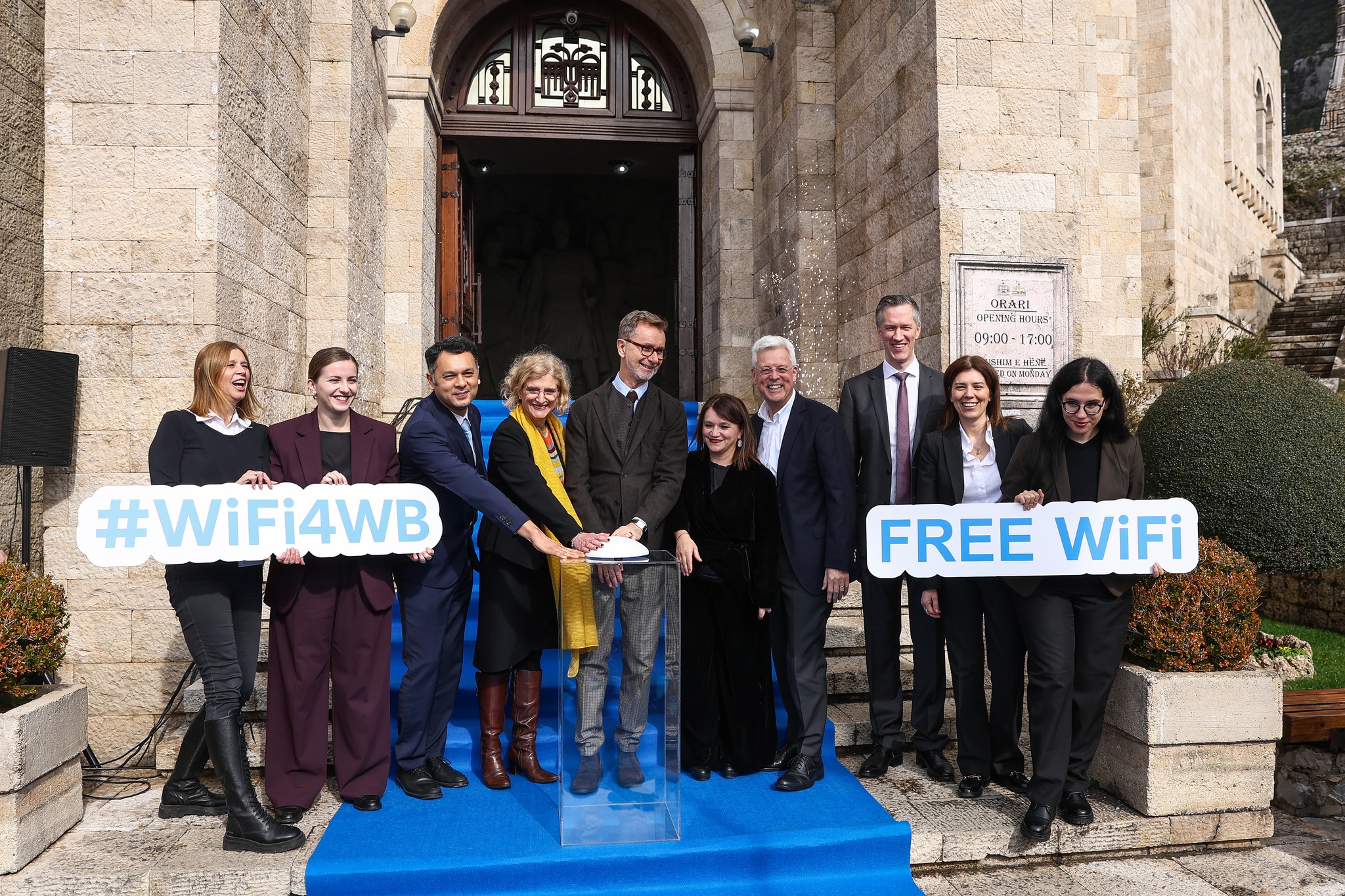
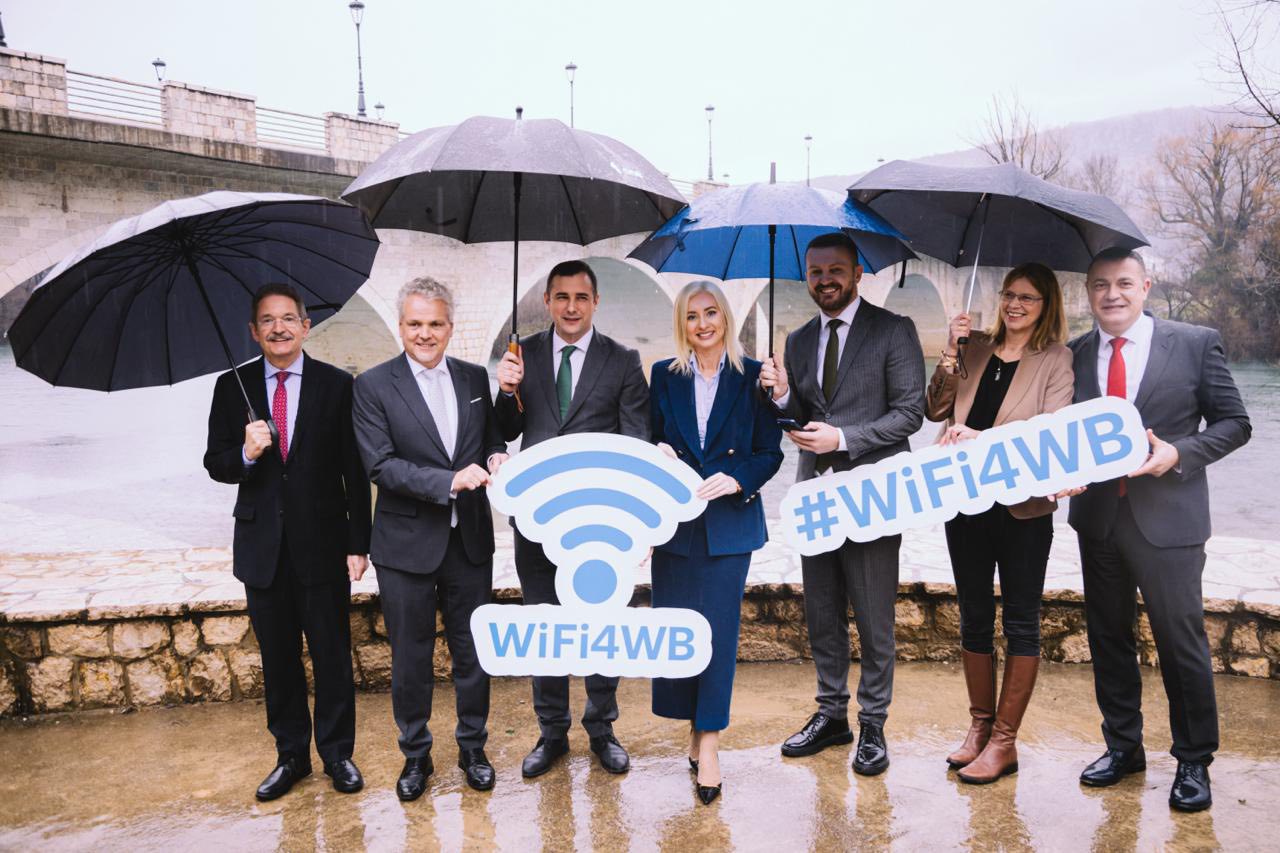
In the near future, 61 municipalities in Albania, along with another 400 municipalities across the Western Balkans, will have free internet access in public spaces – on streets, in squares and libraries. The activity is part of the WiFi4WB project, which forms part of the regional EU4Digital programme funded by the European Union and the Government of Germany and implemented by the Deutsche Gesellschaft für Internationale Zusammenarbeit (GIZ) within the framework of Regional Cooperation for EU Integration.
“Citizens and tourists will be able to use reliable internet free of charge at selected public locations. This is particularly important for young people, students, job seekers and those who may not have stable internet access at home. Free internet in public spaces improves connectivity and benefits small businesses by supporting online communication, digital payments and the promotion of services. It enhances the visitor experience and local tourism while also promoting social inclusion by ensuring that everyone has access to basic digital tools. Overall, the initiative contributes to stronger, better connected and more digitally developed local communities,” explains Amila Ramić from GIZ, stressing that the idea is to help Western Balkan countries integrate into the EU’s Digital Single Market.
The initiative officially began in Albania at the end of February 2025, where all 61 municipalities in the country will receive free Wi-Fi. Anisa Doci from Tirana, who works in the IT sector, believes this is a small but important step towards a more digitally connected and inclusive society.
“For young people, access to free internet opens up more opportunities for learning, exploration and professional development. Students rely heavily on online resources, and easier access can support their education and digital skills. It can help people stay connected, access information more easily and use online public services. It can also help reduce the digital divide for those who may not always have reliable internet access. It may also support the digitalisation of tourist cities by making it easier for visitors to navigate, search for services and share their experiences, while helping local businesses increase their online visibility, promote their services and connect with wider audiences through digital platforms,” says Doci. She believes that EU initiatives that improve digital infrastructure are important for Albania as they help the country move closer to European standards while creating better opportunities for young people, innovation and economic development.
Architect Rixhers Dengo from Albania, a member of the Young European Ambassadors initiative, says he already uses the public Wi-Fi network in his city.
“Internet access has become a basic necessity for participation in modern society, whether in education, work or civic engagement. For citizens, especially young people, free internet in public spaces means greater digital inclusion. It allows people to access information, communicate and use online public services even when they do not have mobile data available. The internet is essential for learning, exploring new opportunities and connecting with the wider world. Free public connectivity can help students access educational resources, discover international opportunities and collaborate with peers beyond their local communities. It supports a more open and connected generation,” Dengo says. He believes that Albania’s path towards the European Union is an opportunity for young people to contribute their ideas and perspectives to the wider European community, while also enabling the country to create better educational and professional opportunities and higher standards in areas such as digital infrastructure and innovation.
The EU initiative for free public Wi-Fi, part of the Growth Plan for the Western Balkans and the individual Reform Agendas, was originally planned for 500 municipalities across the Western Balkans, but 416 applied by the set deadline.
“All six economies have committed to aligning with EU policies through the Growth Plan for the Western Balkans, which outlines a path towards economic integration into the EU’s Single Market, with digital transformation as one of its key pillars. To achieve these goals, it is essential to expand digital infrastructure, develop e-government services and support small businesses in transitioning to the digital economy. Although progress has been made, many challenges remain. High-speed internet is still limited in rural areas, government systems are outdated and businesses often rely on paper-based processes. Stronger digital reforms are needed to connect the region, grow the economy and meet EU standards,” says Ramić. She explains that the free public Wi-Fi project covers equipment, installation, internet services and maintenance for up to three years.
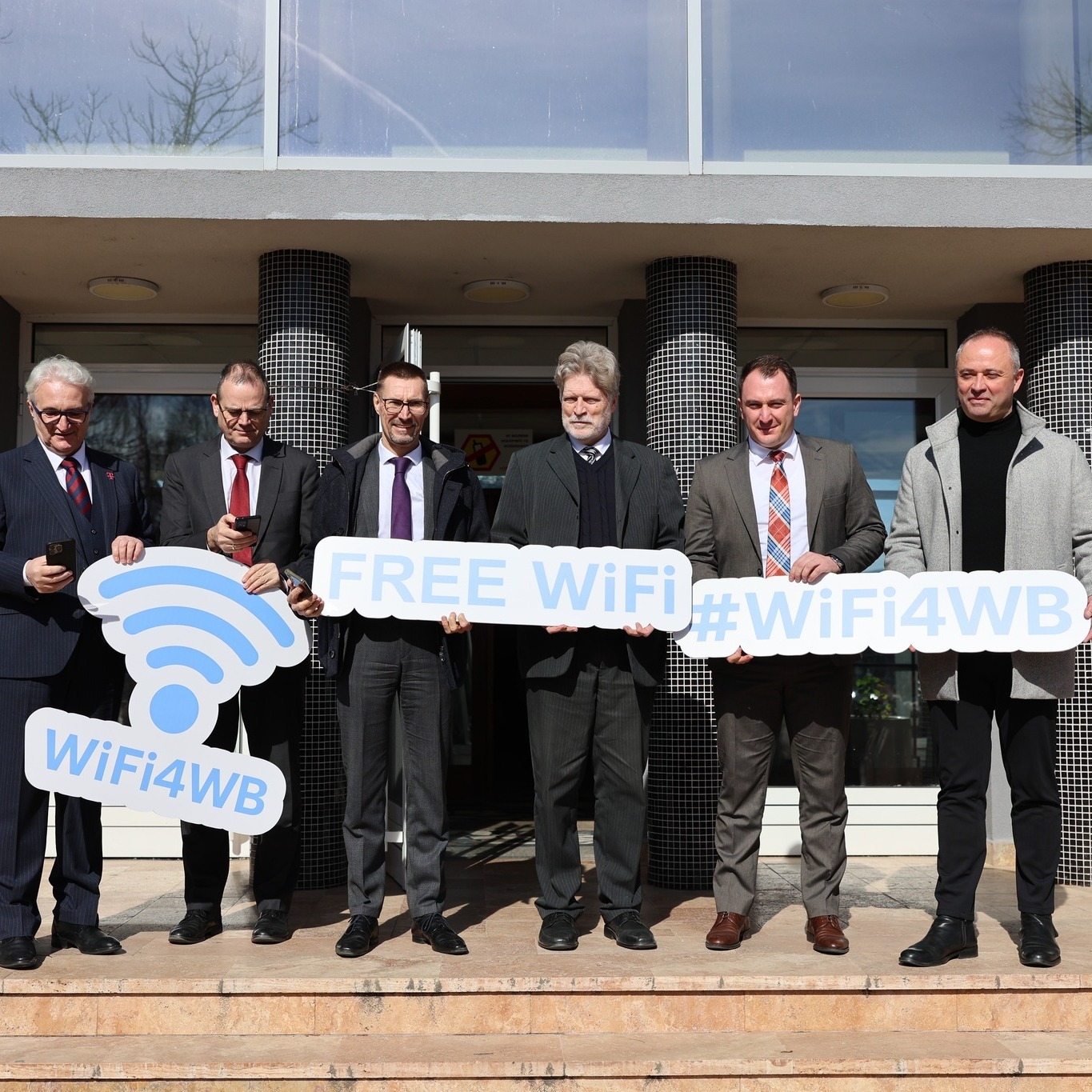
“After this period, municipalities will maintain the service for at least another year, either by covering internet costs themselves or by contracting a provider. They are responsible for securing all necessary permits and ensuring access to electricity. They receive Wi-Fi equipment, which becomes municipal property after handover, as well as installation costs, internet service for 18 months and maintenance for the same period, after which municipalities assume responsibility for operating the network,” Ramić explains.
WiFi4WB draws inspiration from the EU’s WiFi4EU initiative, which was implemented in EU Member States between 2018 and 2020, when approximately €120 million was allocated to support the installation of free public Wi-Fi hotspots in more than 7,000 municipalities across the European Union. The programme improved connectivity in parks, squares, libraries, health centres and public buildings. The aim of the activities in the Western Balkans is to develop secure and sustainable digital infrastructure, strengthen interoperability and e-government, and support the digitalisation of businesses.
Architect Rixhers Dengo from Albania, a member of the Young European Ambassadors initiative, says he already uses the public Wi-Fi network in his city.
“Internet access has become a basic necessity for participation in modern society, whether in education, work or civic engagement. For citizens, especially young people, free internet in public spaces means greater digital inclusion. It allows people to access information, communicate and use online public services even when they do not have mobile data available. The internet is essential for learning, exploring new opportunities and connecting with the wider world. Free public connectivity can help students access educational resources, discover international opportunities and collaborate with peers beyond their local communities. It supports a more open and connected generation,” Dengo says. He believes that Albania’s path towards the European Union is an opportunity for young people to contribute their ideas and perspectives to the wider European community, while also enabling the country to create better educational and professional opportunities and higher standards in areas such as digital infrastructure and innovation.
The EU initiative for free public Wi-Fi, part of the Growth Plan for the Western Balkans and the individual Reform Agendas, was originally planned for 500 municipalities across the Western Balkans, but 416 applied by the set deadline.
“All six economies have committed to aligning with EU policies through the Growth Plan for the Western Balkans, which outlines a path towards economic integration into the EU’s Single Market, with digital transformation as one of its key pillars. To achieve these goals, it is essential to expand digital infrastructure, develop e-government services and support small businesses in transitioning to the digital economy. Although progress has been made, many challenges remain. High-speed internet is still limited in rural areas, government systems are outdated and businesses often rely on paper-based processes. Stronger digital reforms are needed to connect the region, grow the economy and meet EU standards,” says Ramić. She explains that the free public Wi-Fi project covers equipment, installation, internet services and maintenance for up to three years.
“After this period, municipalities will maintain the service for at least another year, either by covering internet costs themselves or by contracting a provider. They are responsible for securing all necessary permits and ensuring access to electricity. They receive Wi-Fi equipment, which becomes municipal property after handover, as well as installation costs, internet service for 18 months and maintenance for the same period, after which municipalities assume responsibility for operating the network,” Ramić explains.
WiFi4WB draws inspiration from the EU’s WiFi4EU initiative, which was implemented in EU Member States between 2018 and 2020, when approximately €120 million was allocated to support the installation of free public Wi-Fi hotspots in more than 7,000 municipalities across the European Union. The programme improved connectivity in parks, squares, libraries, health centres and public buildings. The aim of the activities in the Western Balkans is to develop secure and sustainable digital infrastructure, strengthen interoperability and e-government, and support the digitalisation of businesses.
Please wait while your video is being uploaded...
Don't close this window!