Interview with Aleksandar Dimitrievski and Mihail Milosevski
Over the past few weeks, the Western Balkan countries have been celebrating investigative journalism. Professional juries across Serbia, Bosnia and Herzegovina, Montenegro, Albania, North Macedonia, and Kosovo have gathered to evaluate some of the most compelling investigative journalism pieces.
We spoke to all first-prize winners across the region, and will publish the interviews with them in series. Through this series that we have titled “EU Celebrates Investigative Journalism in the Western Balkans” we want to celebrate these exemplary journalists and get to know more about their investigation practices, the urgency of addressing these issues in their country as well as their reflections on the position of investigative journalism in their country and in the region at large.
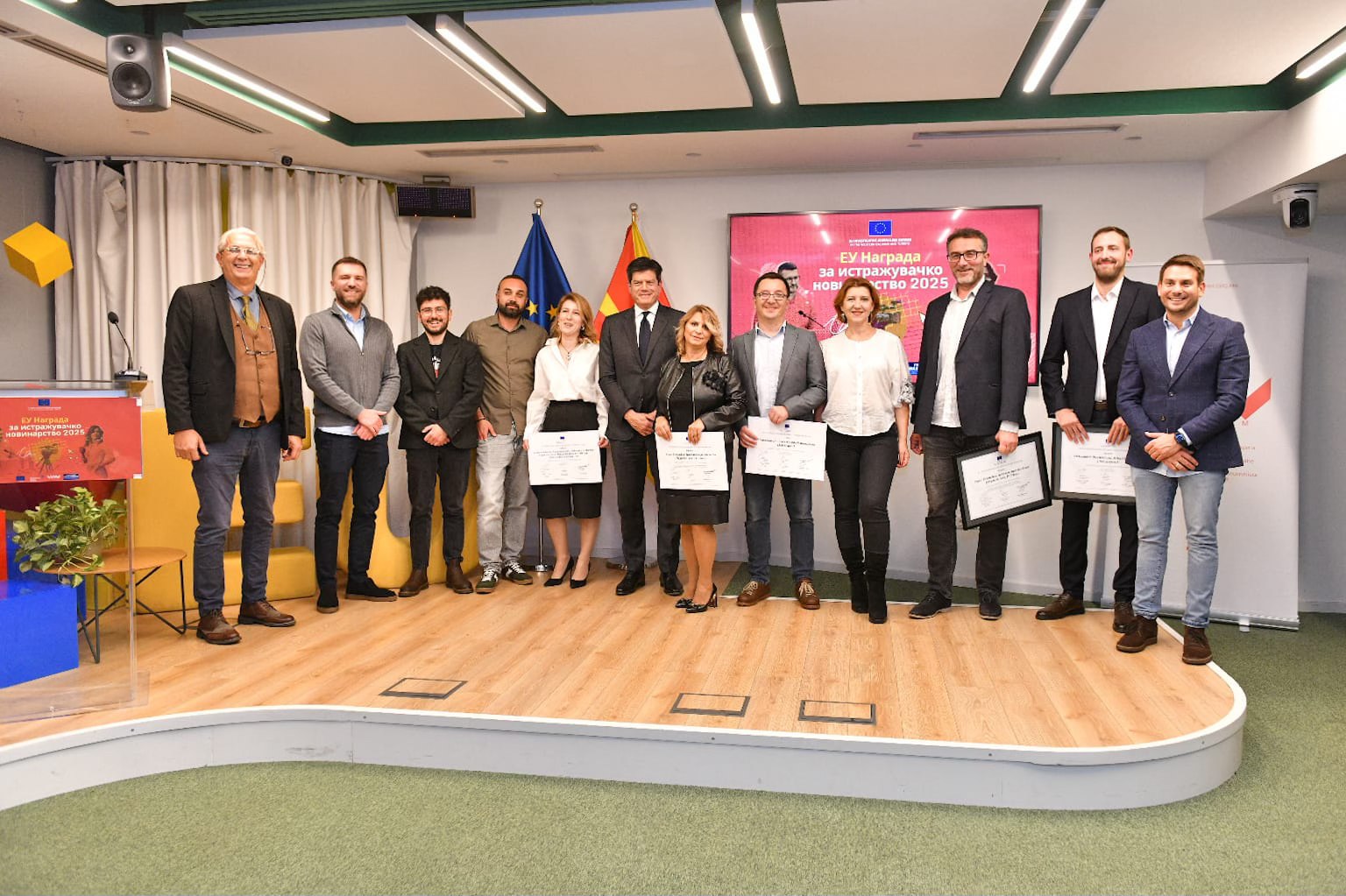
In North Macedonia, the jury comprising Valentin Neshovski, Sonja Delevska, and Ognjen Zorić, awarded Aleksandar Dimitrievski and Mihail Milosevski from 360 stepeni the first prize for their piece Following Julia’s Footsteps, an investigation exposing abuse of power at the top of national security and revealing how those tasked with upholding the law misused their positions.
Aleksandar Dimitrievski is a journalist, editor and one of the co-founders of “360 stepeni”, a TV production company that publishes the online portal www.360stepeni.mk and the TV show “360 stepeni”, which currently airs on the public broadcaster.
His main engagements before “360 stepeni” were in the newsrooms of TV Alsat-M and Alfa TV, both privately owned television stations with national coverage. He is also an author of several publications and stories published by local or regional publishers. In the past few years, he was also actively involved as a lecturer in short-term programs and projects for development of young journalists, as well as programs for development of media literacy teaching in public education system.
Dimitrievski won the first prize of the EU Delegation award in Skopje in 2016. In 2024 he won the first prize of the “Nikola Mladenov” award for investigative journalism, and the third prize of the EU Delegation award in Tirana (as a co-author), among several other awards and recognitions.
Mihail Miloshevski is an acclaimed journalist with experience in investigative and multimedia reporting. Committed to ethical journalism and fighting disinformation, Mihail’s impactful work has earned him significant recognition, including the First Prize in the European Union Award for Investigative Journalism (2025) and the UNDP Award for creativity and ethics.
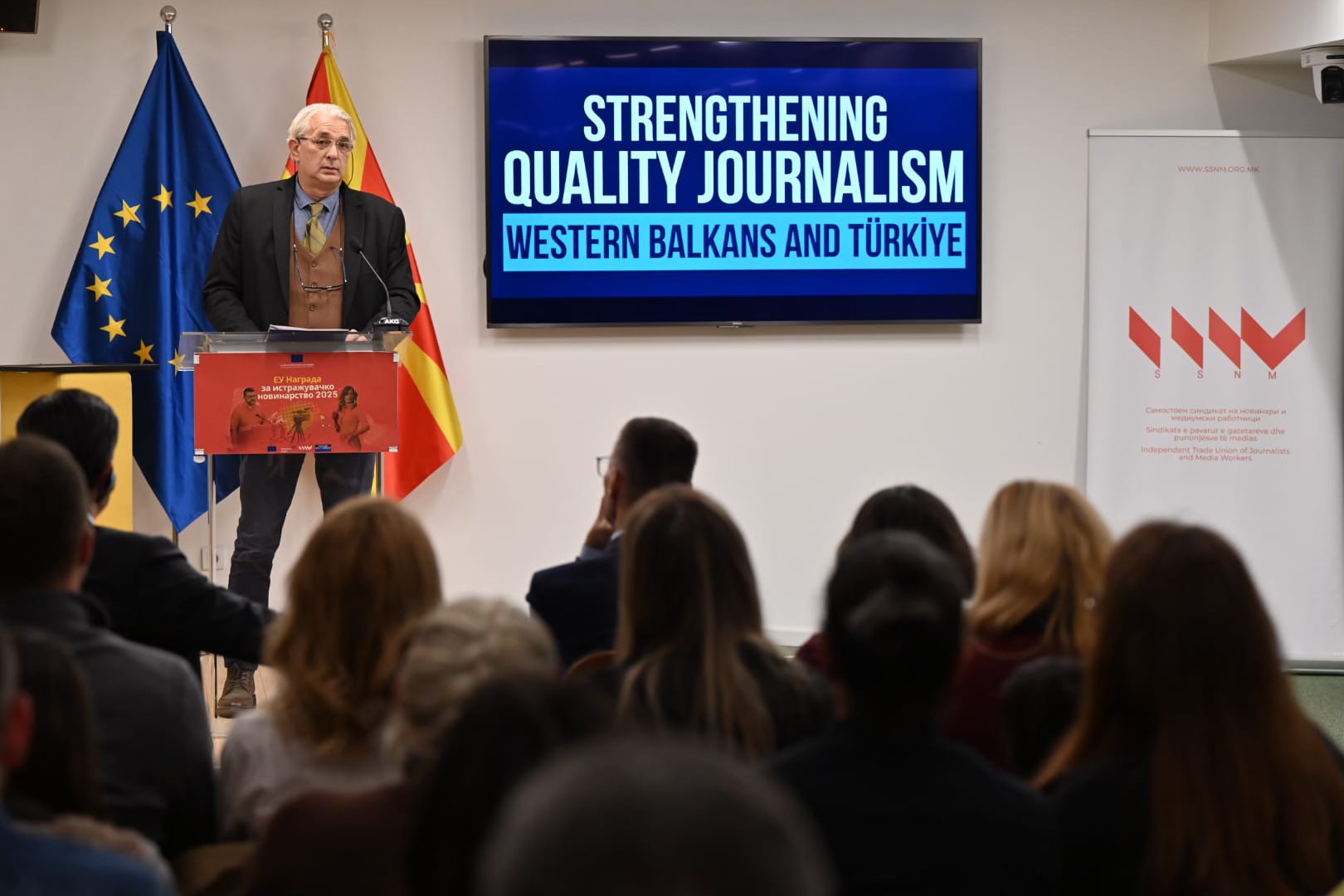
WeBalkans: What was your process of investigation for the piece “Following Julia’s footsteps”, abuse of power in state institutions, security ones included, is quite common in the region. Given this context, the investigation you undertook is quite sensitive. What were the risks you undertook in your process?
Aleksandar Dimitrievski & Mihail Milosevski: The investigative piece exposed a critical case of systemic credential fraud and ignorance towards rule of law involving high-ranking official in Macedonia. The story’s core finding was that the claim of the head of the State Agency for National Security (ANB), Mr. Bojan Hristovski, that he holds a valid TOEFL English language certificate issued in 2022 from a Bulgarian entity, “Julija Ko. DOO” located in Plovdiv, could not be true. A valid certificate for sufficient knowledge of English is a prerequisite for the appointment of a head of the Agency. Presenting a false certificate is a criminal deed in the country.
The first questions regarding the validity of Mr. Hristovski TOEFL certificate were already in the public sphere, when he agreed to an interview for “360 stepeni” on several topics. Questioned, why did he had the exam in Plovdiv (six hours of driving from Skopje and in a different country), he answered – because the waiting list was the shortest. He also said, although indirectly, that the entity in Plovdiv is recognized as a TOEFL center in Macedonian bylaws.
After the interview we tried the simplest way for verification of the facts – by calling the school in Plovdiv. It was clear from the start that we are not dealing with a regular school or an exam center as nobody answered. So, we started a comprehensive check of publicly available data, both in Macedonia and Bulgaria. The data from the Bulgarian Business register gave us the location of the HQ of the company, but also the names and locations of other business ventures of the owner of “Julia Ko. DOO”. We went to Plovdiv and found out that it’s been years since “Julia Ko. DOO” have moved out from their official address, and that there is no sign of a school or an exam center with that name whatsoever. It was the same thing with the related/connected companies. The owner, we were said, lives in Greece for several years. Quickly afterwards, while digging through the public databases, we found a document in the Bulgarian Business Register that “Julija Ko.DOO” doesn’t have any income from the year 2017. In the same time, we found out that the entity in question is NOT recognized as a valid TOEFL exam center in Macedonia. We also found Macedonian court cases in which lower ranking officials were convicted on suspended prison sentences for using false TOEFL certificates from the exact same entity “Julija Ko.DOO”.
In general, this was not a story of abuse of power by the head of the Agency for National Security. It was more a story about the lack of rule of law in the country, even among the ones that are given the confidence to deal with the most delicate of matters in the society. And, while it looks dangerous to shake the chair of the head of secret agency in the country, it won’t be fair if don’t admit that it wasn’t. The main reason for that outcome, we believe, is our rigorous and very careful approach towards the facts and their presentation. We tried very hard not to fall in the trap to assume things, as the smallest mistake might have compromised the credibility of everything else.
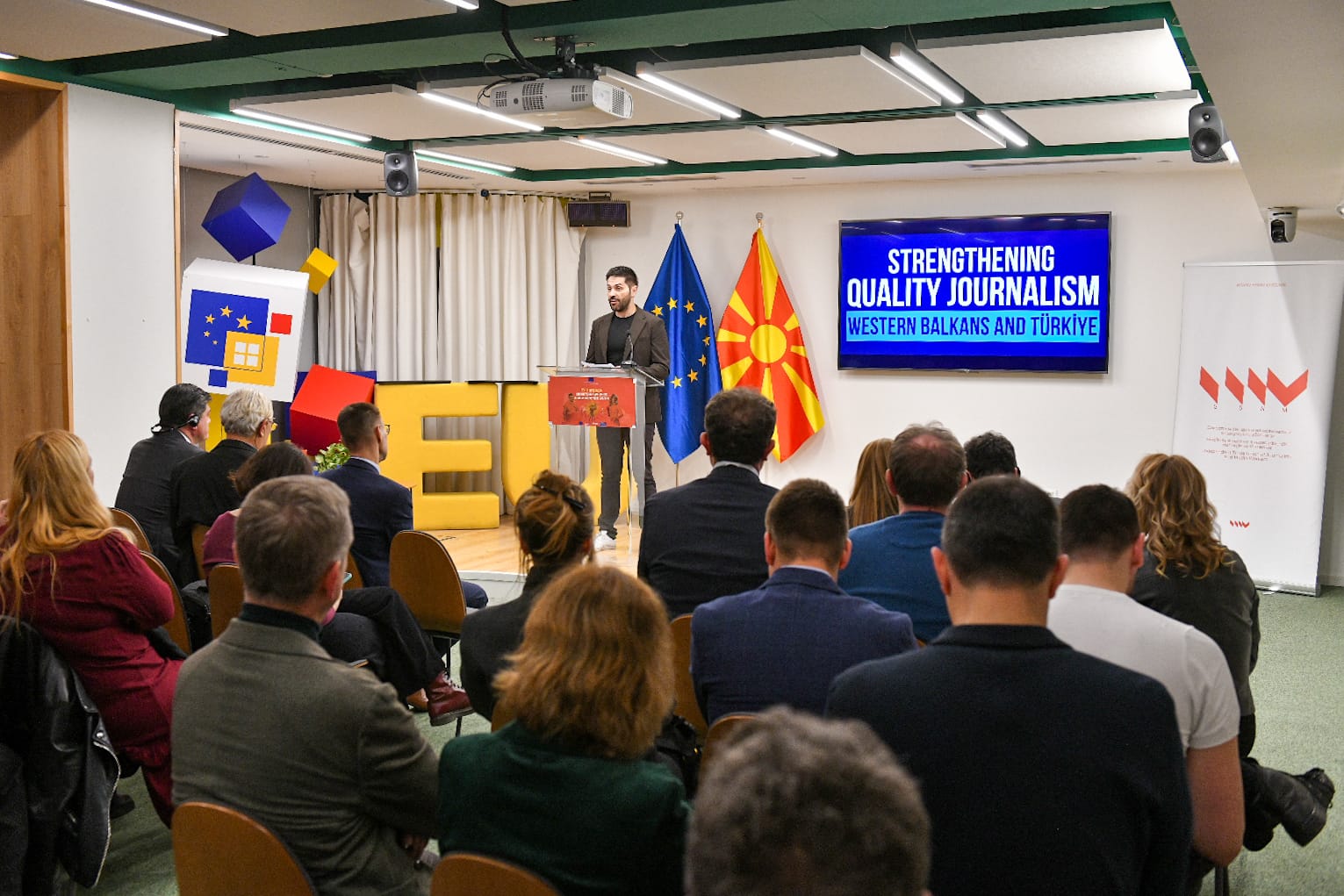
WeBalkans: What are your thoughts on the position of journalism at large in the region today, and especially of investigative journalism. In regions like Western Balkans, it seems like the need for independent investigative journalism is even more urgent, whereas pressure towards journalists and investigative journalism is at the same time higher and ever-more present. What are your thoughts on this?
Aleksandar Dimitrievski & Mihail Milosevski: In a region where the judiciary and accountability mechanisms are frequently compromised or politically captured, journalists often serve as the last effective democratic check and balance. Unfortunately, less and less journalist have the chance to serve that public mission in the WB as the traditional media are less and less able (or willing) to sponsor quality in-depth and investigative journalism, and the new media are more infotainment oriented.
To put it more bluntly, Investigative journalism on the Balkans is dying out. Not because of threats and violence towards journalists, but because it is increasingly financially unsustainable. Look no further for proof than the winners of the EU Award in the past years. It’s mostly the smaller donor funded outlets that are keeping the ideal alive. And there is nothing in the horizon that seems it can really solve the problem.
WeBalkans: What was your process of investigation for the piece “Following Julia’s footsteps”, abuse of power in state institutions, security ones included, is quite common in the region. Given this context, the investigation you undertook is quite sensitive. What were the risks you undertook in your process?
Aleksandar Dimitrievski & Mihail Milosevski: The investigative piece exposed a critical case of systemic credential fraud and ignorance towards rule of law involving high-ranking official in Macedonia. The story’s core finding was that the claim of the head of the State Agency for National Security (ANB), Mr. Bojan Hristovski, that he holds a valid TOEFL English language certificate issued in 2022 from a Bulgarian entity, “Julija Ko. DOO” located in Plovdiv, could not be true. A valid certificate for sufficient knowledge of English is a prerequisite for the appointment of a head of the Agency. Presenting a false certificate is a criminal deed in the country.
The first questions regarding the validity of Mr. Hristovski TOEFL certificate were already in the public sphere, when he agreed to an interview for “360 stepeni” on several topics. Questioned, why did he had the exam in Plovdiv (six hours of driving from Skopje and in a different country), he answered – because the waiting list was the shortest. He also said, although indirectly, that the entity in Plovdiv is recognized as a TOEFL center in Macedonian bylaws.
After the interview we tried the simplest way for verification of the facts – by calling the school in Plovdiv. It was clear from the start that we are not dealing with a regular school or an exam center as nobody answered. So, we started a comprehensive check of publicly available data, both in Macedonia and Bulgaria. The data from the Bulgarian Business register gave us the location of the HQ of the company, but also the names and locations of other business ventures of the owner of “Julia Ko. DOO”. We went to Plovdiv and found out that it’s been years since “Julia Ko. DOO” have moved out from their official address, and that there is no sign of a school or an exam center with that name whatsoever. It was the same thing with the related/connected companies. The owner, we were said, lives in Greece for several years. Quickly afterwards, while digging through the public databases, we found a document in the Bulgarian Business Register that “Julija Ko.DOO” doesn’t have any income from the year 2017. In the same time, we found out that the entity in question is NOT recognized as a valid TOEFL exam center in Macedonia. We also found Macedonian court cases in which lower ranking officials were convicted on suspended prison sentences for using false TOEFL certificates from the exact same entity “Julija Ko.DOO”.
In general, this was not a story of abuse of power by the head of the Agency for National Security. It was more a story about the lack of rule of law in the country, even among the ones that are given the confidence to deal with the most delicate of matters in the society. And, while it looks dangerous to shake the chair of the head of secret agency in the country, it won’t be fair if don’t admit that it wasn’t. The main reason for that outcome, we believe, is our rigorous and very careful approach towards the facts and their presentation. We tried very hard not to fall in the trap to assume things, as the smallest mistake might have compromised the credibility of everything else.
WeBalkans: What are your thoughts on the position of journalism at large in the region today, and especially of investigative journalism. In regions like Western Balkans, it seems like the need for independent investigative journalism is even more urgent, whereas pressure towards journalists and investigative journalism is at the same time higher and ever-more present. What are your thoughts on this?
Aleksandar Dimitrievski & Mihail Milosevski: In a region where the judiciary and accountability mechanisms are frequently compromised or politically captured, journalists often serve as the last effective democratic check and balance. Unfortunately, less and less journalist have the chance to serve that public mission in the WB as the traditional media are less and less able (or willing) to sponsor quality in-depth and investigative journalism, and the new media are more infotainment oriented.
To put it more bluntly, Investigative journalism on the Balkans is dying out. Not because of threats and violence towards journalists, but because it is increasingly financially unsustainable. Look no further for proof than the winners of the EU Award in the past years. It’s mostly the smaller donor funded outlets that are keeping the ideal alive. And there is nothing in the horizon that seems it can really solve the problem.
Please wait while your video is being uploaded...
Don't close this window!